20+ Indian Wedding Reception Hairstyles Trending in 2026
Reception hair has a harder job than wedding-day hair. It gets photographed from the front during the varmala, from behind during the walk-in, and from every angle once the dance floor opens. It usually has to survive a second outfit, a few hundred hugs and several hours under warm lights.
So this list is grouped by how each style behaves over a long night rather than by trend order. Pick the family of styles that suits your outfit and your hair texture first, then choose the exact look inside it.
How to choose a reception hairstyle
Four questions narrow the list faster than any trend report.
- What is your neckline? Backless, halter and off-shoulder silhouettes look best with hair worn up. A high embroidered collar balances better with hair down or half-up.
- Are you changing outfits? A convertible style, worn up for the ceremony and let loose for the after-party, saves a full redo between functions.
- How heavy is your jewellery? A maang tikka, matha patti or statement earrings already frame your face. Large hair accessories on top usually compete with them.
- What does your hair actually do? Fine hair holds sleek styles beautifully but drops curls quickly. Thick hair needs structure and pins to stay up. Humidity decides how much of either survives the evening.
Sleek and minimal reception hairstyles
This is the most reliable family of styles for a reception, because nothing moves and nothing needs fixing mid-function. The polish is the entire detail.
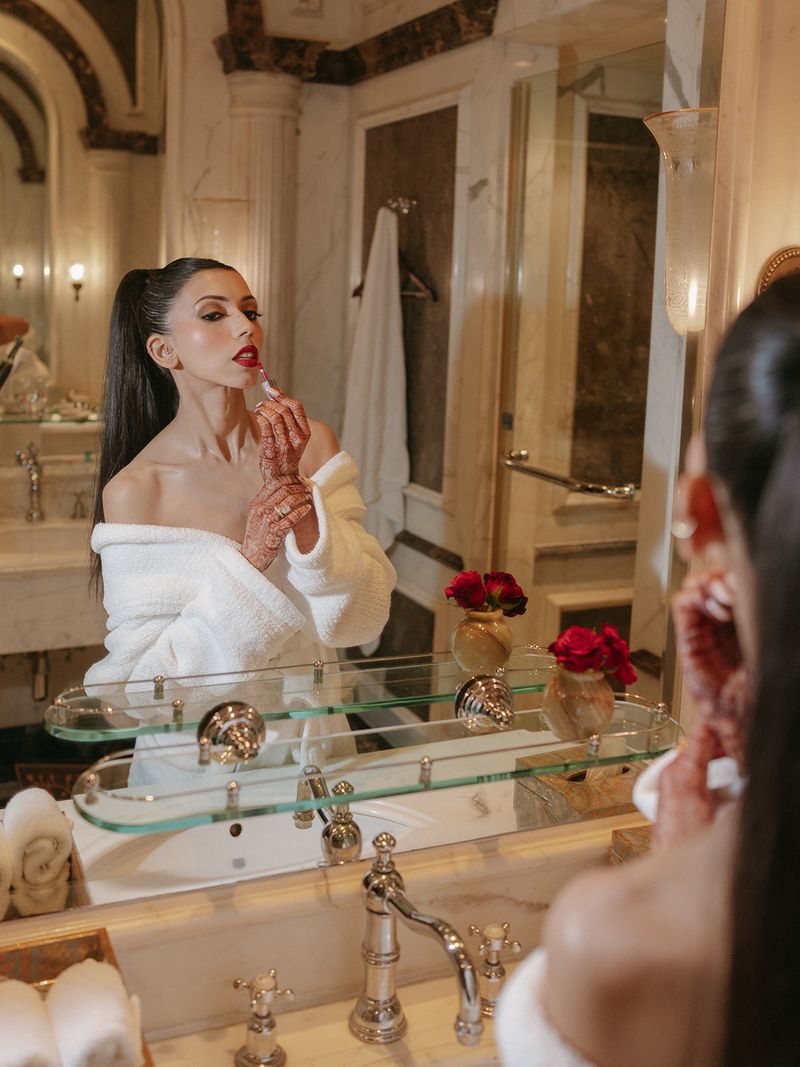
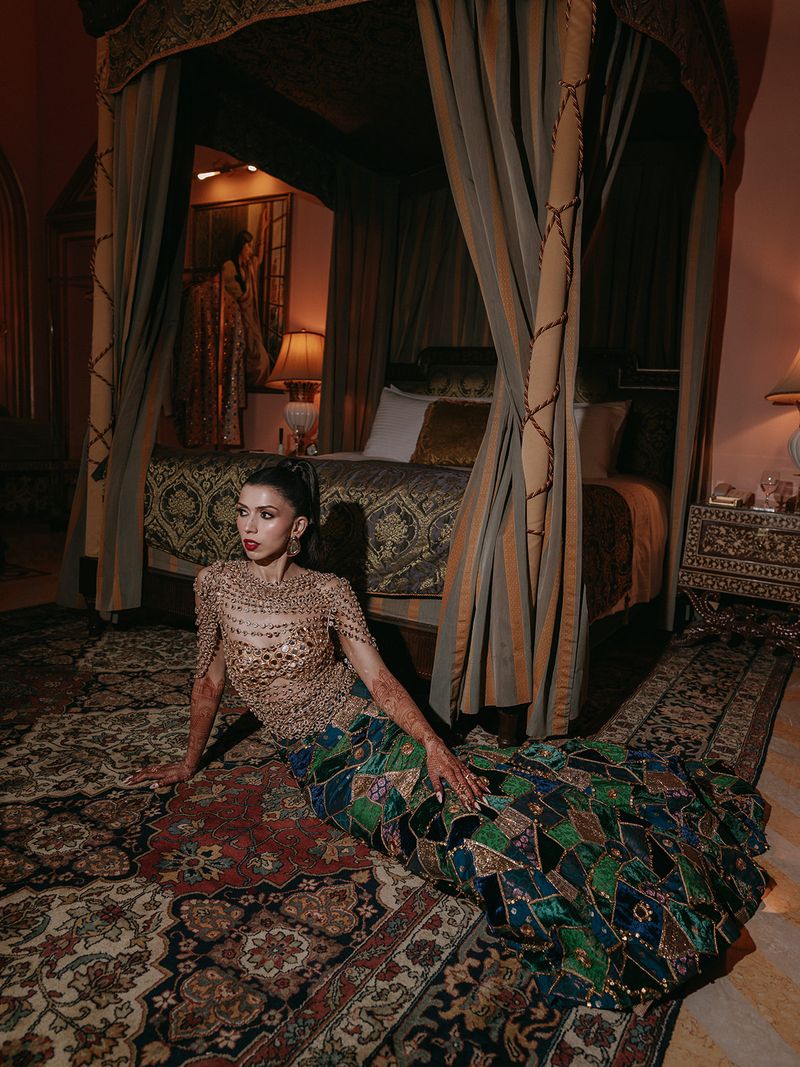
The glass-smooth high ponytail
Hair is pulled back tight from the crown with a soft centre part left loose to frame the face, then gathered into one clean line down the back. No flowers, no pins, no embellishments — the finish is the statement. It works particularly well when your jewellery and mehendi are the details you want people to notice.
The sleek low bun or chignon
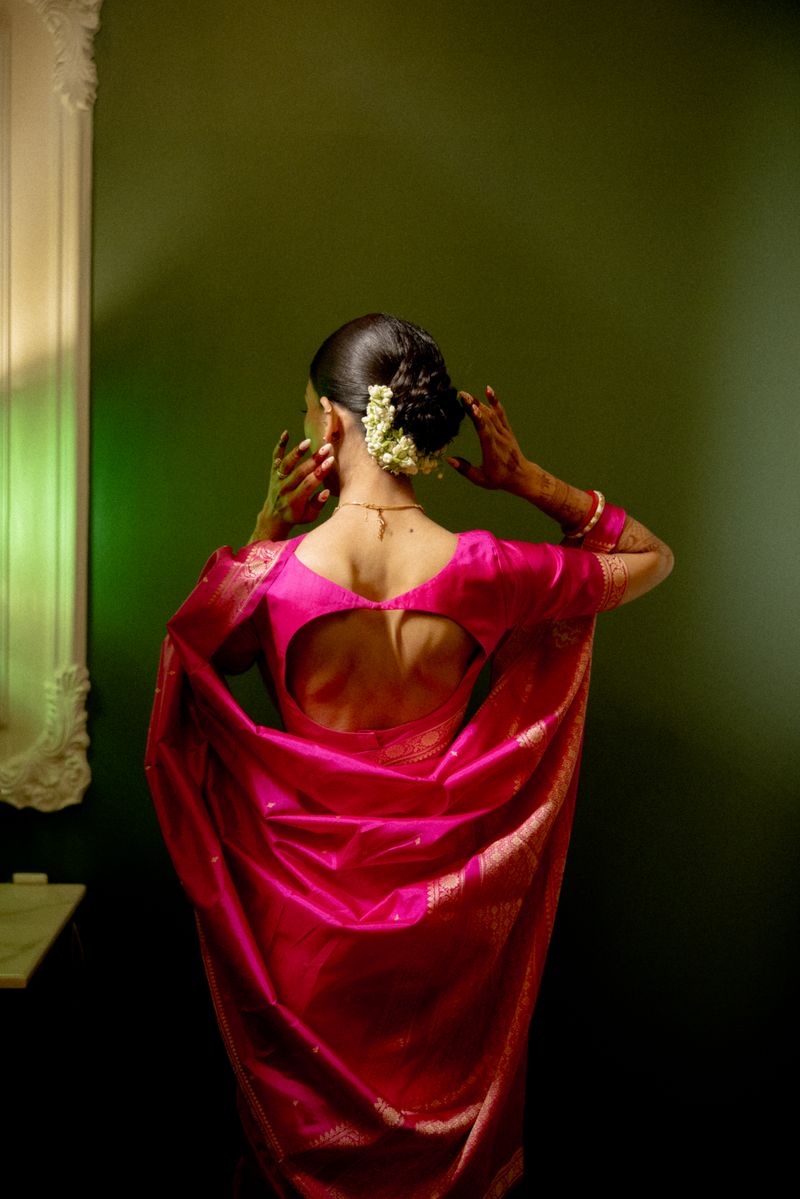
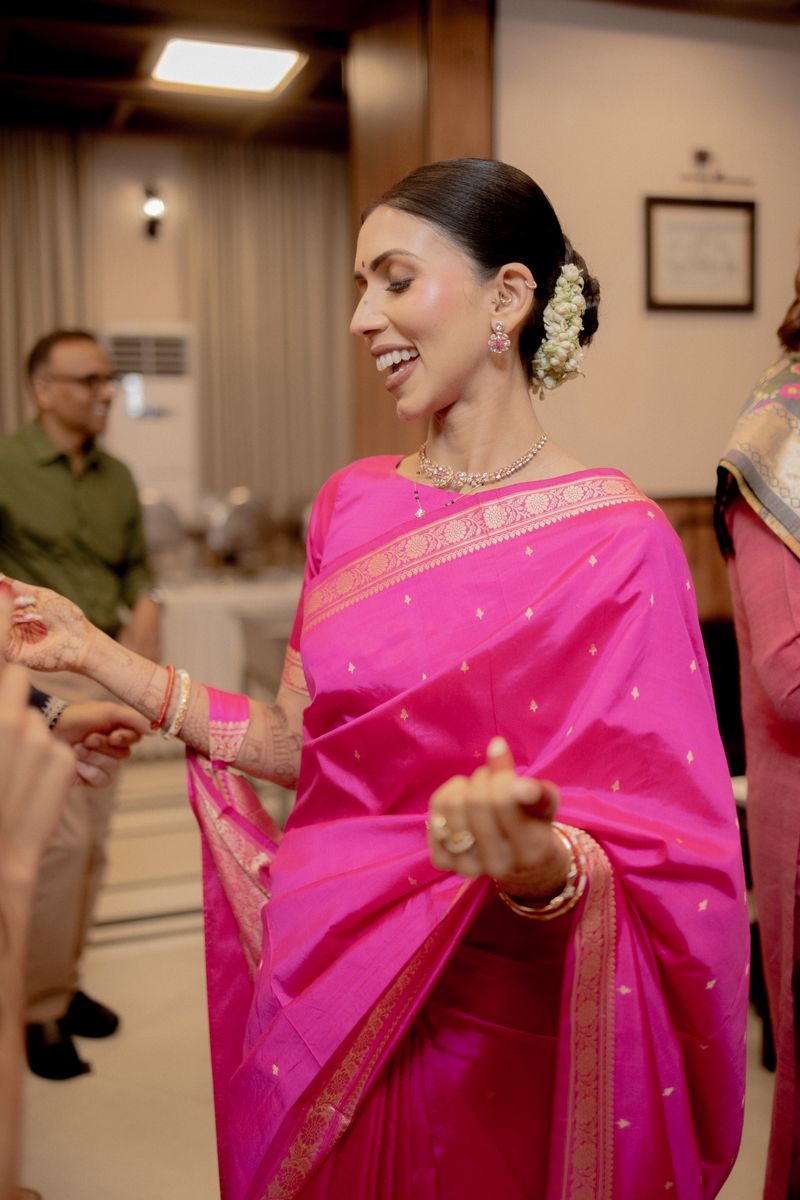
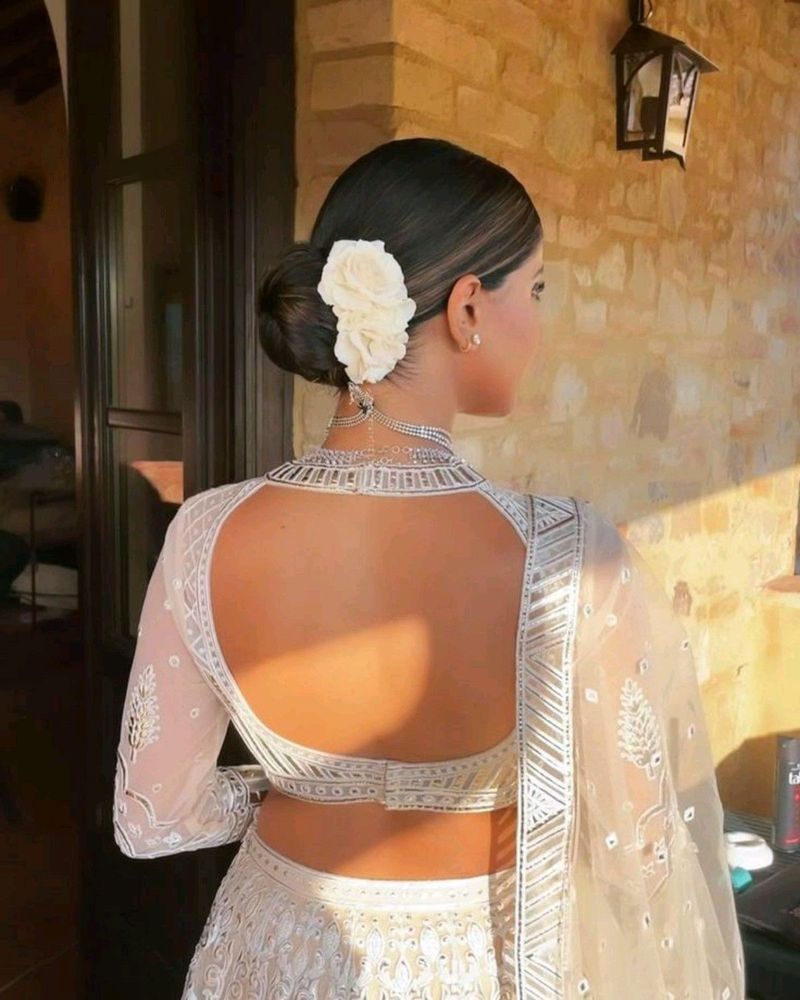
A centre-parted, glass-smooth bun set low at the nape reads far more current than the traditional high reception bun. Think clean, glossy and almost architectural. It is also the easiest style to add a single ornate pin or a delicate hair vine to, without tipping into clutter.
The wedding-to-reception bun
If your reception follows immediately after the wedding, a full redo is often impossible. Ask your stylist for a base that converts: a secure bun for the ceremony that can be taken down and restyled into soft waves, or tightened into a sleeker shape, in under fifteen minutes.
Waves and curls with movement
Soft, windblown movement is photographing better right now than stiff, sprayed curls. These styles depend entirely on how the wave is set, so they are worth a trial run before the wedding day.
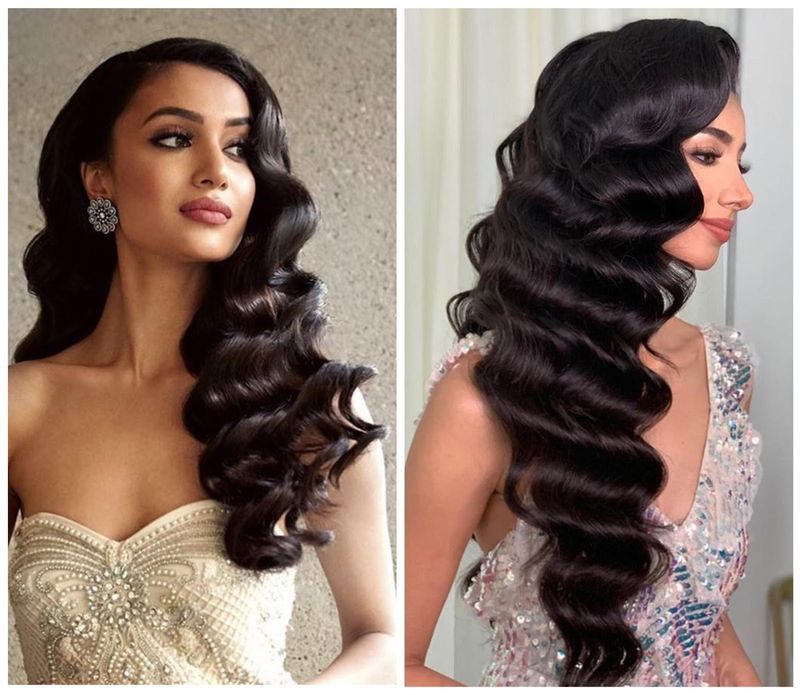
Old Hollywood side-swept waves
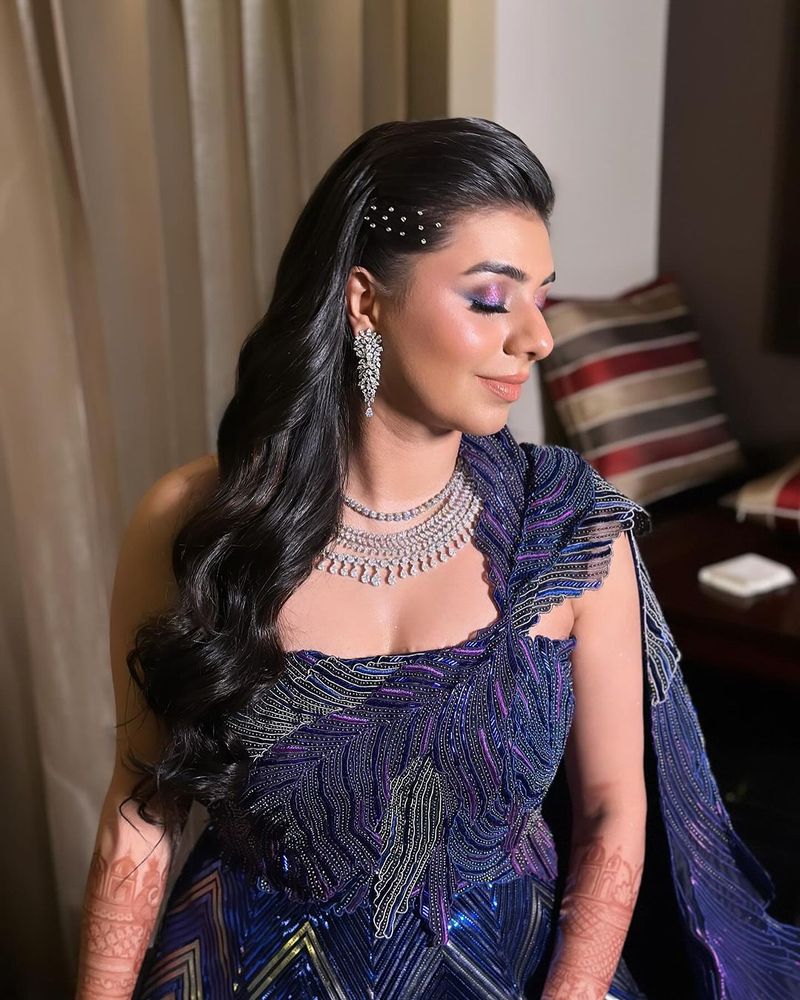
Deep, glossy waves fall loosely over one shoulder while the rest sweeps back off the face. It is a deliberate throwback to old Hollywood glamour, minus the rigid finger waves — softer, warmer and much easier to live in for a whole night of photographs and toasts. It holds its own against a heavily embellished outfit.
Voluminous side curls with a maang tikka
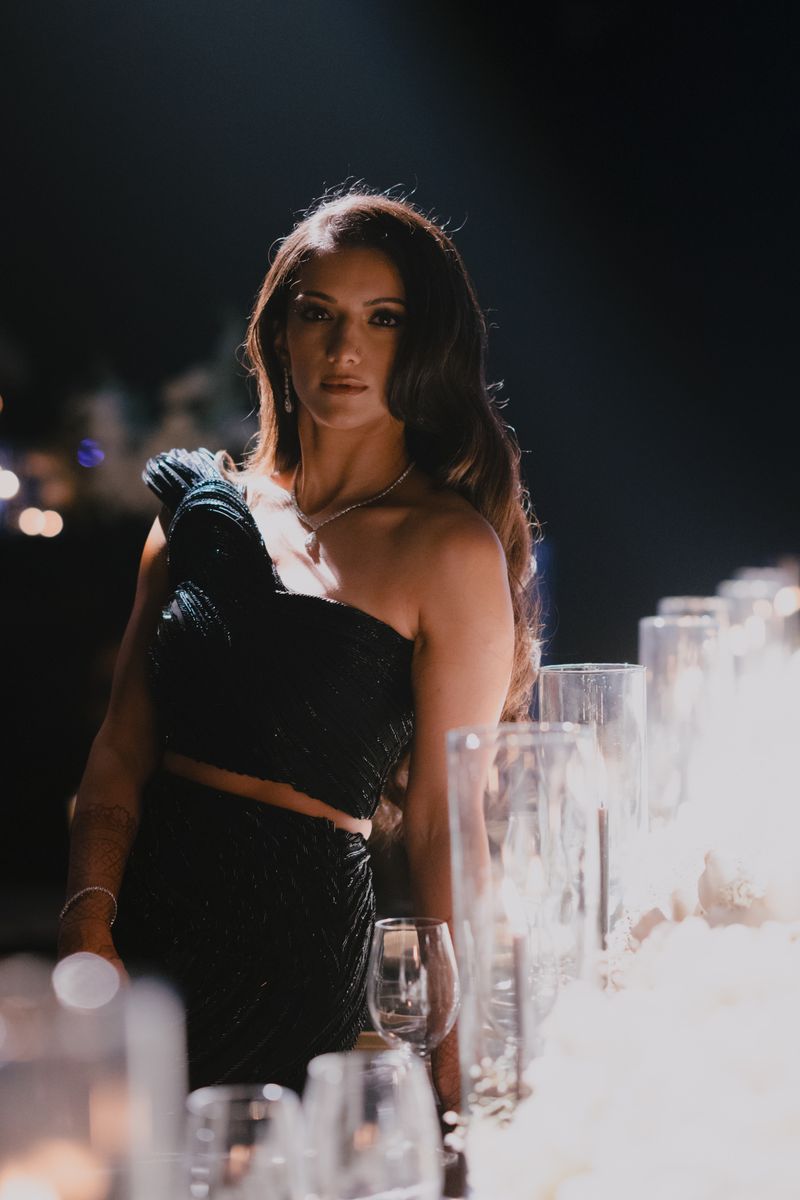
What makes this reception-worthy rather than purely sangeet is the balance: the curls are full and glamorous without being stiff, so they survive hugs and spins without falling flat. Paired with a corset blouse and a fringe lehenga it bridges fusion outfits as easily as traditional ones. If you are doubling a look across functions, see our sangeet ceremony guide for what else carries over.
Soft side-swept curls for lehengas
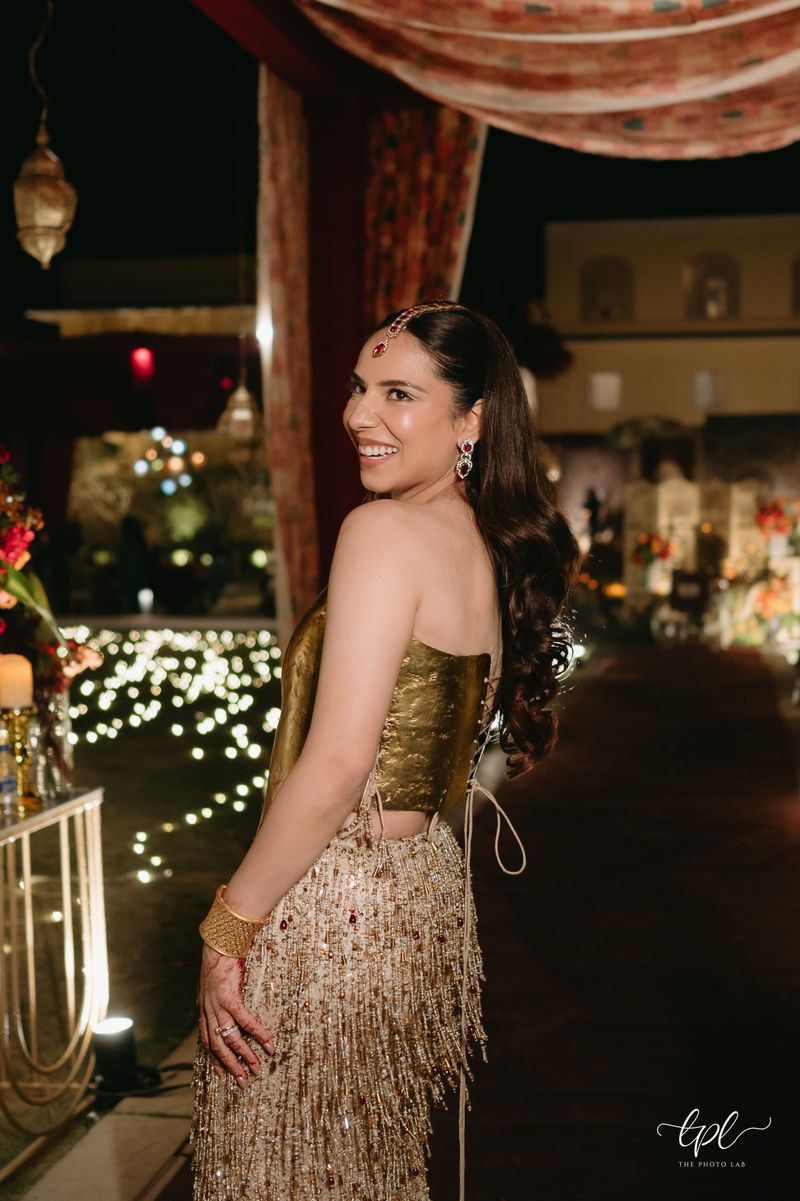
Long hair curled outwards and swept to one side is one of the simplest ways to add volume without an updo. Add a pearl accessory at the parting to lift it from everyday to reception-ready. Brides with long tresses get the most out of this one.
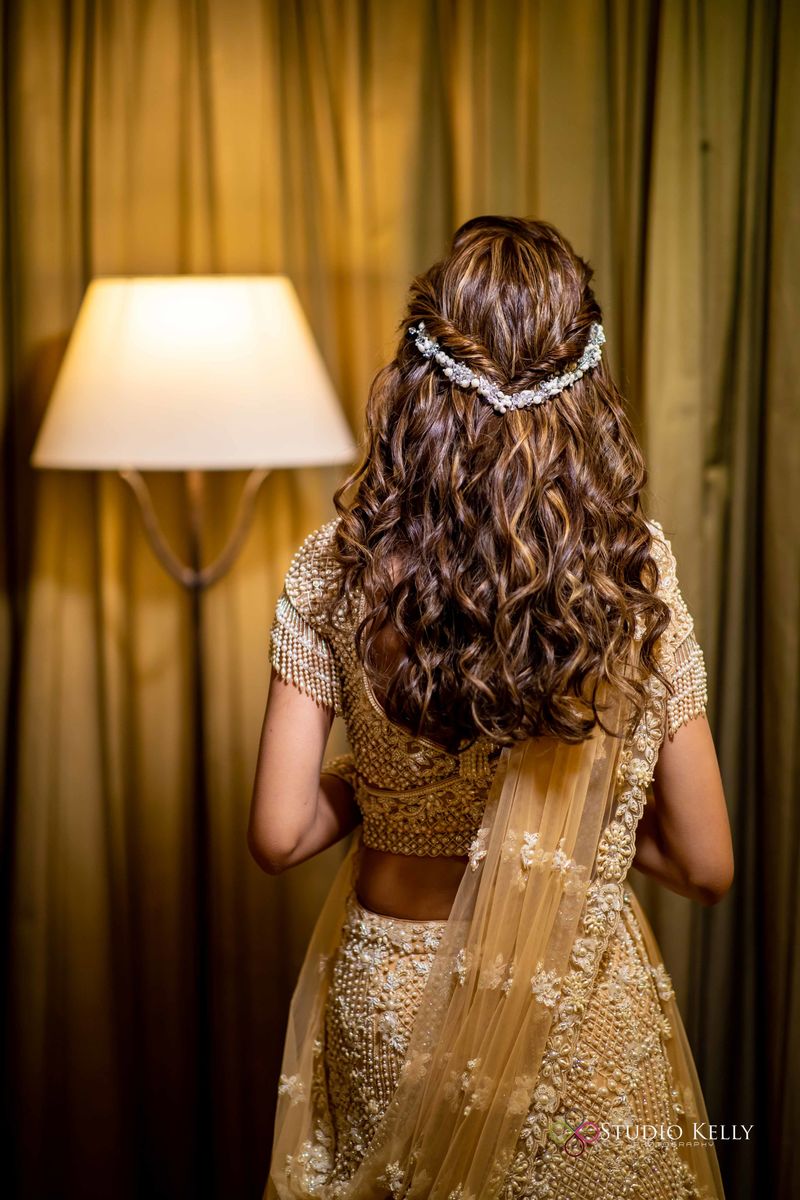
Textured waves with pearl flowers
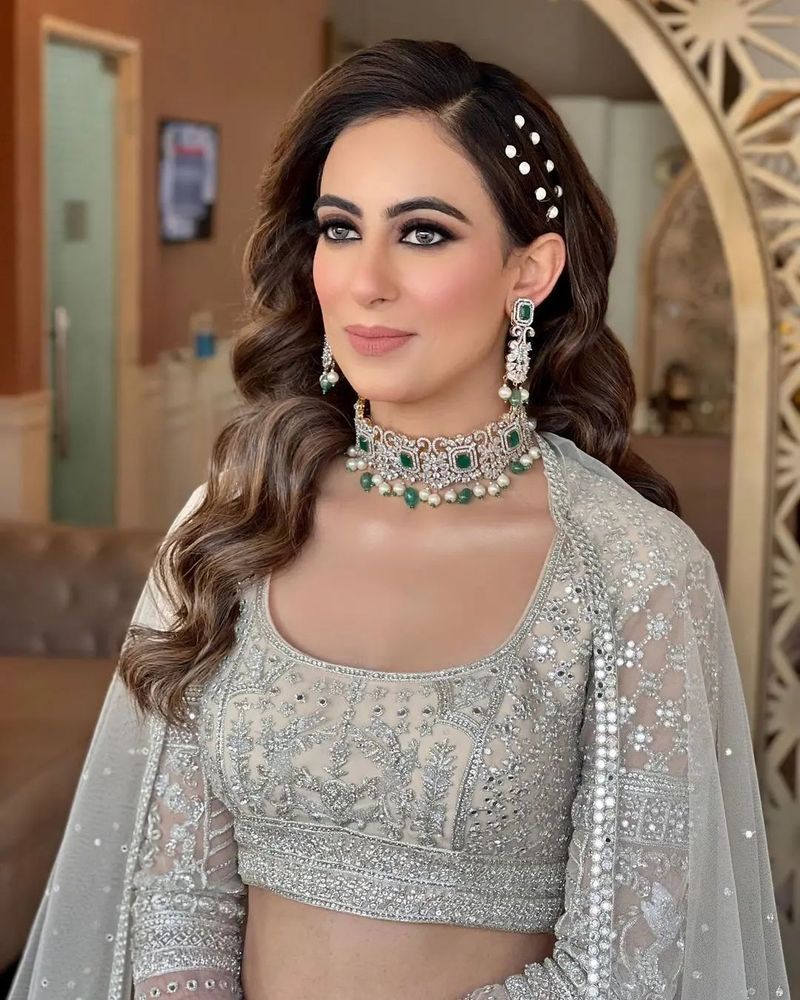
For brides who do not want fresh flowers, pearl flowers are the practical alternative. They hold their shape through a long evening, they do not wilt in humidity, and they photograph as a highlight rather than a blur of colour. Pair them with textured waves rather than perfect curls.
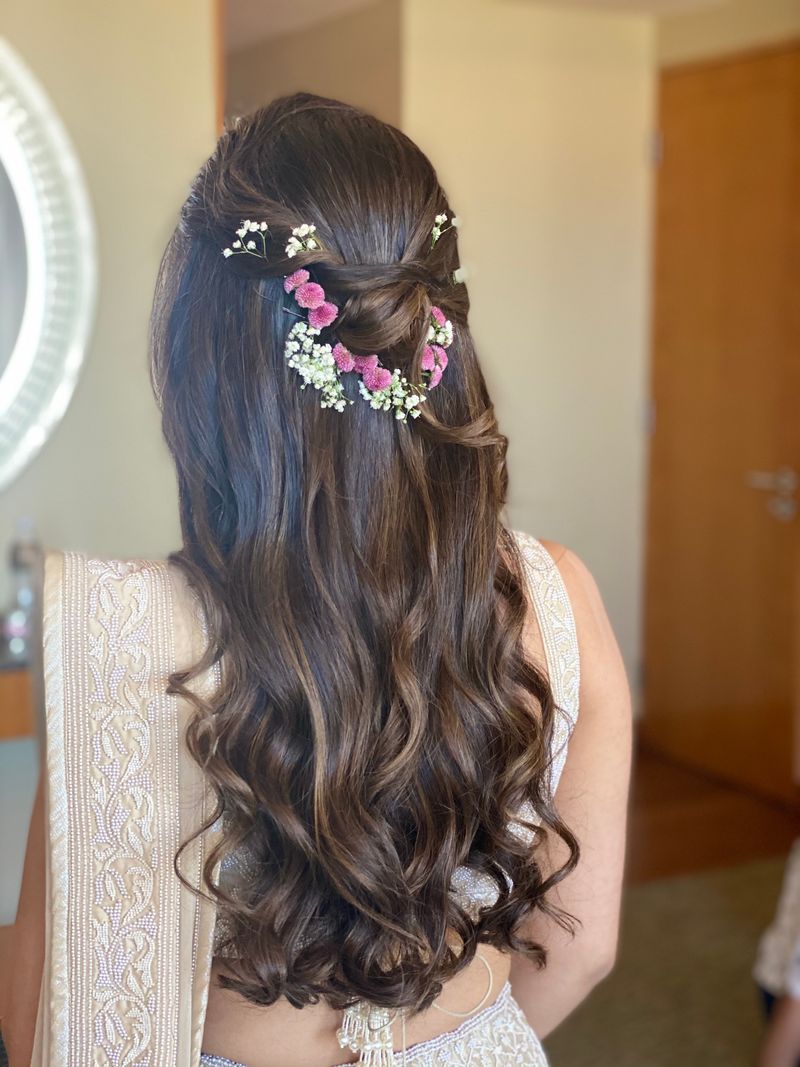
Soft loose curls with minimal flowers
A few small flowers tucked into soft curls is the middle path: more finished than open hair, far less formal than an updo. Keep the flowers small and clustered to one side so they read as a detail instead of a crown.
Waves with no flowers at all
If flowers are not your style, a simple waved finish is enough on its own. This suits minimal brides, second-time brides, and anyone whose outfit already carries a lot of embroidery.
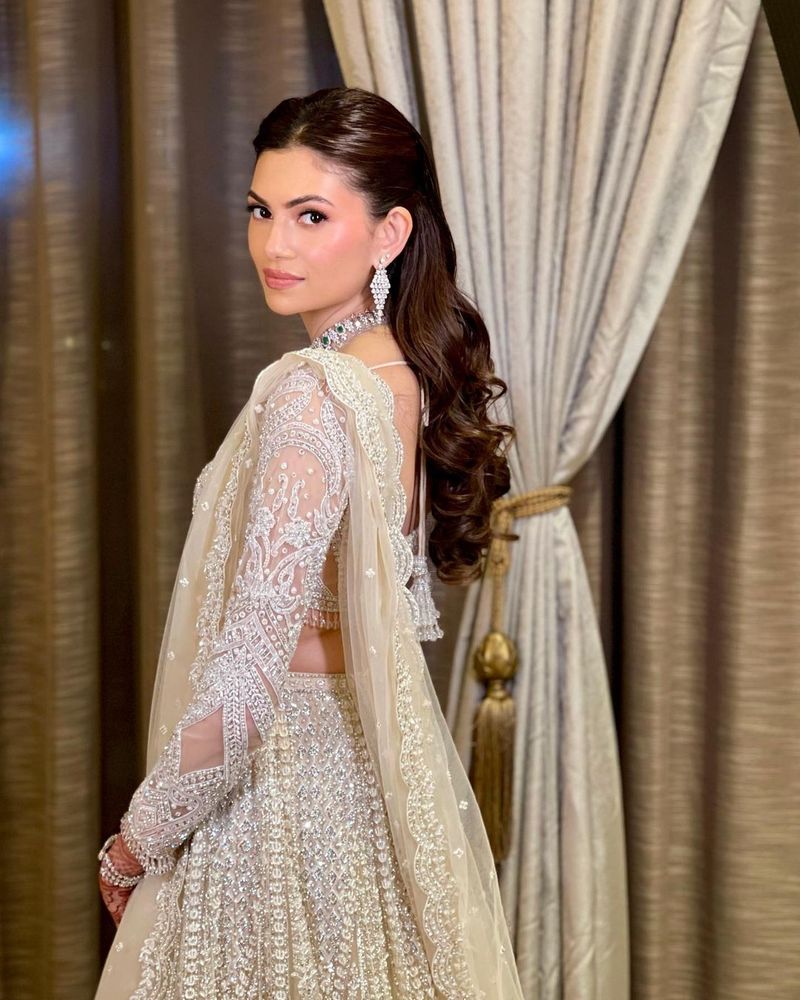
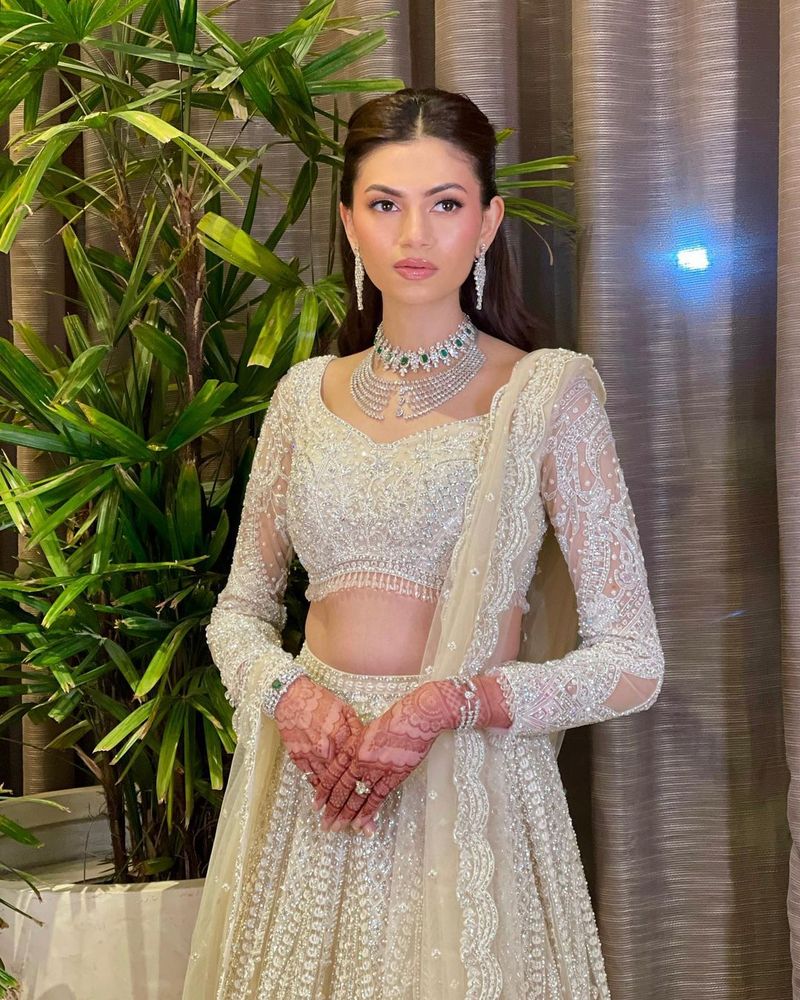
Retro party waves
Swept, glossy and deliberately retro, with no accessory at all. It is a strong pairing for a gown or a sleek saree, and it is one of the few wave styles that still looks intentional after several hours of dancing.
Braids and half-up styles
Braids are having a long run because they hold their shape without looking rigid, and half-up styles give you the face-framing of open hair with most of the durability of an updo.
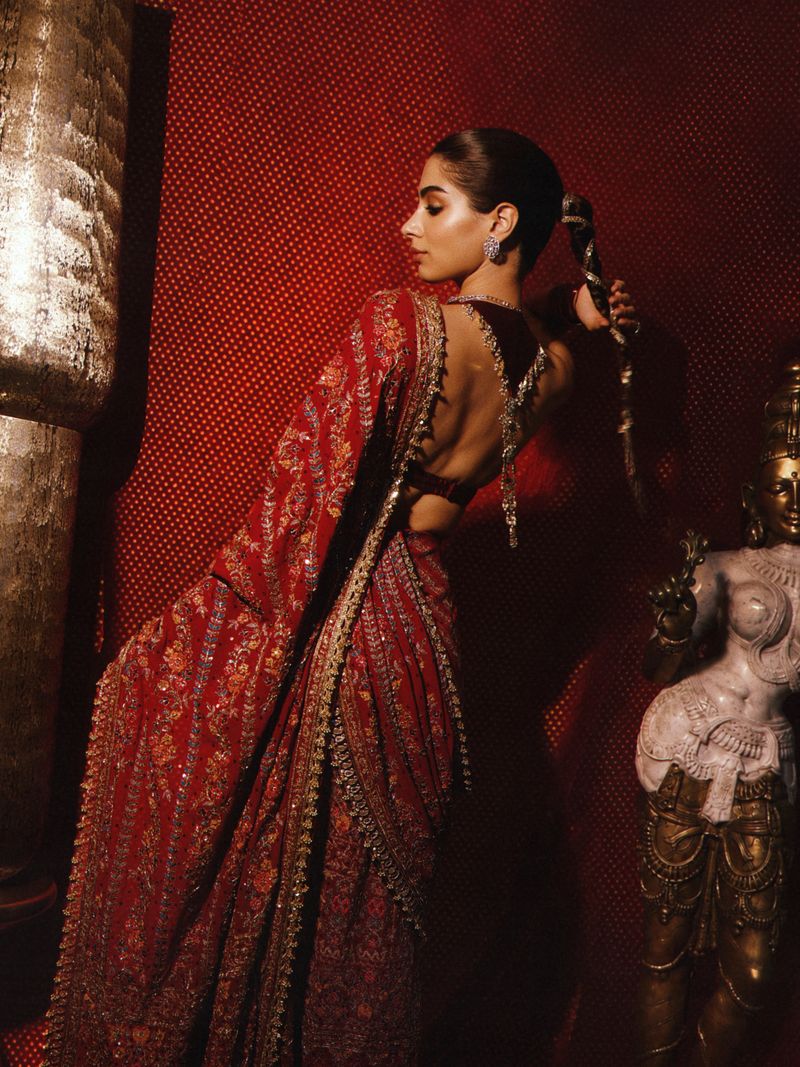
The slender gota braid
A slim braid threaded with gota brings texture and shine without the weight of a full floral arrangement. It sits close to the head, so it photographs cleanly from behind — which matters more than most brides expect, since the walk-in and the vidai are both shot from the back.
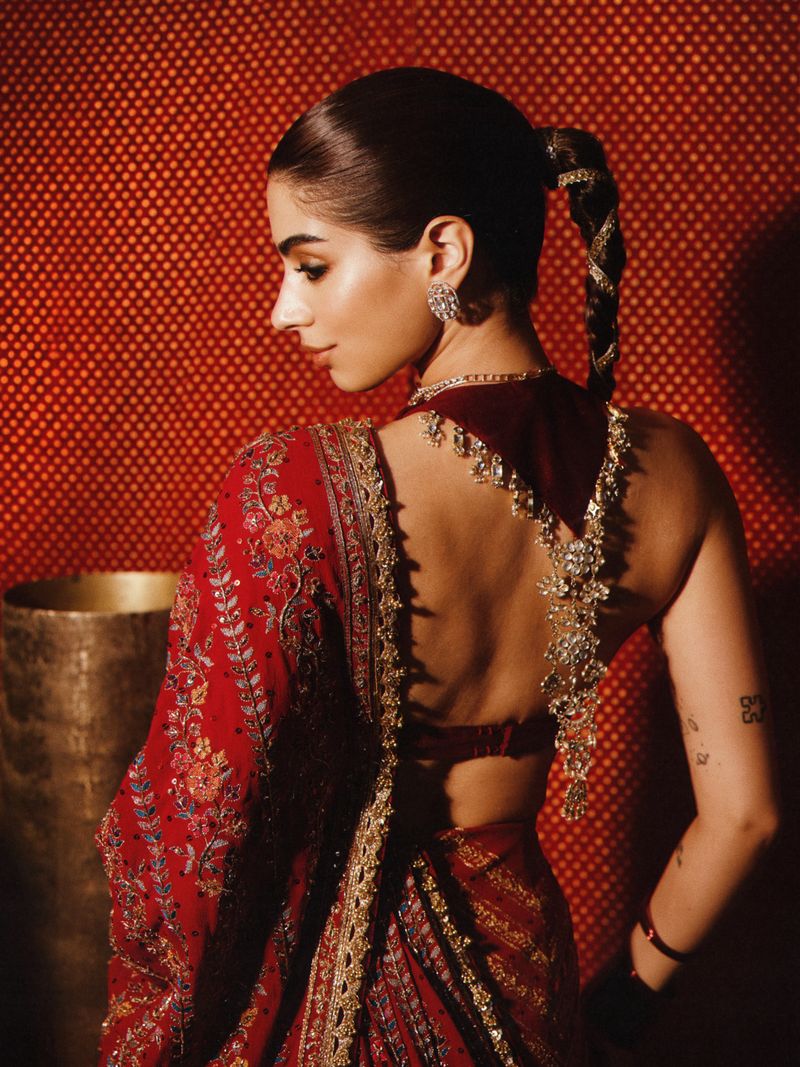
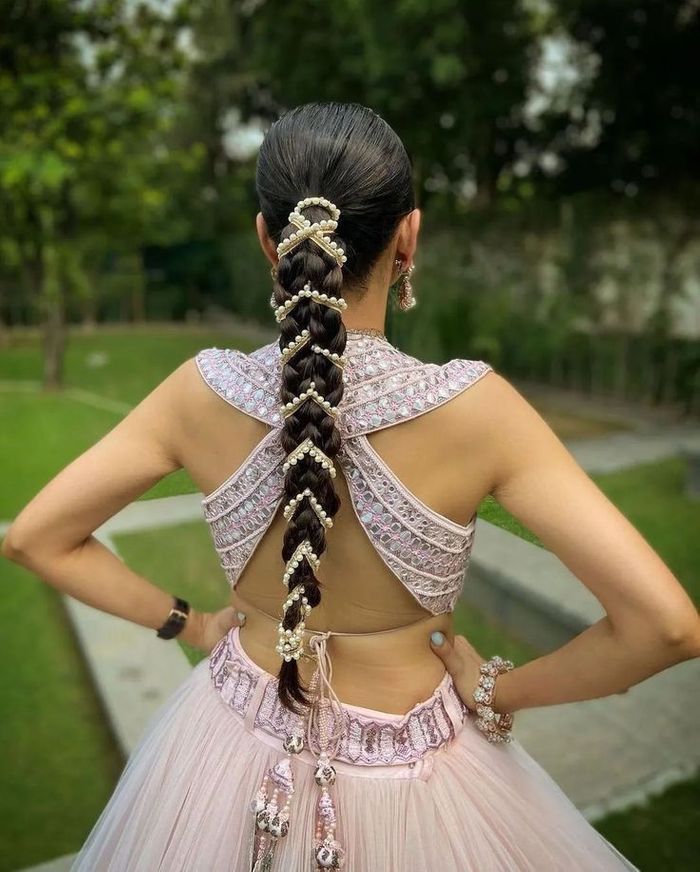
The sleek pearl braid
If typical reception styles feel too traditional, a sleek pearl braid is the modern alternative. It works especially well with an Indo-Western silhouette such as a jumpsuit or a co-ord set, where a heavy updo would look out of place.
The romantic half braid
For brides who want the softness of half-up hair but still love braids, this mixes the two: a braided section across the crown with the rest left loose and waved. It photographs well from the front and the side, which covers most of a reception.
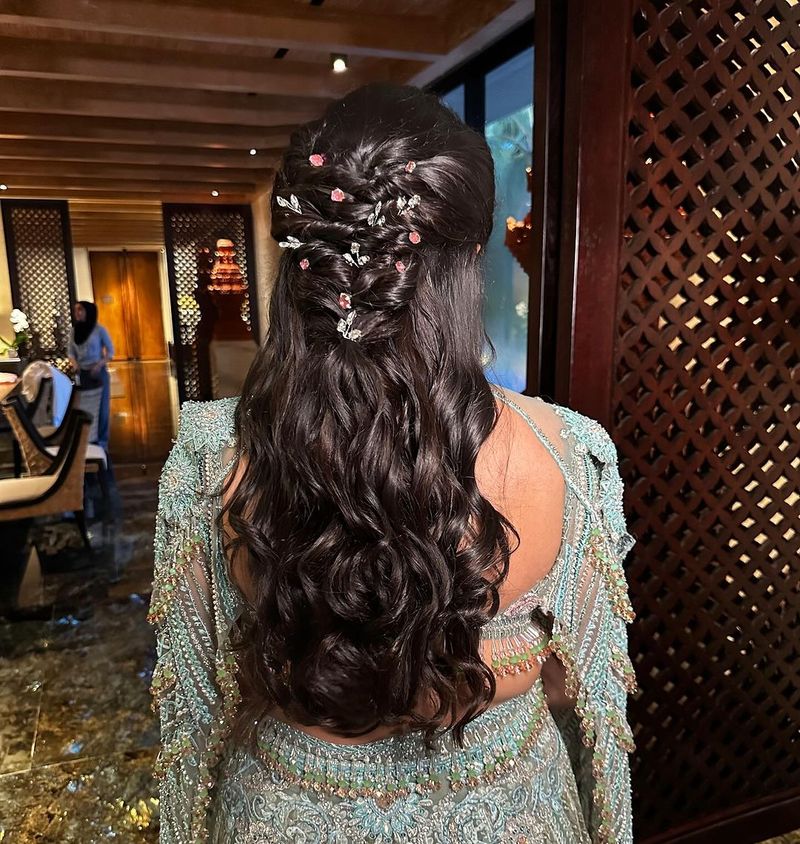
Half up and half down
The classic compromise, and still the easiest sell to a stylist: pinned at the crown so it stays put, loose below so it moves. It flatters long hair in particular because it shows off the length instead of hiding it in a bun.
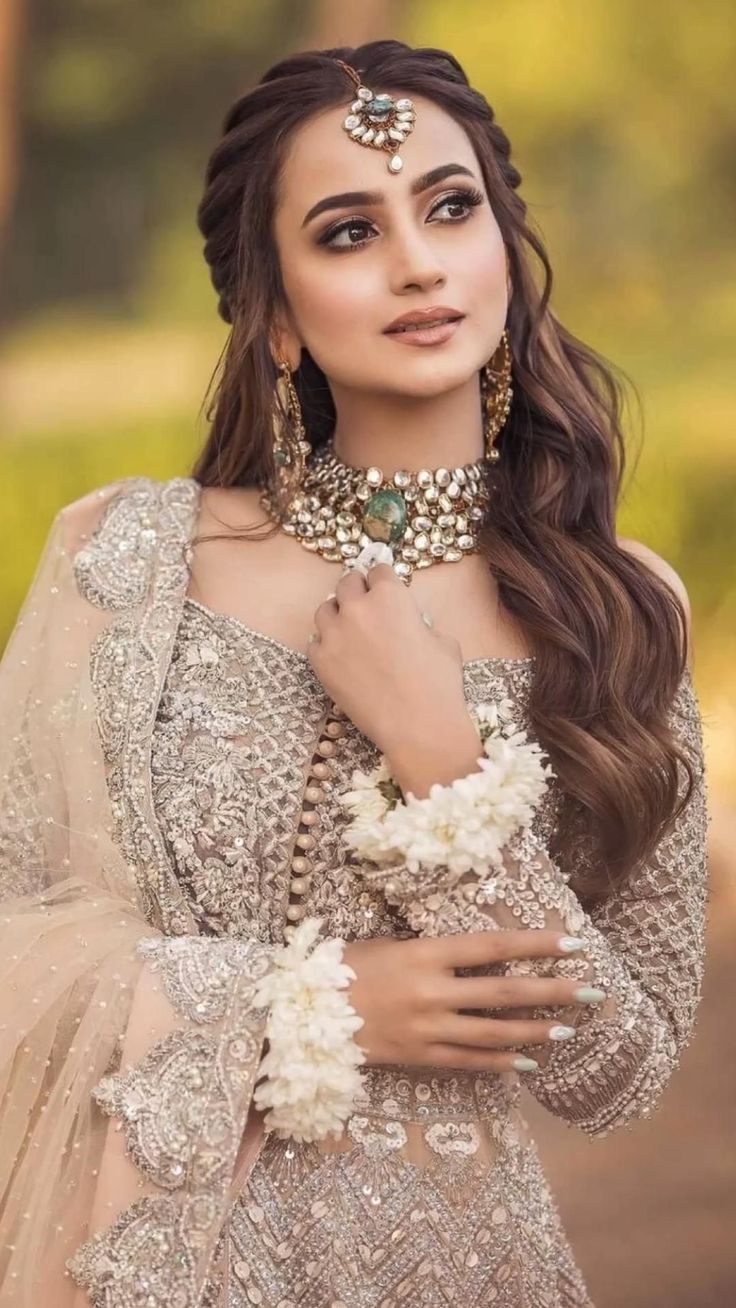
Bow accents
Bows have stayed in bridal hair for several seasons now, and they work best when there is one clear bow rather than several small ones. Place it at the base of a half-up style or at the back of a bun, and keep the rest of the hair smooth.
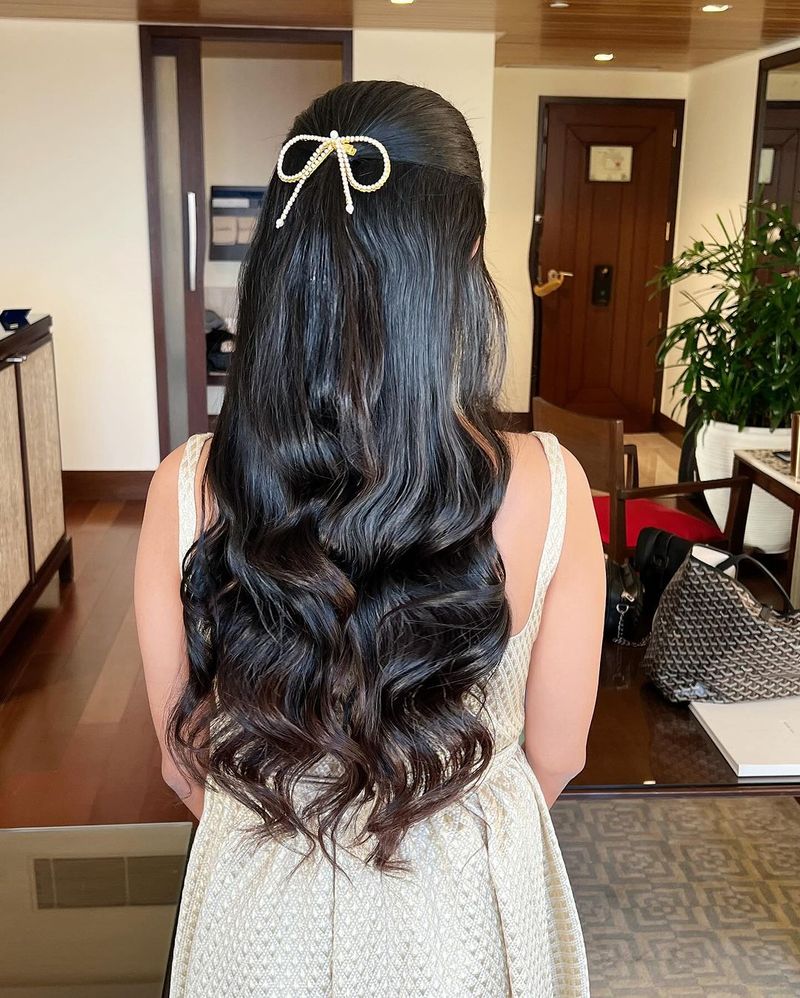
The high half-pony with textured waves
A high half ponytail gives the lift of an updo at the crown while textured waves keep the rest soft. It is a useful middle ground for brides who want volume in photographs without committing to a full bun.
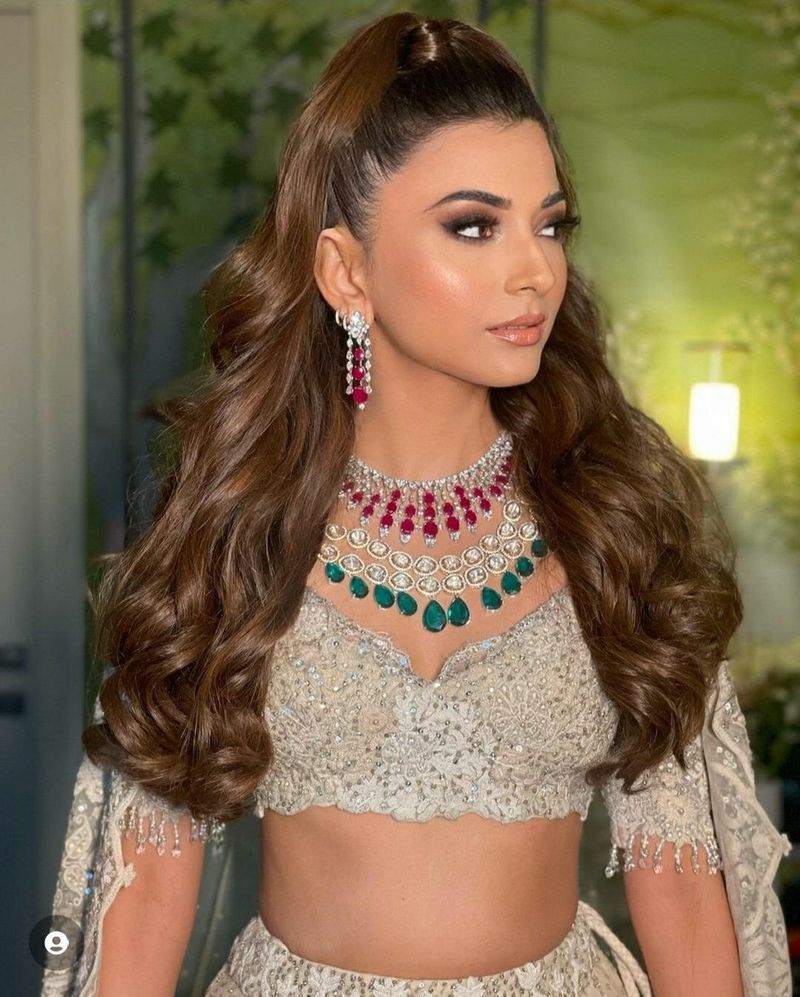
Buns, updos and textured ponytails
These are the styles built for the second half of the night, when the photographs move to the dance floor and the outfit changes get shorter.
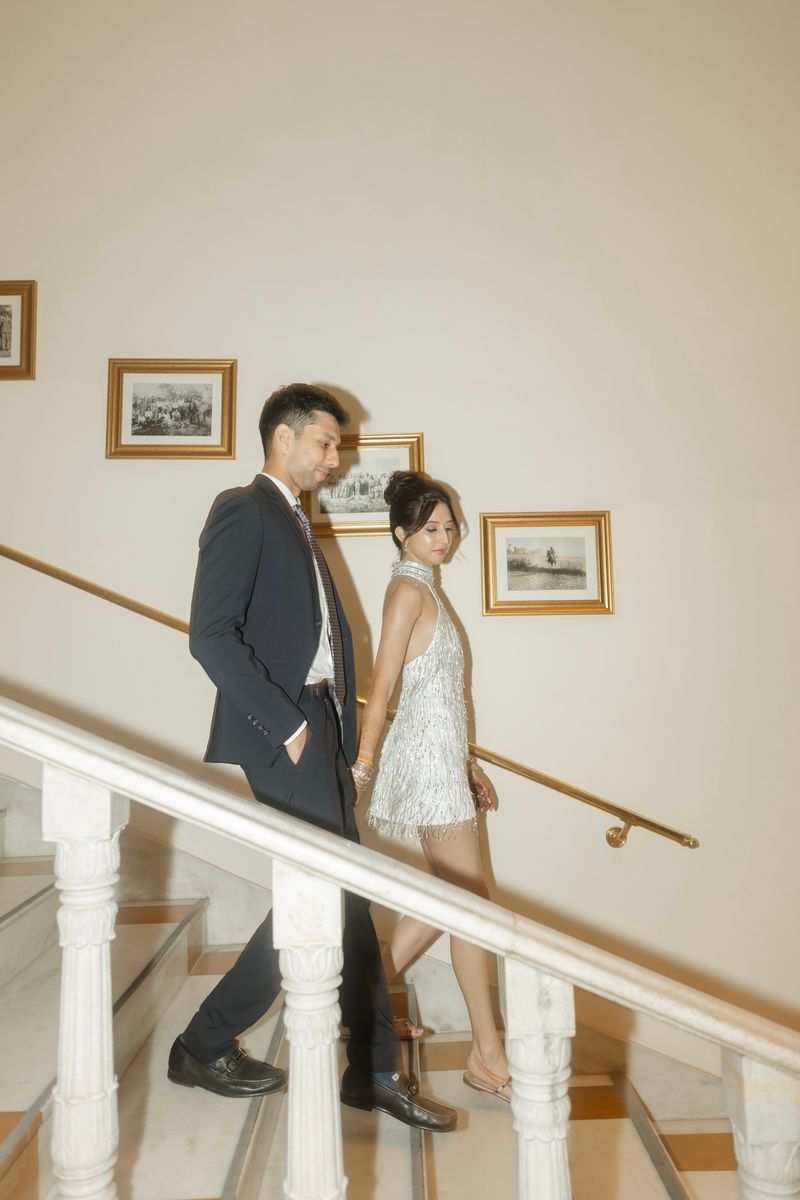
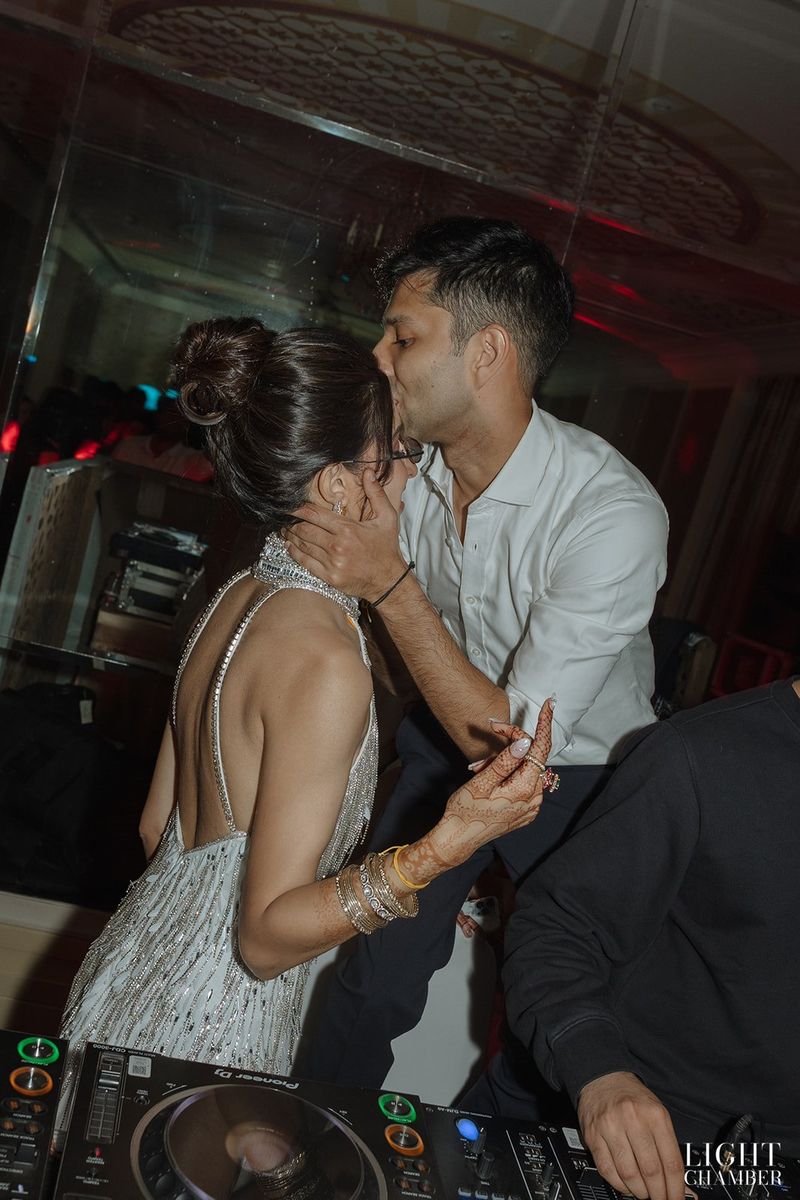
The sleek high bun for the after-party
A high, rounded bun smooths hair back from the face and leaves the neck and shoulders completely bare. That makes it the natural partner for a halter-neck dress or anything backless when you change for the after-party. It also holds up to dancing better than almost anything else on this list.
The twisted mogra bun
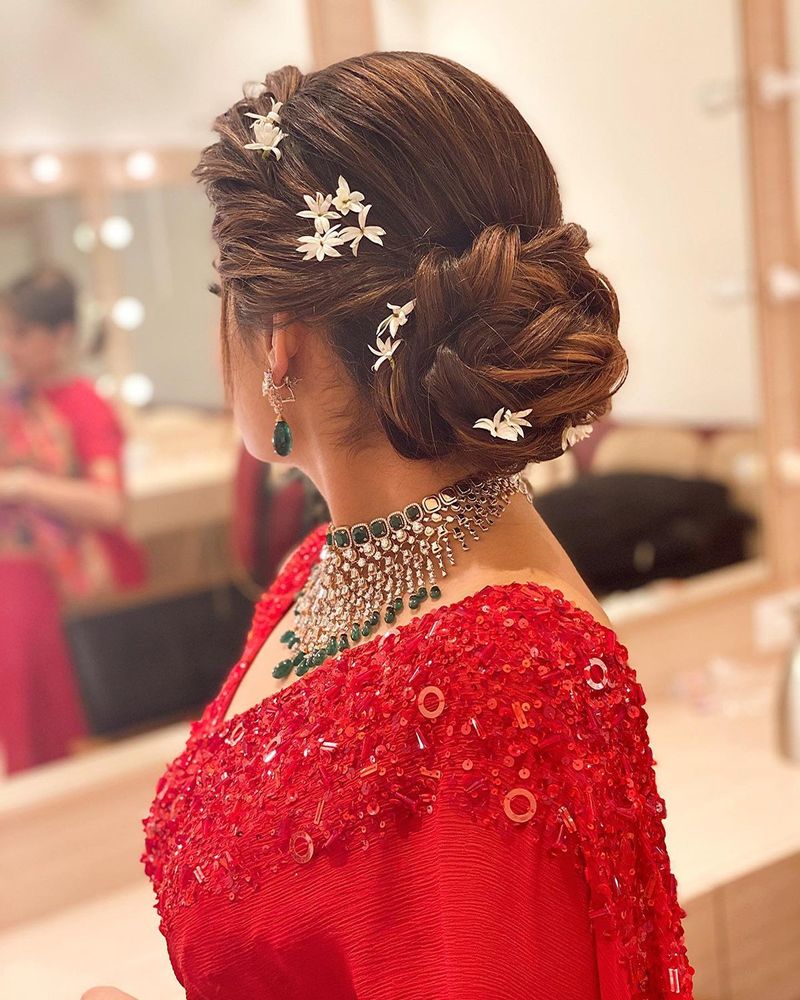
Traditional, but with a less usual shape than the standard reception bun, finished with mogra. If you are wearing a saree for your reception, this style completes that look more naturally than any modern updo.
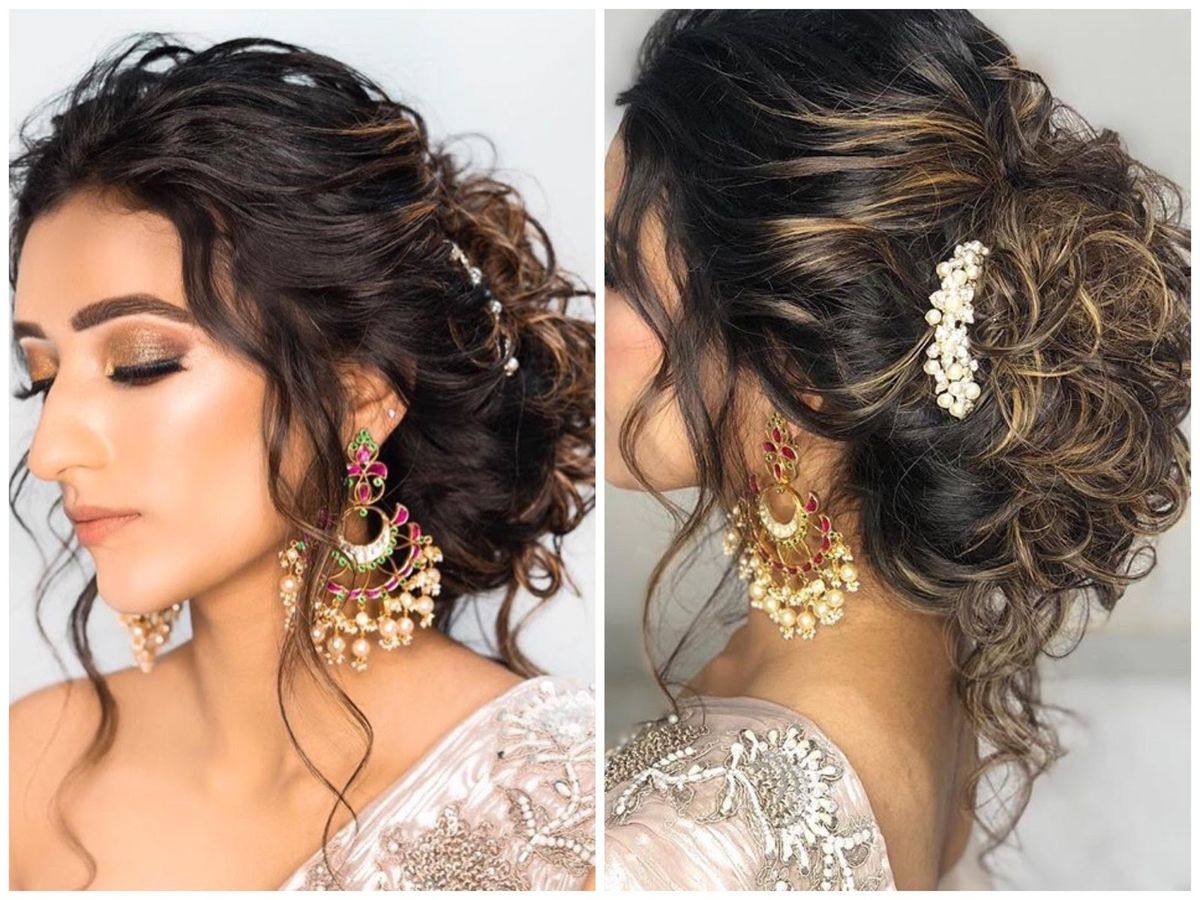
The chic messy updo
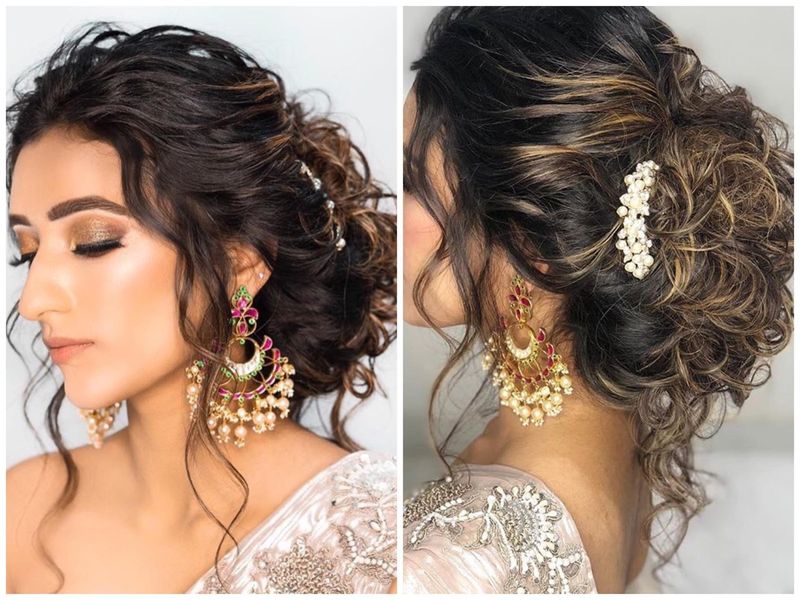
A deliberately undone updo with delicate curls left loose around the face. Messy buns create their own kind of statement, and this one suits an off-shoulder reception outfit especially well. Small sparkling pins tucked through the curls keep it from looking unfinished.
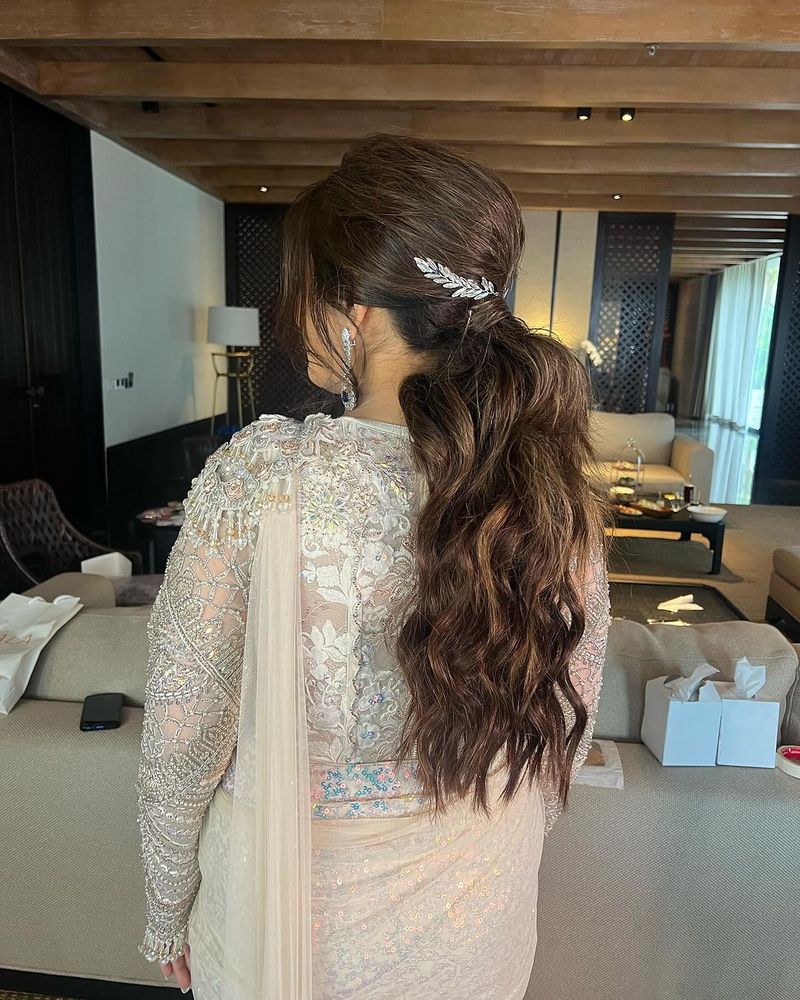
The messy textured ponytail
Nothing reads as effortlessly stylish as a textured ponytail. It works with a lehenga and with Indo-Western outfits, which makes it one of the more versatile options if your reception wardrobe is still undecided.
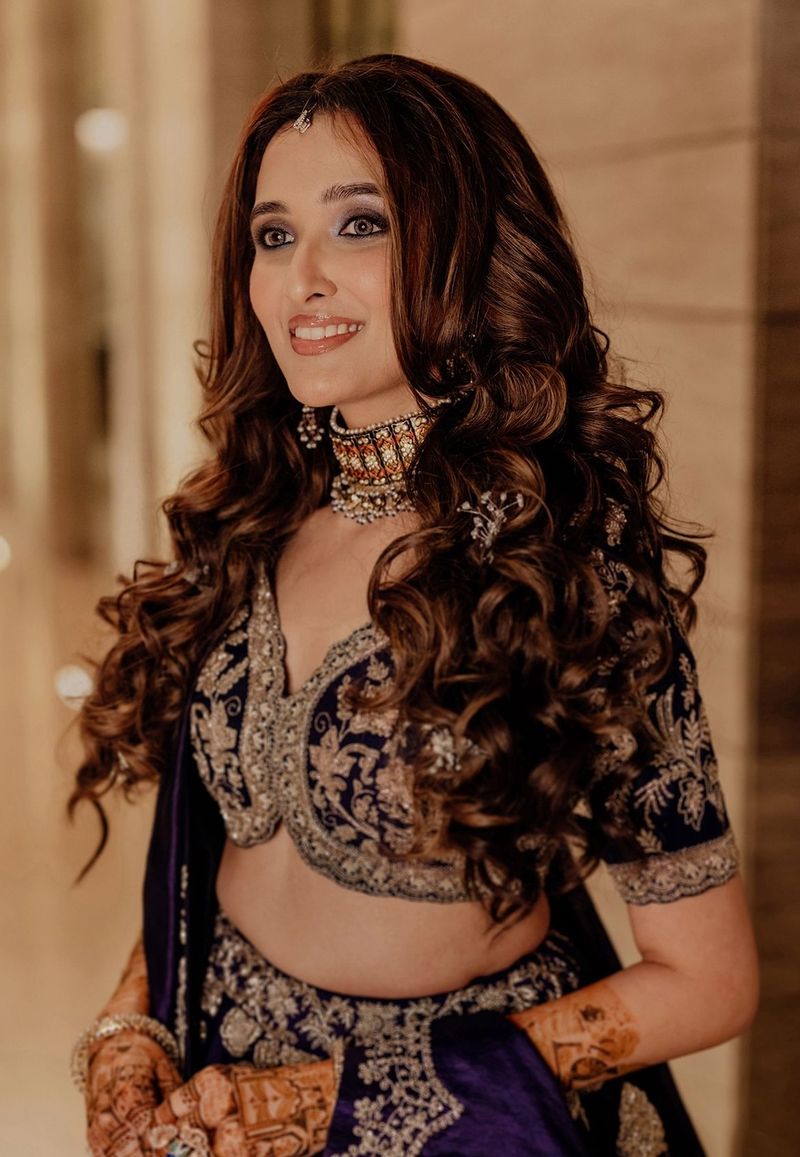
Curls worn loose
If your wedding-day look was a traditional bun, letting your hair down for the reception is its own kind of transformation. Add volume with outward curls and keep the finish simple. Best suited to long, thick hair that holds a curl.
Accessories that carry the look
One considered accessory usually does more than three. These are the pieces showing up most in reception photographs.
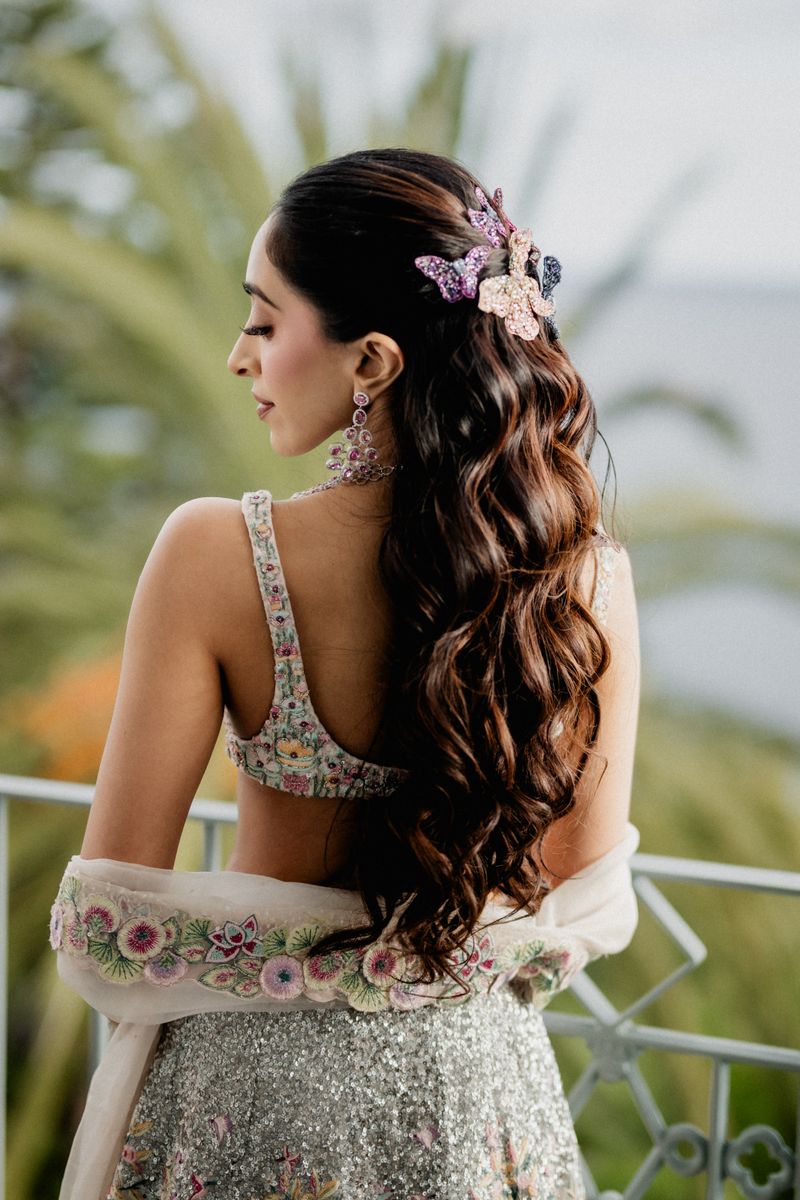
Butterfly clips
A cluster of pastel, crystal-dusted butterfly clips pinned along the crown, with the rest of the hair falling in glossy curls, is a playful alternative to bridal florals. It is whimsical without losing the polish a sequinned lehenga needs.
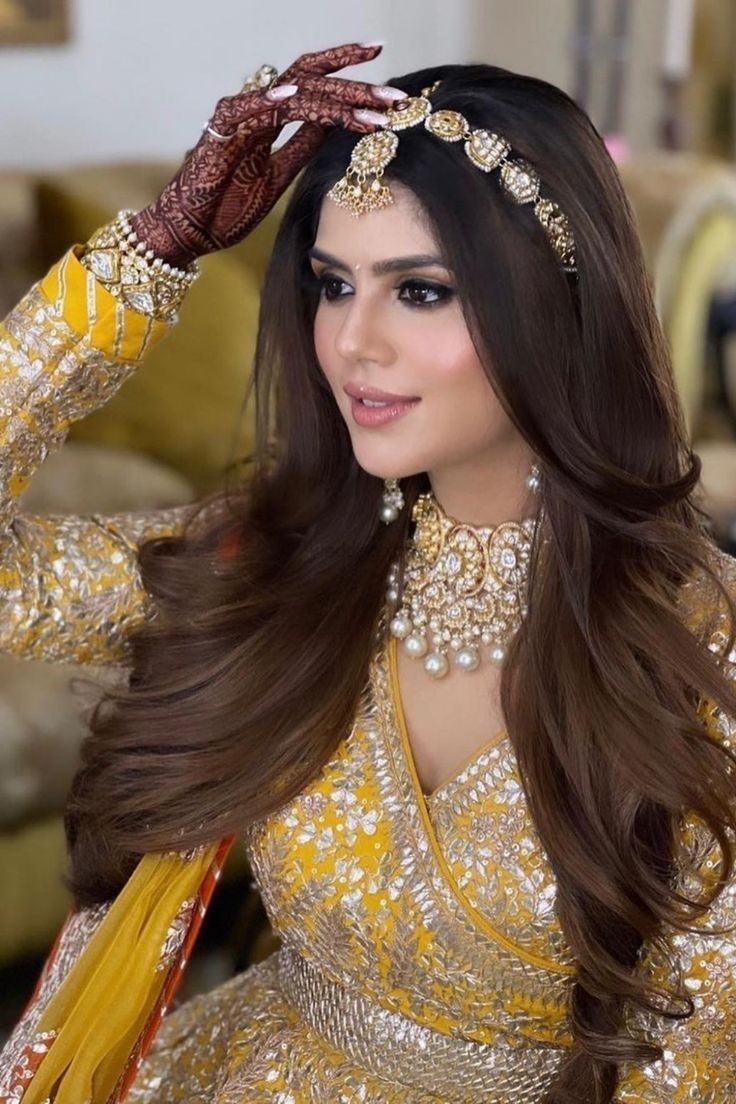
The diamond sispatti band
A sispatti worn with open hair adds a jewelled line across the parting without pulling the hair back. It is a good compromise for brides who want open hair but still want the formality of a hair ornament.
A little sparkle
Embellished pins and small crystal details catch reception lighting in a way that flowers cannot. Keep them concentrated in one area so they read as a highlight rather than scattering light across the whole hairstyle.
Making reception hair last the night
- Do a full trial with your outfit and dupatta. A style can look perfect in a chair and collapse the moment a dupatta is pinned over it.
- Ask for structure, not just spray. Pins, a proper base and a light set hold far better than heavy lacquer, which flattens under warm lights.
- Plan for humidity. If your reception is outdoors or in a coastal city, sleek styles beat curls almost every time.
- Carry a small repair kit. A few matching pins, a fine comb and blotting paper fix more than a full re-style can.
- Tell your photographer the plan. If you are changing your hairstyle between the entry and the after-party, we would rather know in advance so both versions are covered properly.
Frequently asked questions
Should I wear my hair up or down for a reception?
Up if your outfit is backless, halter or off-shoulder, or if you plan to dance for hours. Down or half-up if your outfit has a high or heavily embroidered neckline, or if your hair holds a curl well.
How long does a reception hairstyle take to set?
Allow 45 to 75 minutes for a sleek updo or a full set of waves, plus extra time if accessories such as a sispatti or a long dupatta pinning are involved. Convertible styles cost a short restyle later rather than a second full appointment.
Should my hairstyle match my jewellery?
Match the weight, not the design. Heavy jewellery needs calm hair. If your jewellery is minimal, hair accessories can carry more of the look. For outfit pairings that work alongside these styles, see our notes on bandhani bridal outfits and paisley bridal fashion.
Planning your reception look? Talk to us — after hundreds of Indian weddings, we know which hairstyles hold their shape from the entry to the last dance.