Bridal Jewellery Trends 2026-27: The Moodboard to Bookmark
The full matching bridal set is no longer the default. Through 2026 and into 2027, brides are treating jewellery like a wardrobe rather than a single purchase: mixing eras, mixing metals, restyling pieces that already exist in the family, and choosing one or two strong ideas instead of a complete coordinated parure.
What follows is the moodboard we are seeing most often at weddings, with notes on how each trend behaves in photographs and on the body over a long function.
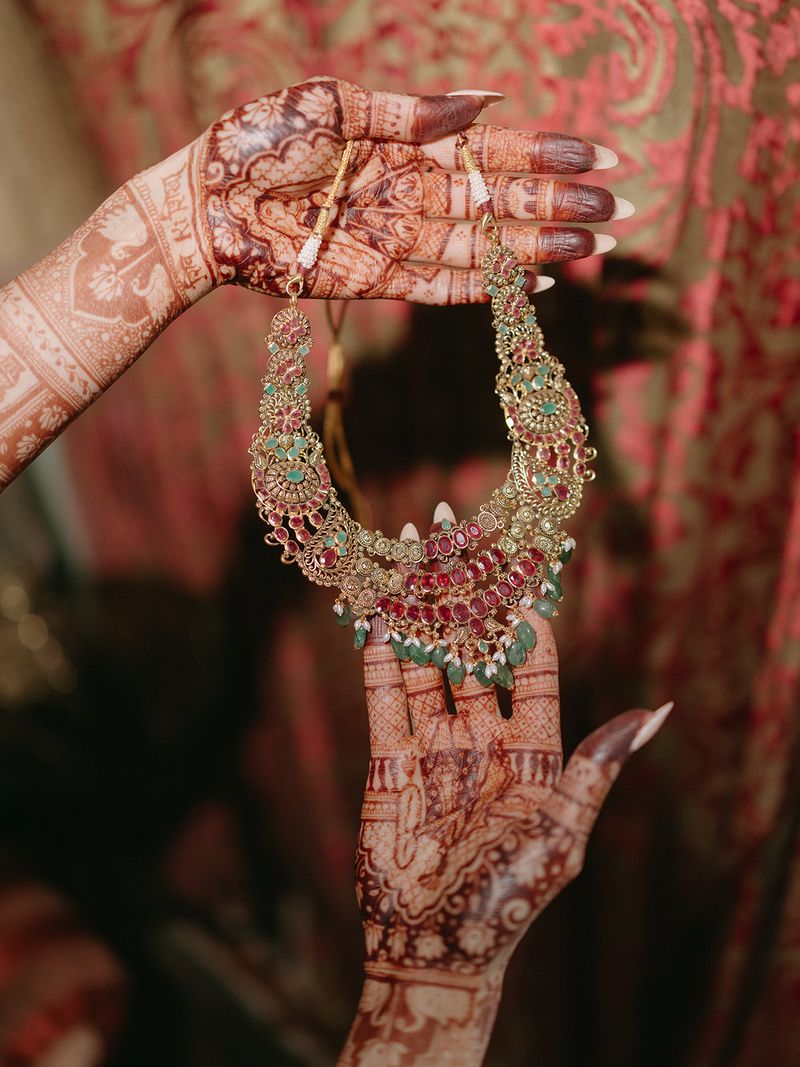
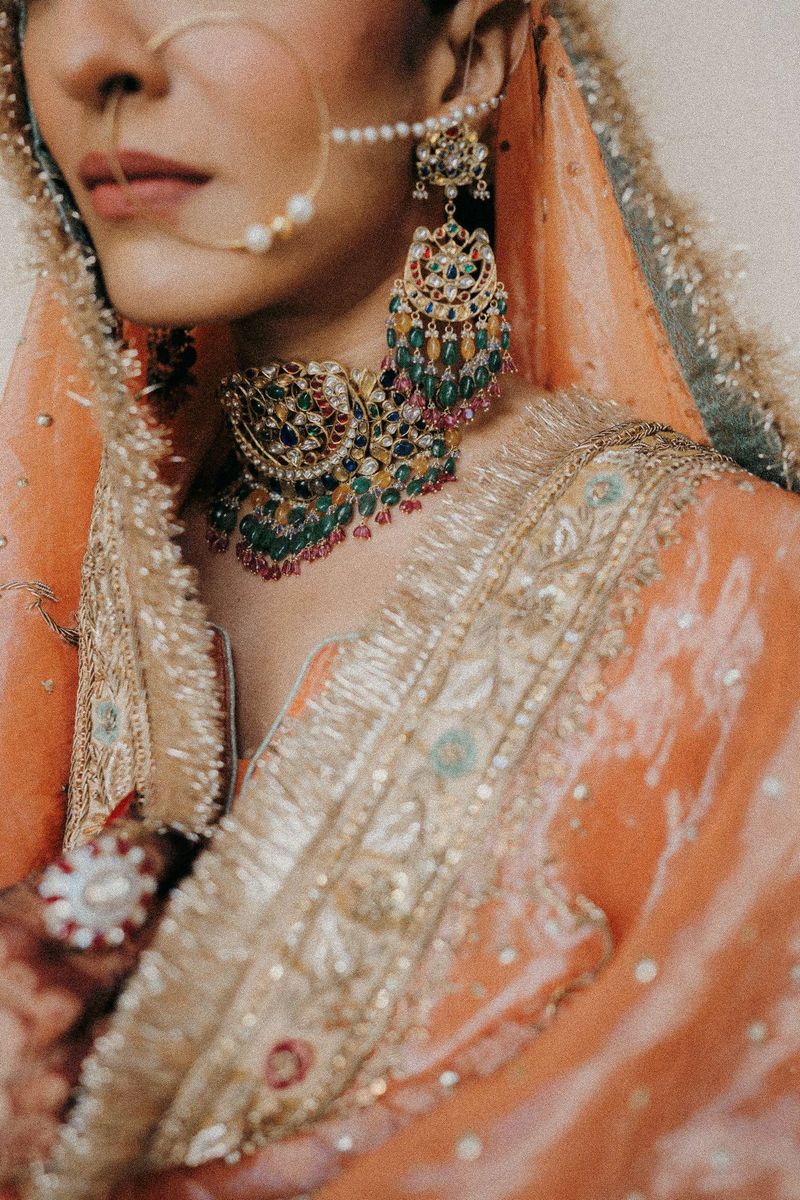
Emerald and ruby layering is the new colour
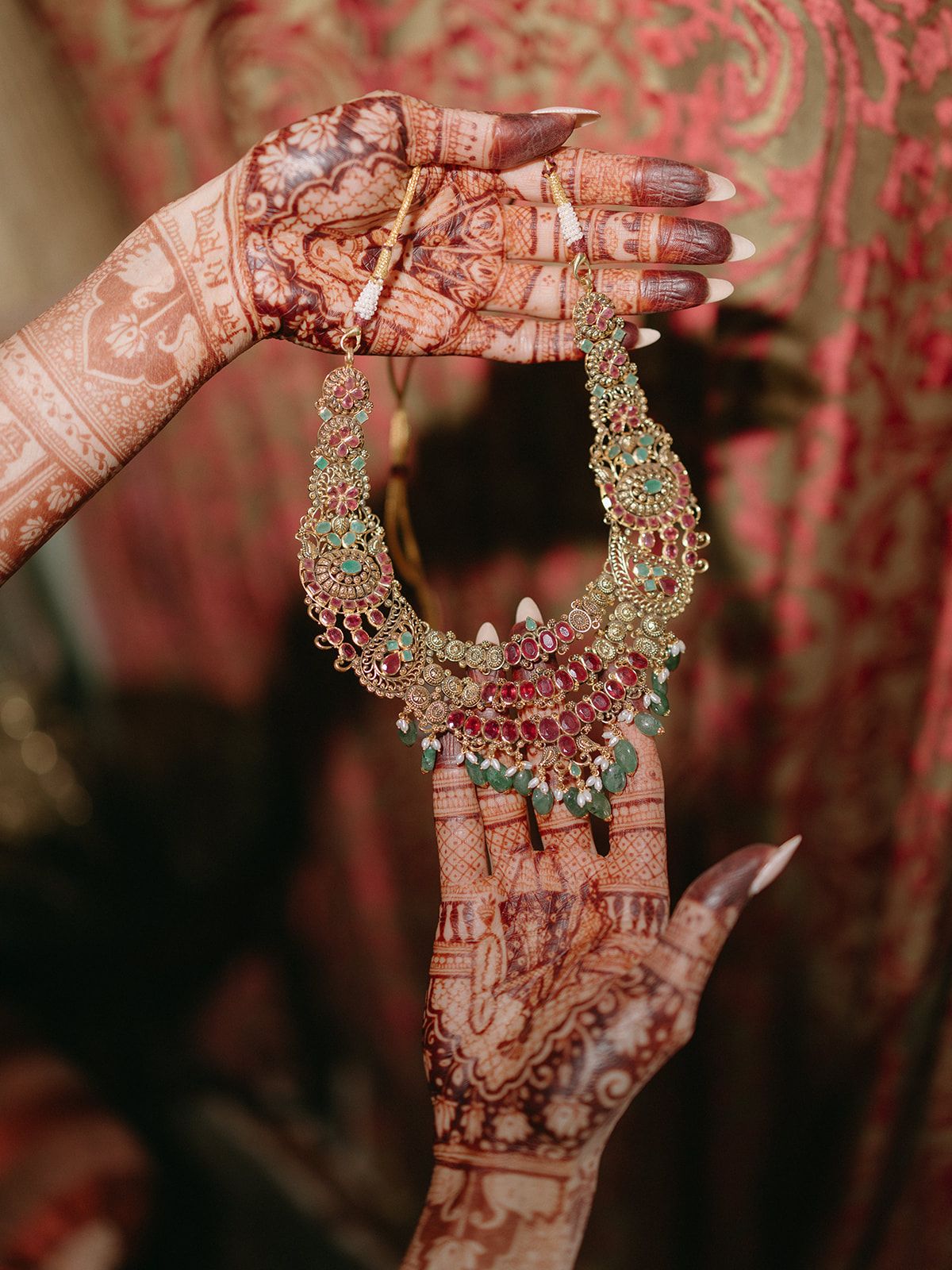
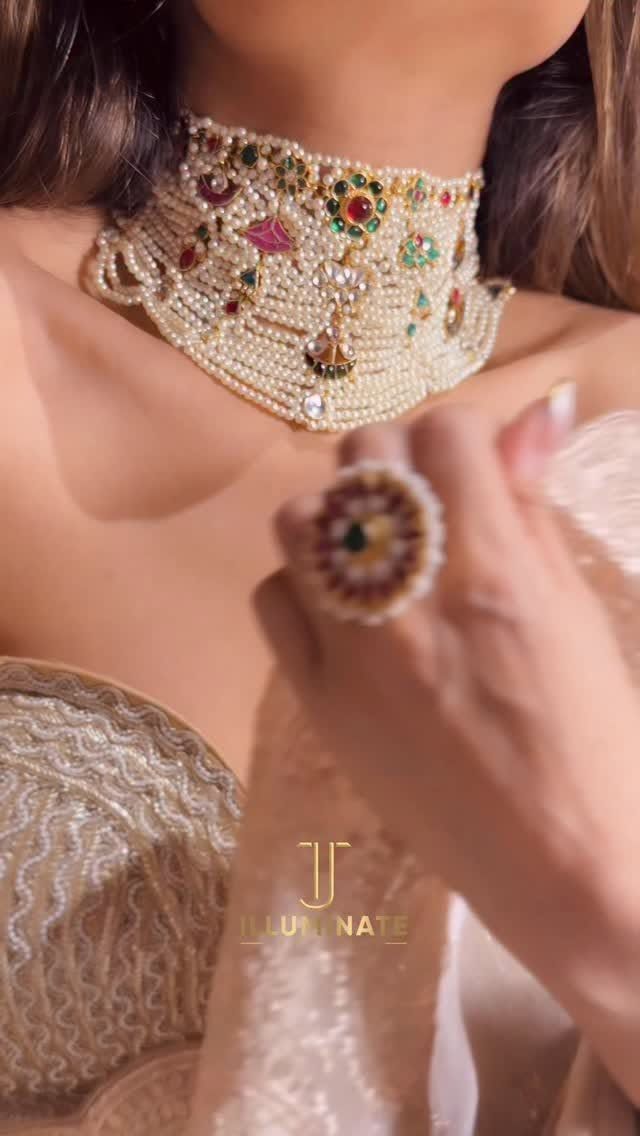
Emeralds and rubies have stepped well beyond the occasional statement necklace. Brides are layering them with diamonds, pearls and traditional gold so the colour reads as part of the composition rather than a single accent. A choker, a longer emerald strand and matching earrings is one route; mixing emeralds or rubies into an existing kundan or polki set is the more personal one.
From a photography point of view, this is the trend that rewards colour most. Green and red stones separate beautifully from gold in warm reception light, which is why layered coloured stones look richer on camera than a single large diamond piece.
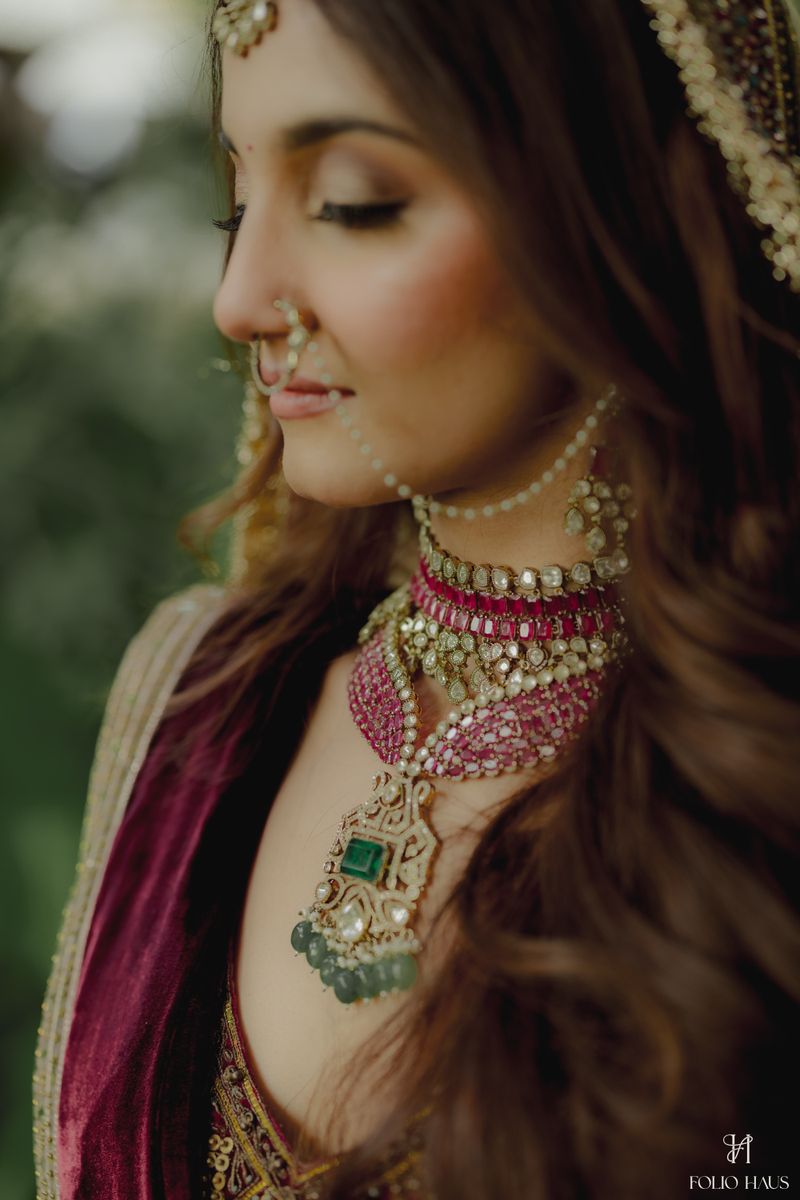
Heirloom remixing
Heirloom remixing means taking your mother's or grandmother's jewellery and styling it with completely new pieces, instead of wearing the entire inherited set together. A single old necklace against a modern earring, or an heirloom maang tikka with a contemporary choker, keeps the emotional weight of the piece while removing the dated feeling of a full matched set.
Two practical notes. First, have old pieces checked and restrung before the wedding — clasps and threads that have sat in a locker for years fail at the worst possible moment. Second, if a piece is heavy, wear it for the ceremony and switch to something lighter for the reception rather than enduring it all night.
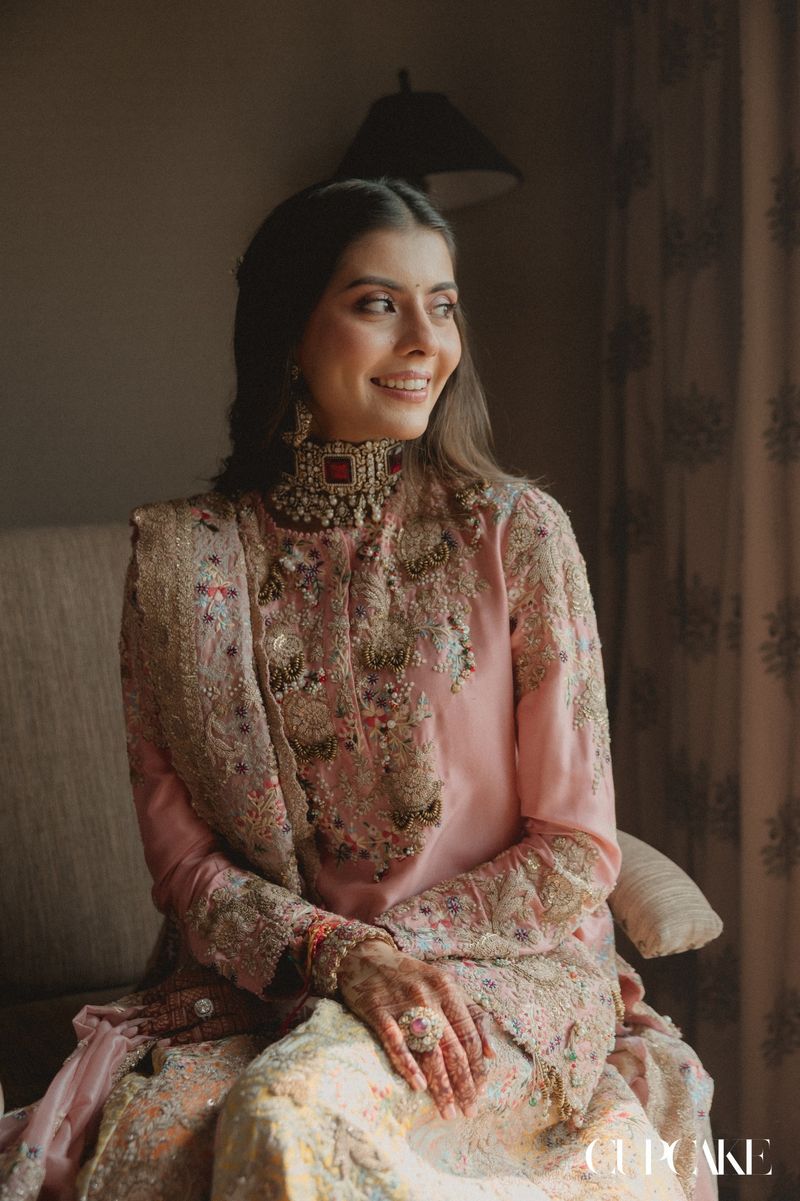
Chandi jewellery is the cooler choice
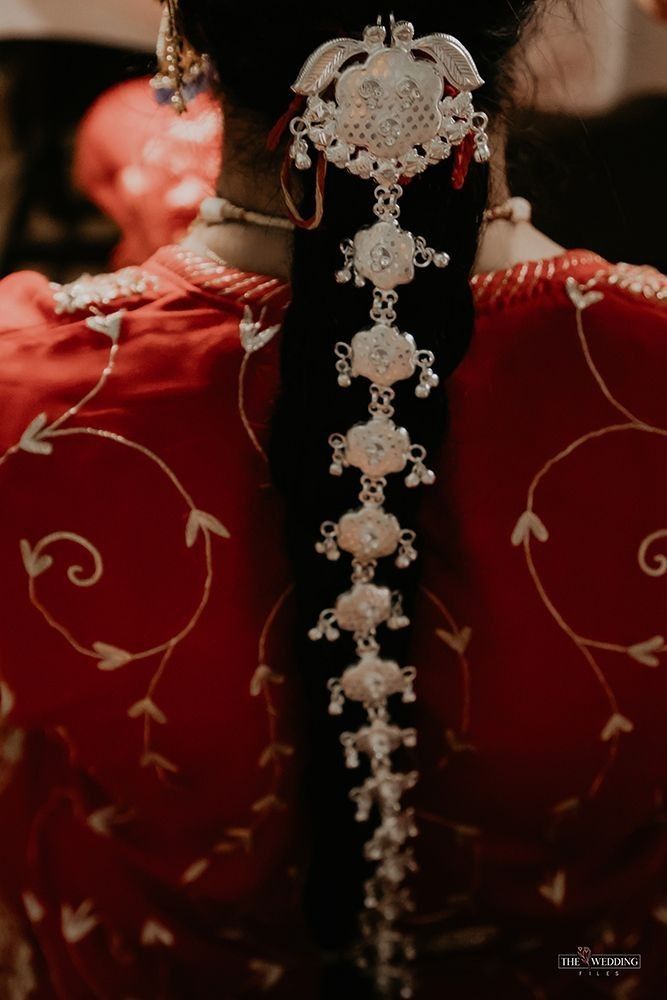
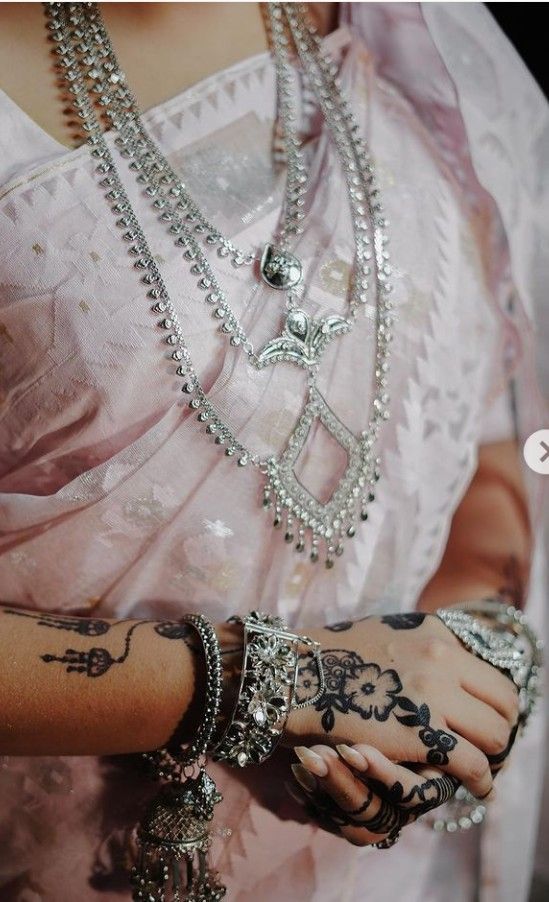
Gold has held a bridal monopoly for long enough. Oxidised and chunky silver, temple-inspired motifs and handcrafted silver pieces bring a more unconventional edge, and they suit haldi, mehendi and intimate celebrations better than a heavy gold set does. Silver hair jewels work particularly well with bright textiles and stronger makeup, because the contrast does the styling for you.
Silver also behaves differently in photographs: it reflects cooler light, which can look stunning outdoors in daylight and slightly dull indoors under warm tungsten. If your function is in a hall at night, ask your photographer to check how the pieces read under the actual lighting.
Shoulder necklaces are the new statement piece
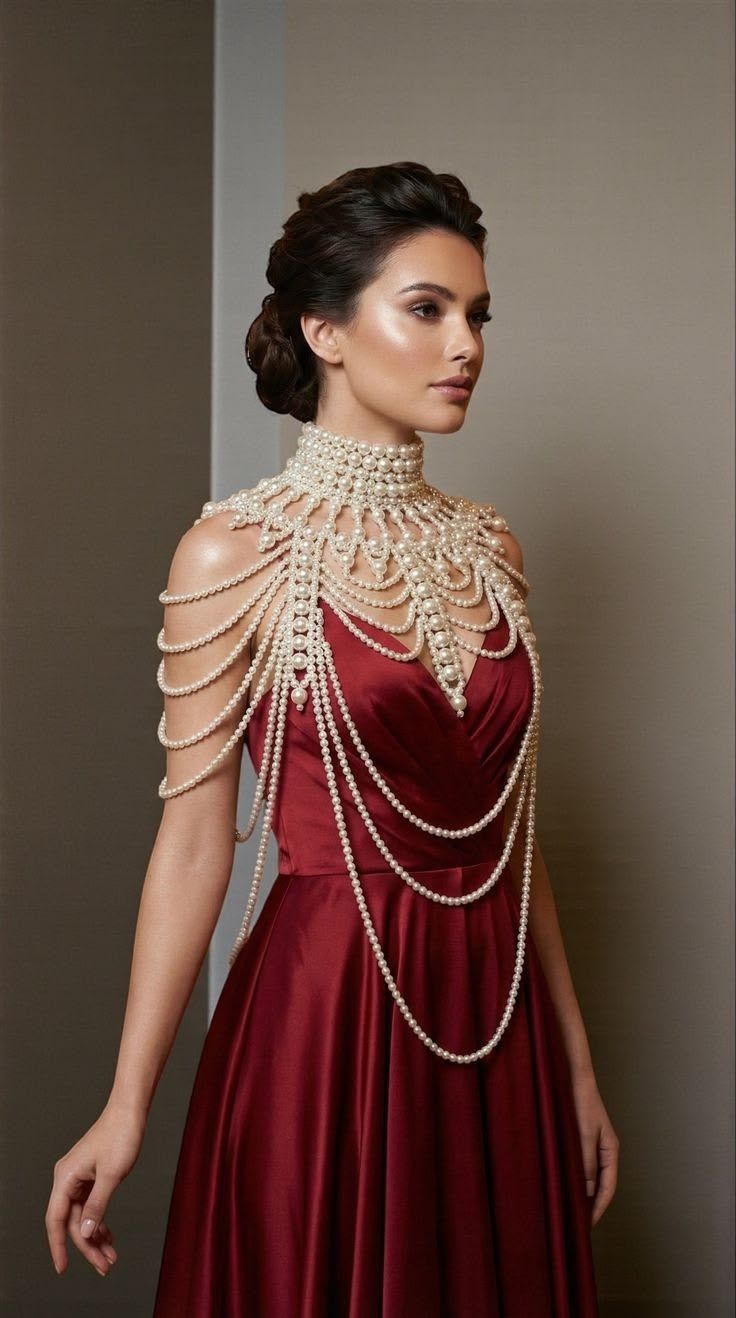
Shoulder necklaces sit wider across the collarbone and shoulders, creating a sculptural, almost couture effect. They are dramatic in a way that a standard necklace cannot be, and they look best with off-shoulder, strapless and contemporary blouse silhouettes where there is actual space for the piece to sit.
The trade-off is movement. These pieces are structured, so they restrict how freely you can raise your arms. Try yours on with the exact blouse before the wedding, and decide whether you want to dance in it.
Vintage polki, refreshed
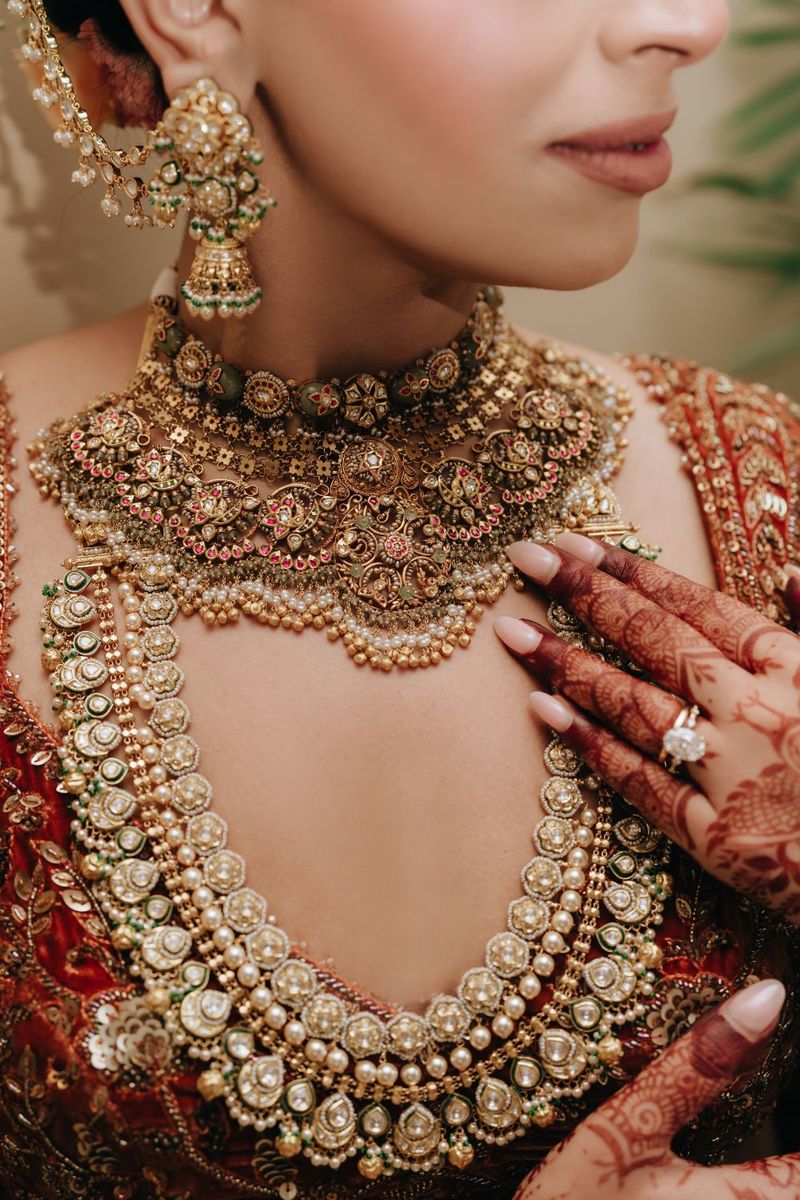
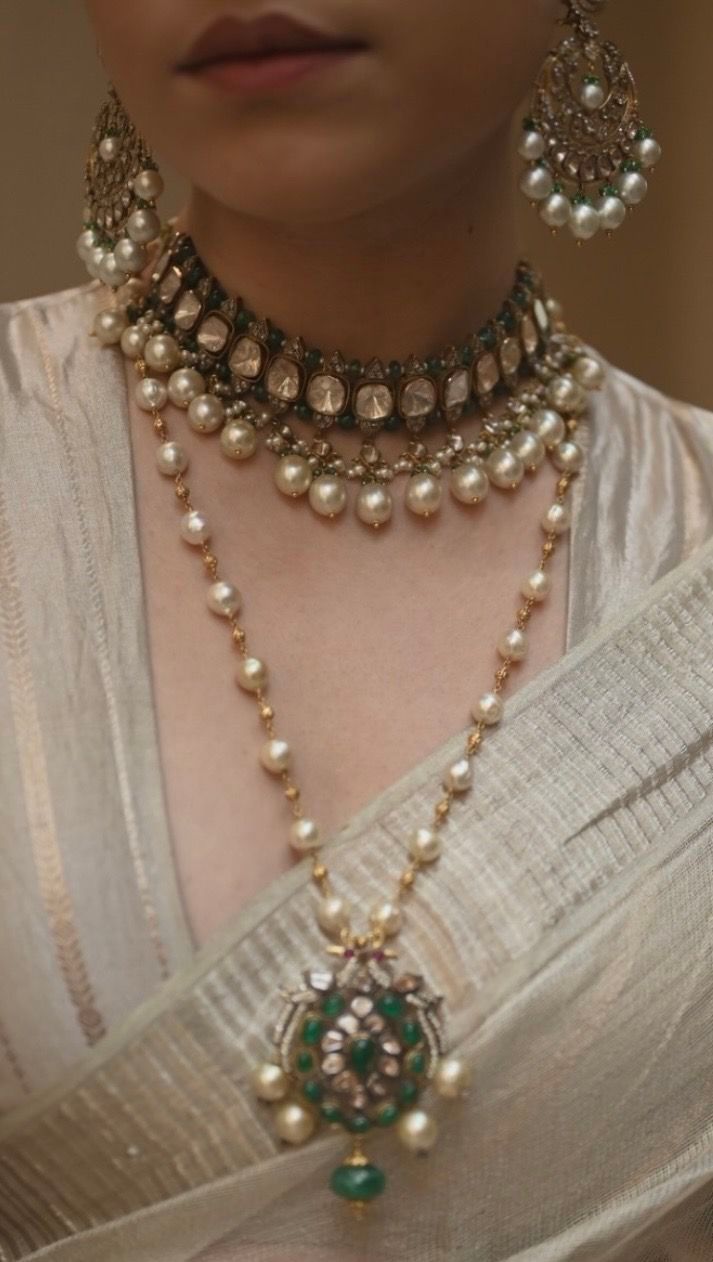
Polki never left the bridal wardrobe, but the current version has a different mood: uncut diamonds, old-world detailing and slightly imperfect silhouettes, styled with contemporary outfits rather than matched to traditional ones. It reads as heirloom energy without borrowing an entire jewellery box.
Polki photographs softly because uncut diamonds scatter light instead of throwing it back. That makes it forgiving in daylight and beautiful in candlelight, and it is one of the few jewellery styles that looks equally good in both.
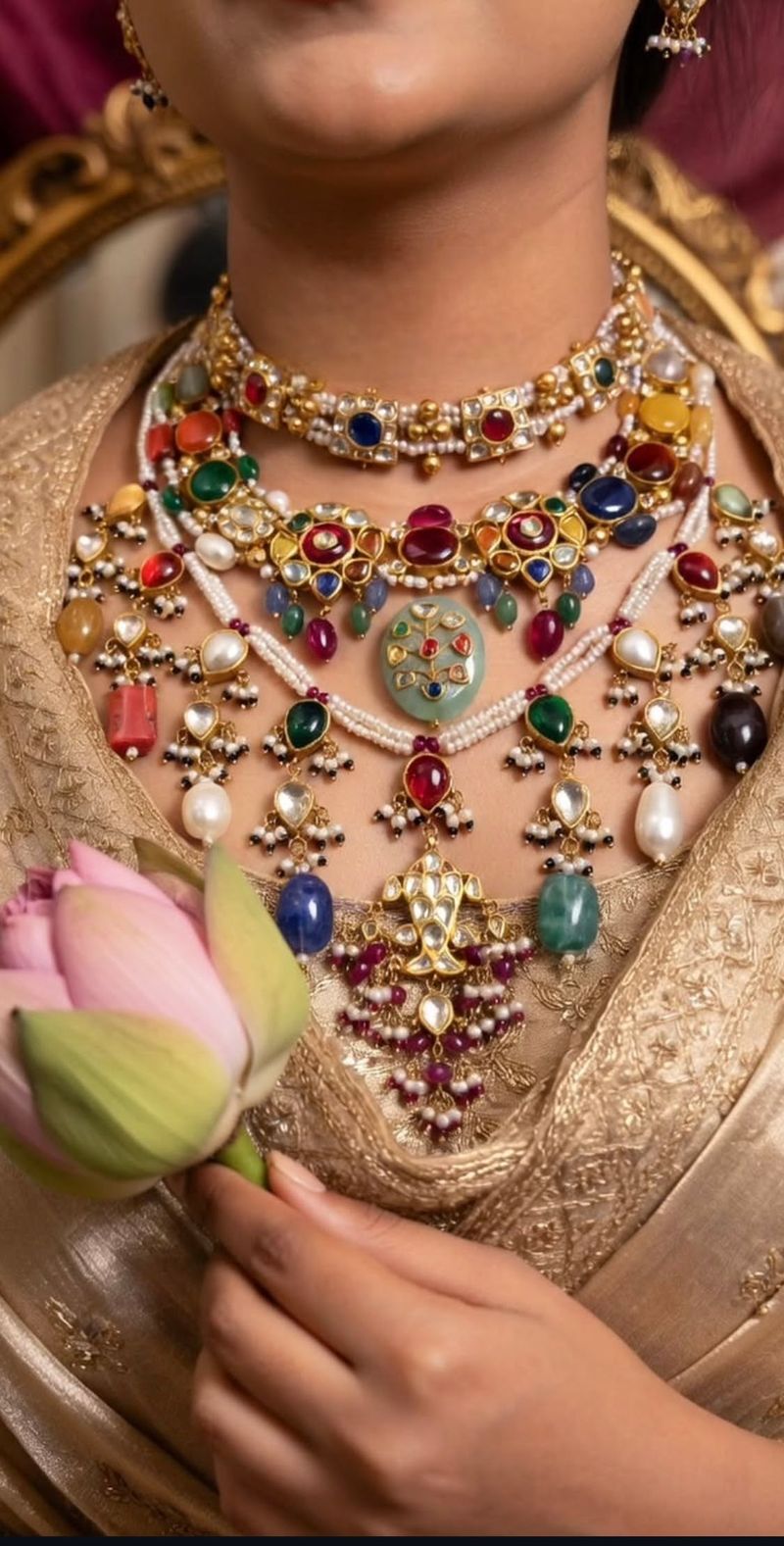
Navratna gets a fashion-forward refresh
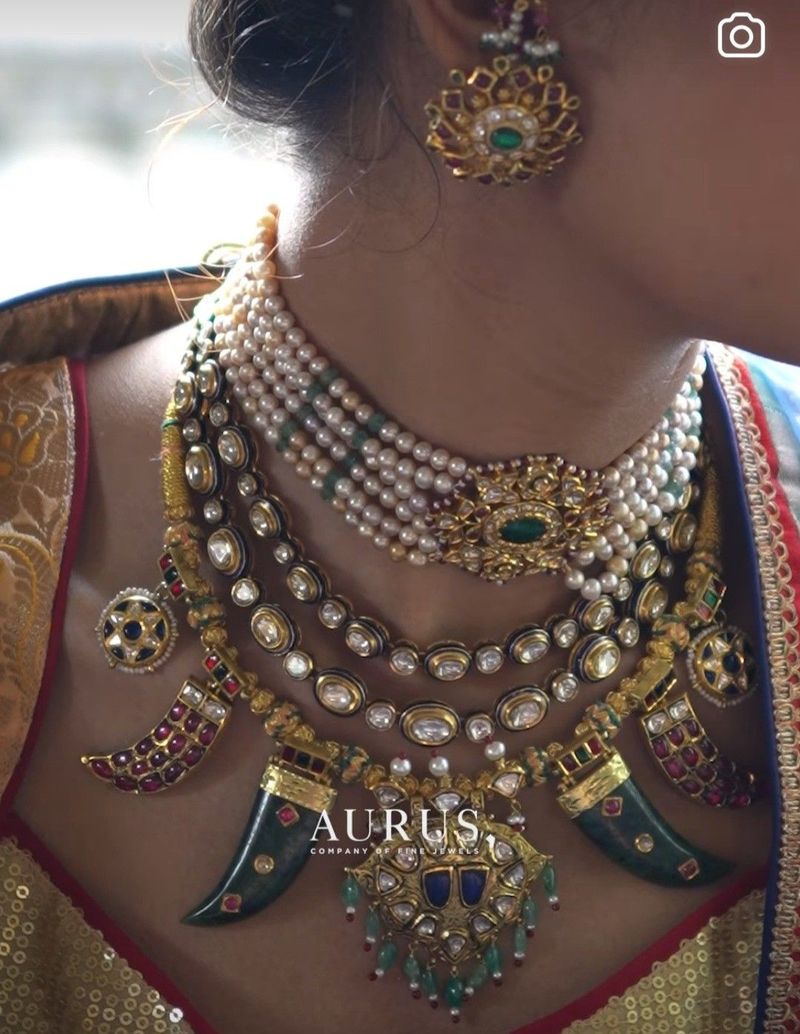
Nine gemstones and nine colours, styled very differently from the traditional version: layered necklaces, colourful earrings and modern navratna pieces worn against deliberately minimal outfits. It is maximalist jewellery with an intentional, curated feel.
Because navratna already carries so much colour, it works best when the outfit is quiet. Let the jewellery be the loudest thing in the frame.

Pearl stacks are everywhere
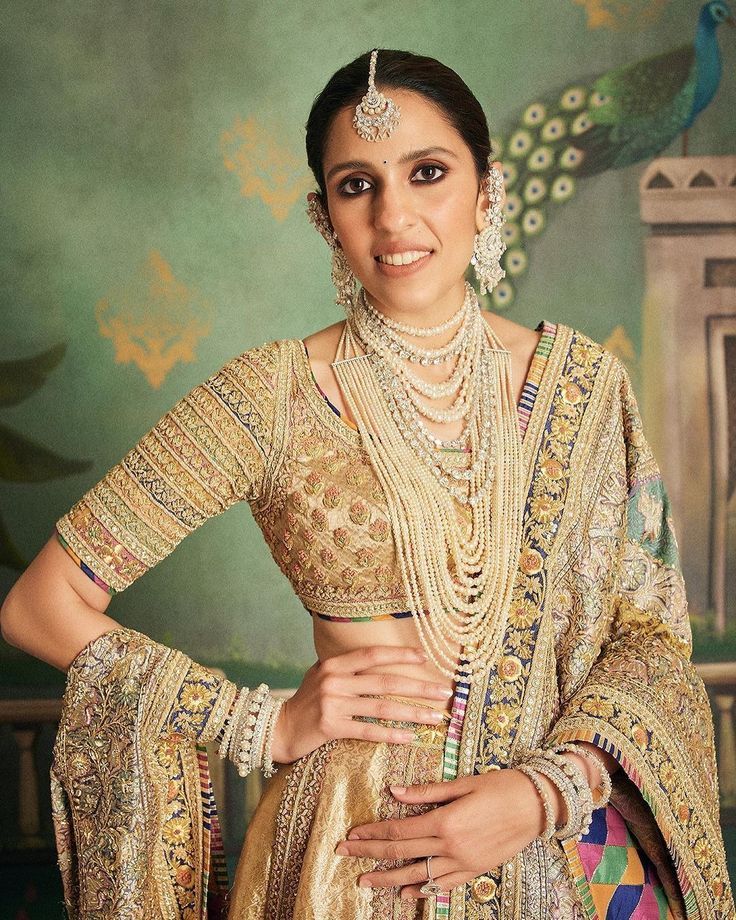
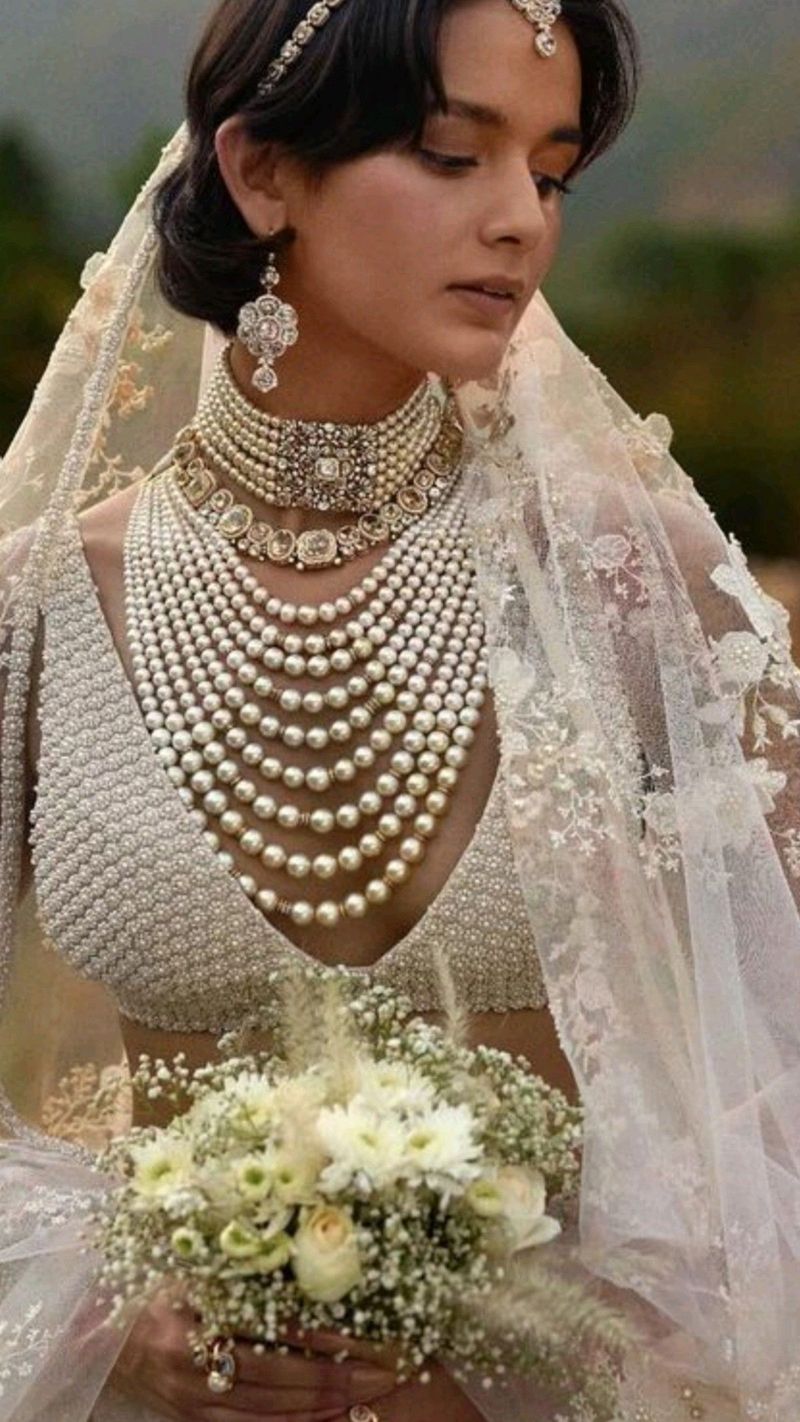
Pearls are being stacked, layered and styled far beyond the classic single strand: multiple necklaces, pearl chokers, layered strands and oversized pearl earrings. The finish is softer than a diamond set but still clearly a statement, and it works especially well with ivory tones, contemporary outfits and minimal silhouettes.
The practical advantage is that pearls move easily from the wedding day into the honeymoon wardrobe. They are also the most forgiving option for a bride who wants to re-wear her jewellery after the wedding.
Face jewellery is having a moment
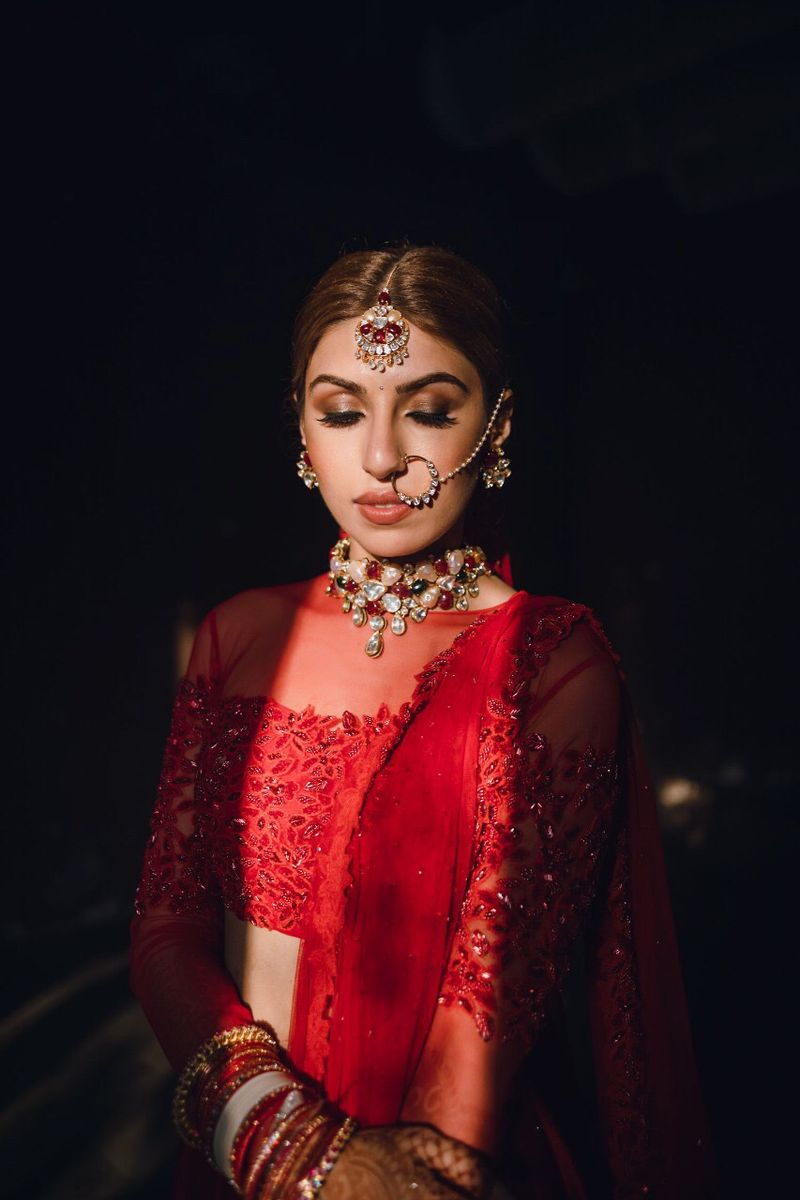
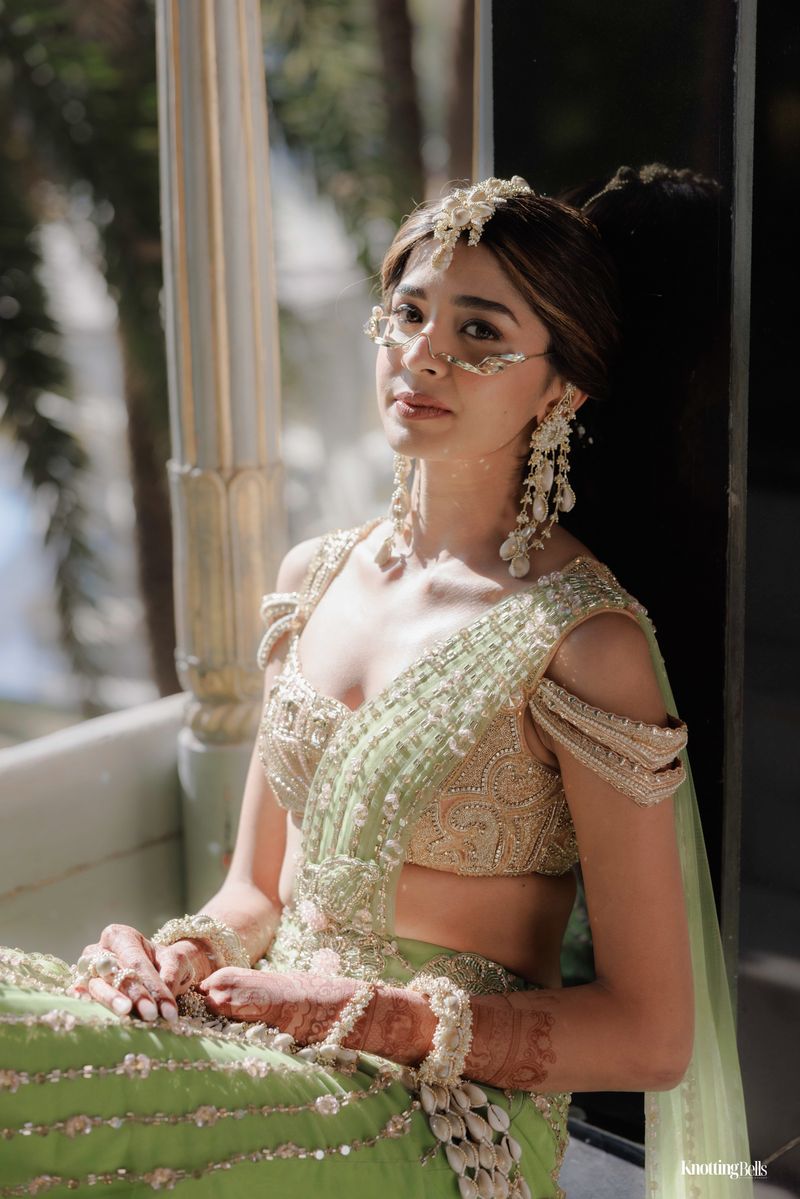
Face jewellery has moved past the traditional nath into something more deliberate: delicate chains connecting to earrings, statement naths, maang tikas that frame the face, and intricate pieces that sit along the hairline. The styling rule is simple — keep everything else pared back and let the face jewellery be the main character.
It is also the trend that changes most under photography. Fine chains can disappear against a busy dupatta or in wide shots, so keep them for the functions where the camera will be close.
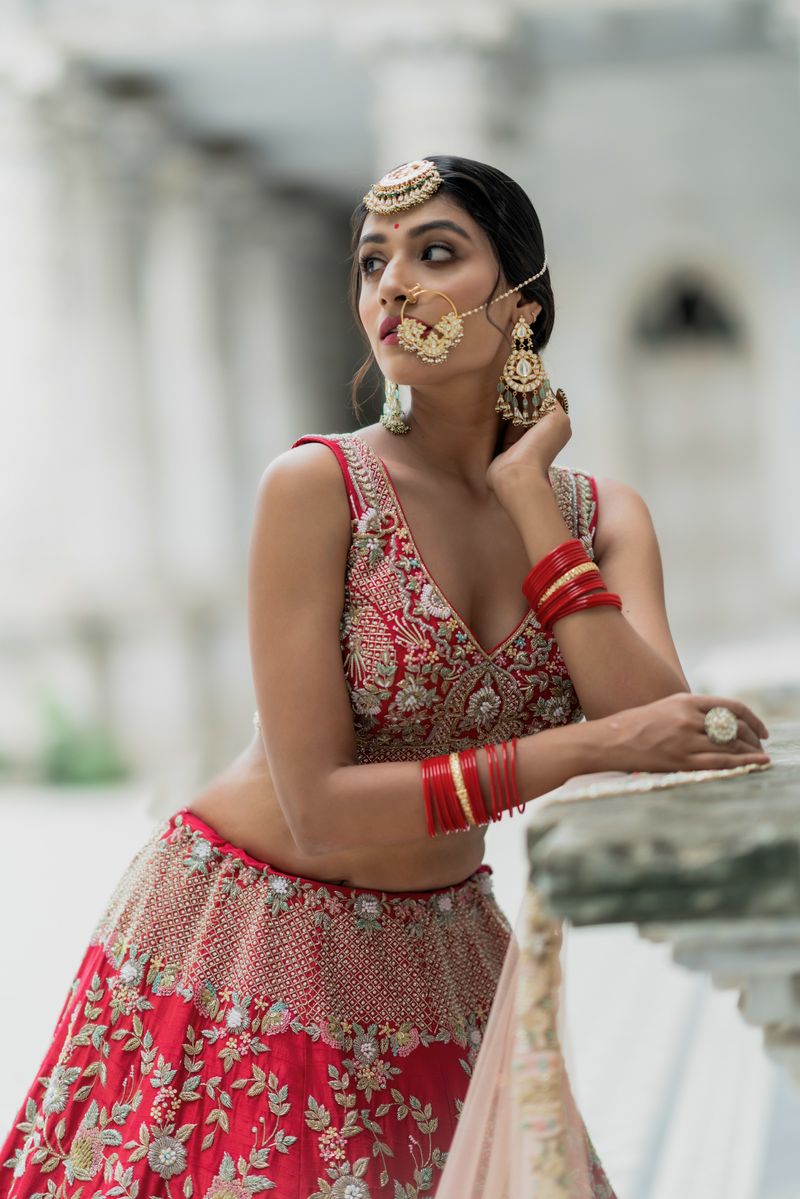
Building your own bridal jewellery moodboard
- Start with two anchor pieces. One for the neck and one for the face or ears. Everything else supports them.
- Photograph your heirlooms on a plain surface. It is far easier to plan layers when you can see every piece in one frame.
- Test against your outfit fabric, not a swatch photo. Gold, silver and coloured stones change completely against red, ivory, pastel and jewel tones.
- Plan function by function. Heavy for the ceremony, lighter for the reception, oxidised for haldi and mehendi.
- Weigh everything before the wedding day. A necklace that feels fine for ten minutes can be unbearable by the third hour.
- Think about travel. Destination weddings mean jewellery travels with you, so count pieces, photograph them and carry them in hand luggage.
Frequently asked questions
Can I mix gold and silver jewellery at my wedding?
Yes, and it is one of the more modern looks right now. Keep one metal dominant and use the other as an accent, or separate them by function so each look stays deliberate.
Is polki or kundan better for a 2026 wedding?
Neither is better; they photograph differently. Polki scatters light softly and suits daylight and candlelight, while kundan reflects more sharply and reads stronger under bright reception lighting.
How much bridal jewellery is too much?
When the pieces compete rather than layer. If you are unsure, remove one item and look again — the same rule we use when framing a portrait. For outfit pairings that carry heavier jewellery well, see our notes on paisley bridal fashion and royal Udaipur wedding inspiration.
Getting married in 2026 or 2027? Talk to us — we photograph jewellery up close and in motion, and we will tell you honestly which pieces are worth wearing all night.