30+ Bridal Entry Ideas for an Unforgettable Indian Wedding
Your bridal entry deserves more thought than a packet of cold sparklers and the same three songs every guest has already heard this season. It is the first time your guests see you as a bride, and it is the single most photographed walk of the entire wedding.
What follows is grouped by the kind of moment you want to create — tradition, family, light, sound, or a quiet solo walk — so you can pick a direction first and then choose the specific idea inside it.
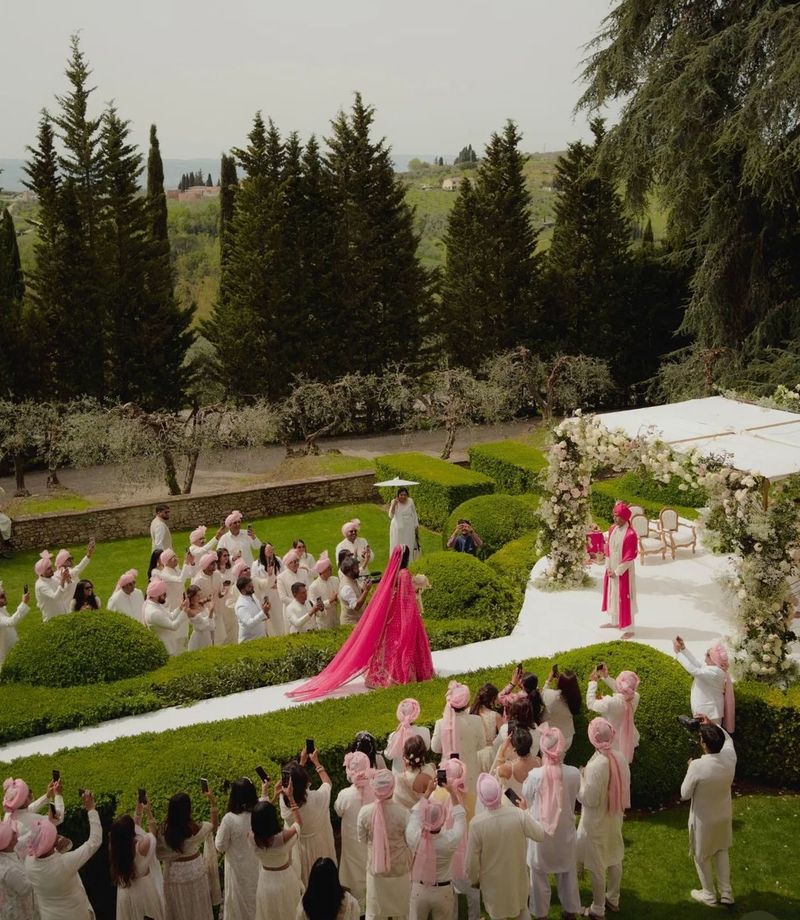
Traditional entries, reimagined
These keep the ritual intact but remove the parts that hide the bride from her own guests.
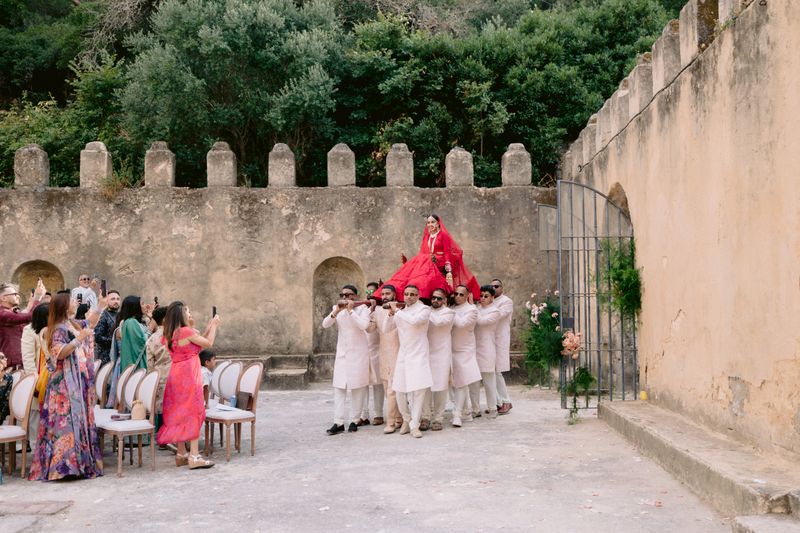
Arrive in an open doli
The doli is one of the few entry traditions that already has built-in drama. An open version updates it for a modern wedding: the structure stays, but your face, outfit and jewellery are visible the whole way down instead of hidden behind curtains.
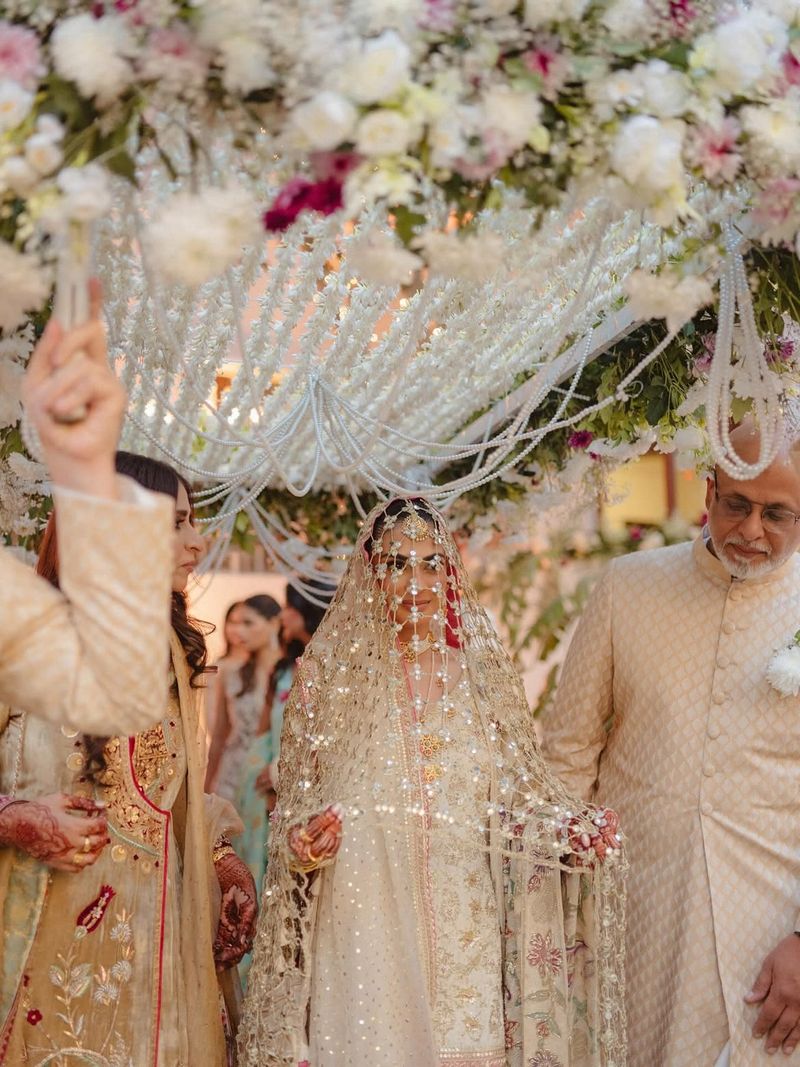
Walk in under a mirror-work dupatta
A mirror-work or heavily embroidered dupatta held overhead turns the aisle into a frame. It photographs beautifully from behind, which is where most entry shots are taken.
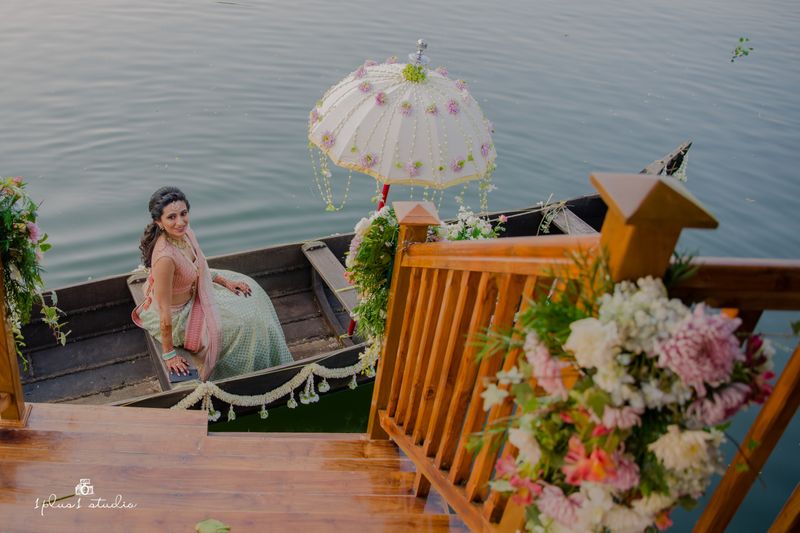
A traditional wooden boat
For a backwater or riverside venue, a wooden boat replaces the aisle entirely. Keep the decor minimal here — the setting is the spectacle, and extra flowers only compete with it.
Family at the centre
The entries guests remember most are rarely the most expensive ones. They are the ones where the people who raised you are part of the walk.
Enter with a sibling
Walking in with a brother or sister changes the mood from solemn to joyful. It also gives you someone to talk to in the thirty seconds before the cameras start, which settles nerves far better than a deep breath.
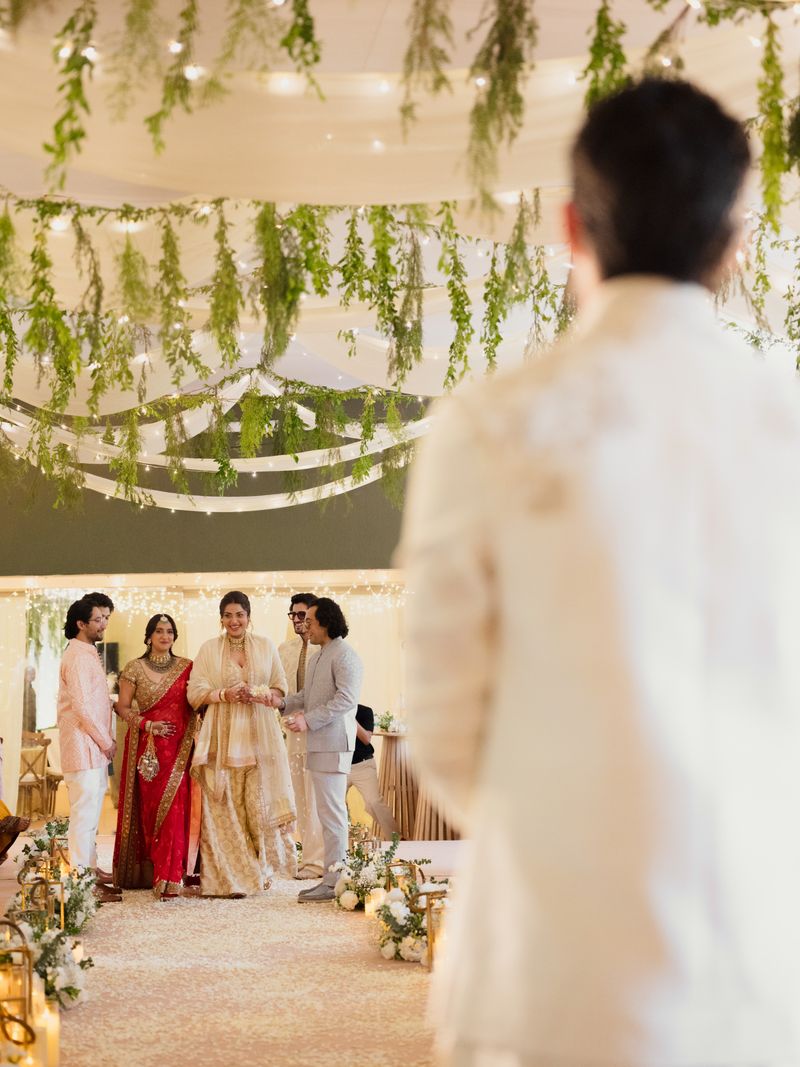
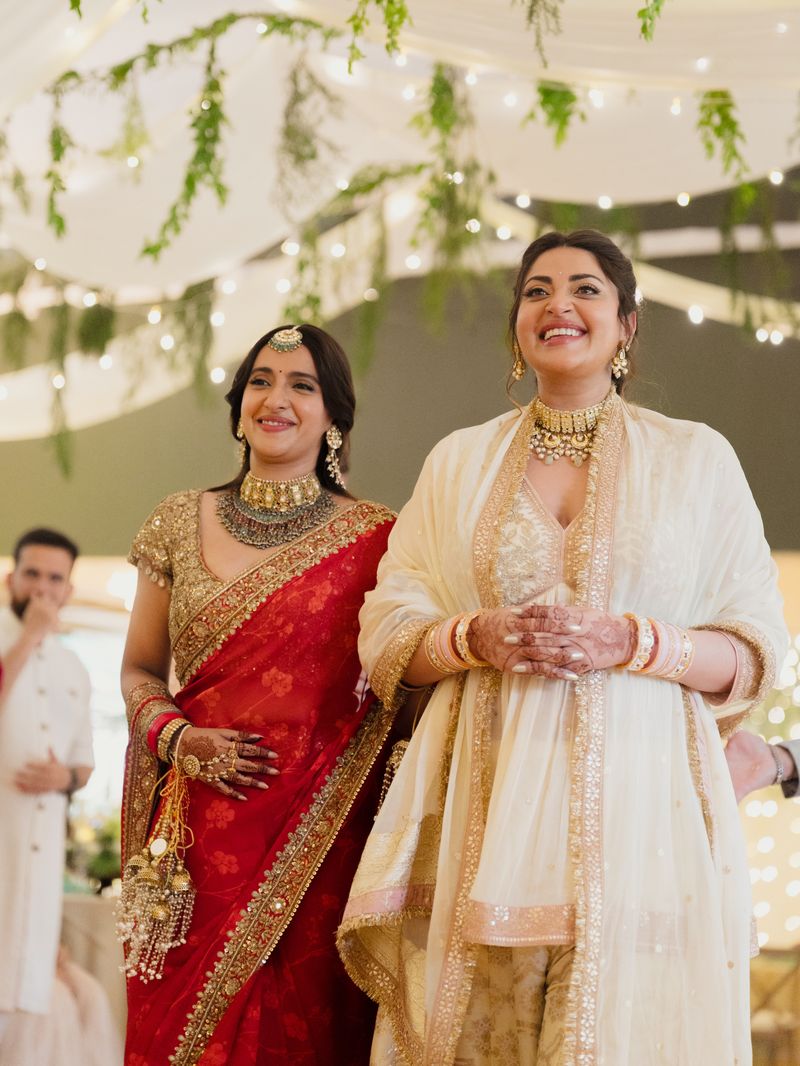
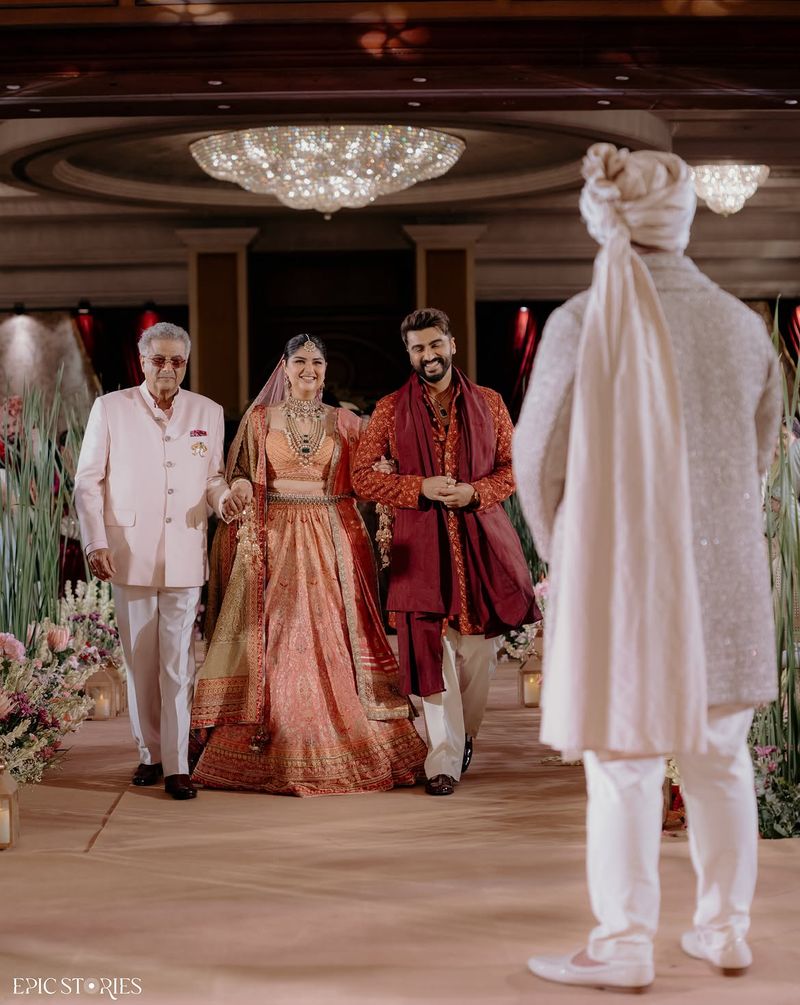
The three-part handover
This is the most emotionally loaded idea on the list: you begin the walk solo, are joined by your brother, are handed to your father, and he walks you to the mandap where your partner waits. Three relationships, three short walks, one continuous shot.
Plan it with your photographer in advance. A handover sequence needs the camera to stay with you rather than cut away, and it needs the aisle to be long enough for three deliberate segments.
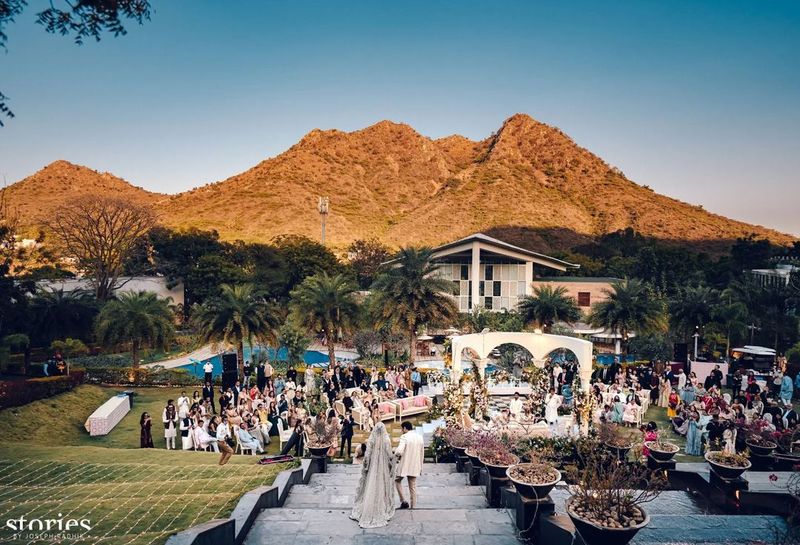
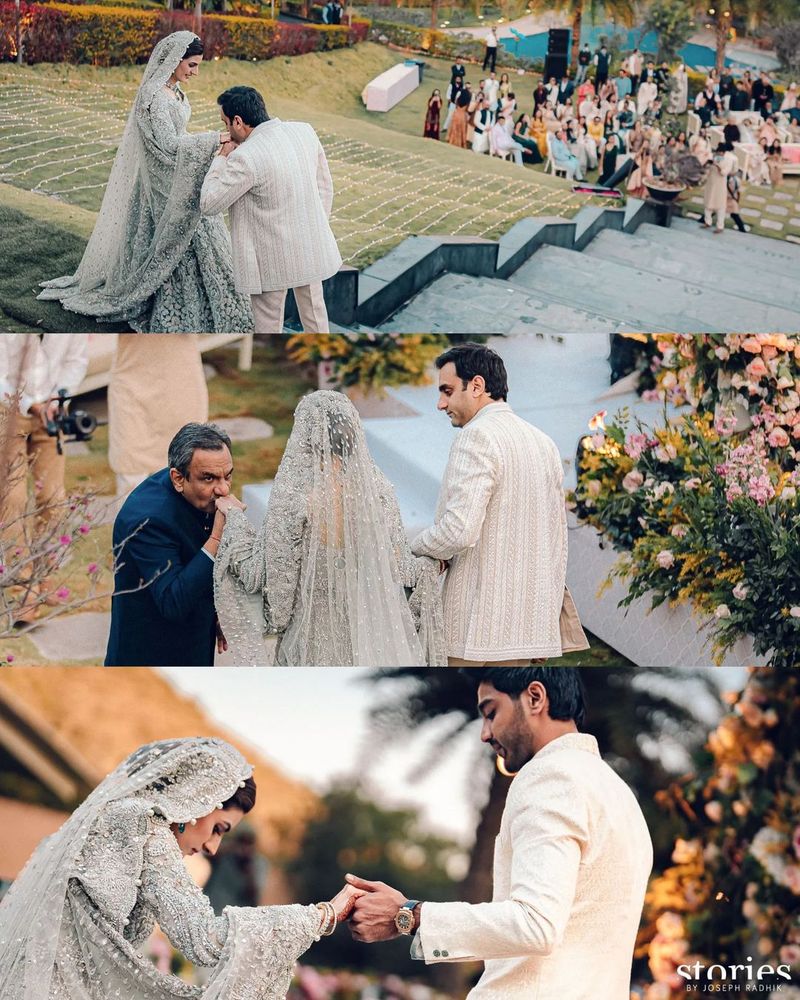
Walk in with your father and son
For brides with children, including a son or daughter in the entry turns a formal moment into a family portrait. It is also one of the few ways to give a child a defined role without putting them on the spot.
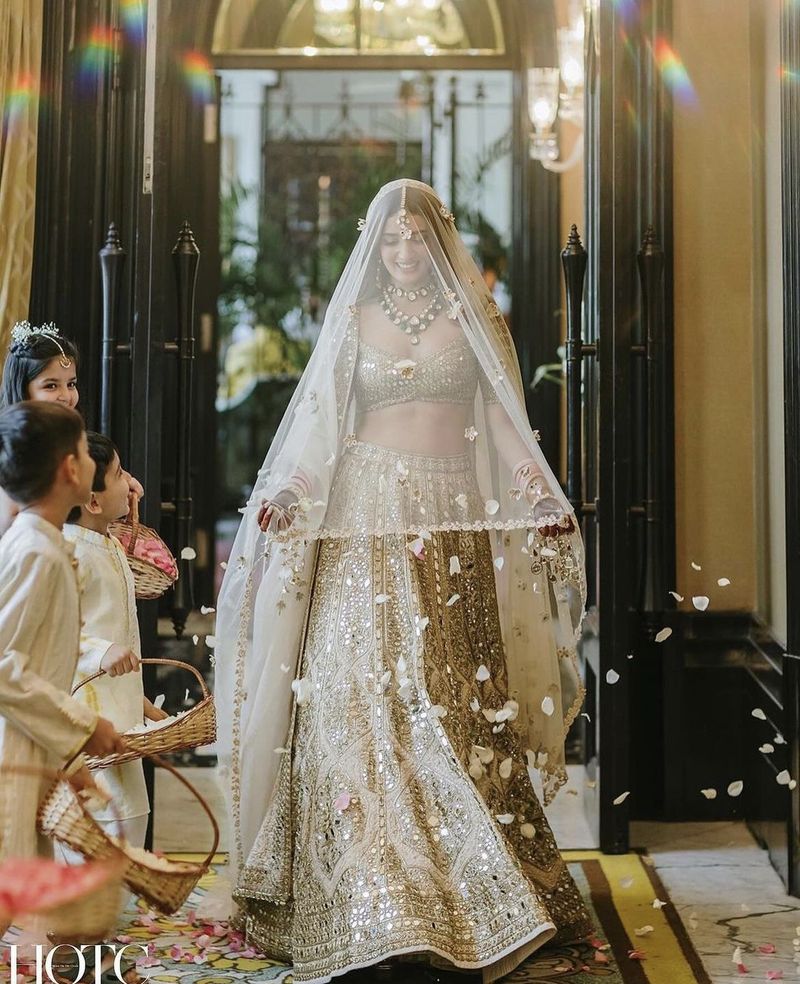
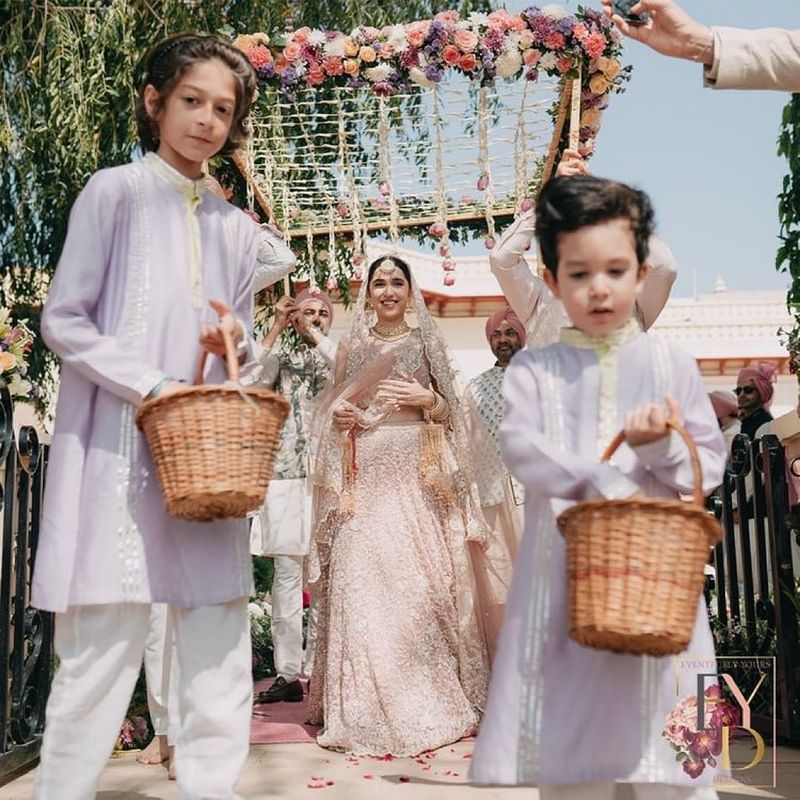
Tiny nephews as flower boys
Small children ahead of you scatter petals, slow the whole procession down, and give the photographs an unscripted energy that no choreography can reproduce. Expect at least one of them to wander off — that is usually the best frame of the set.
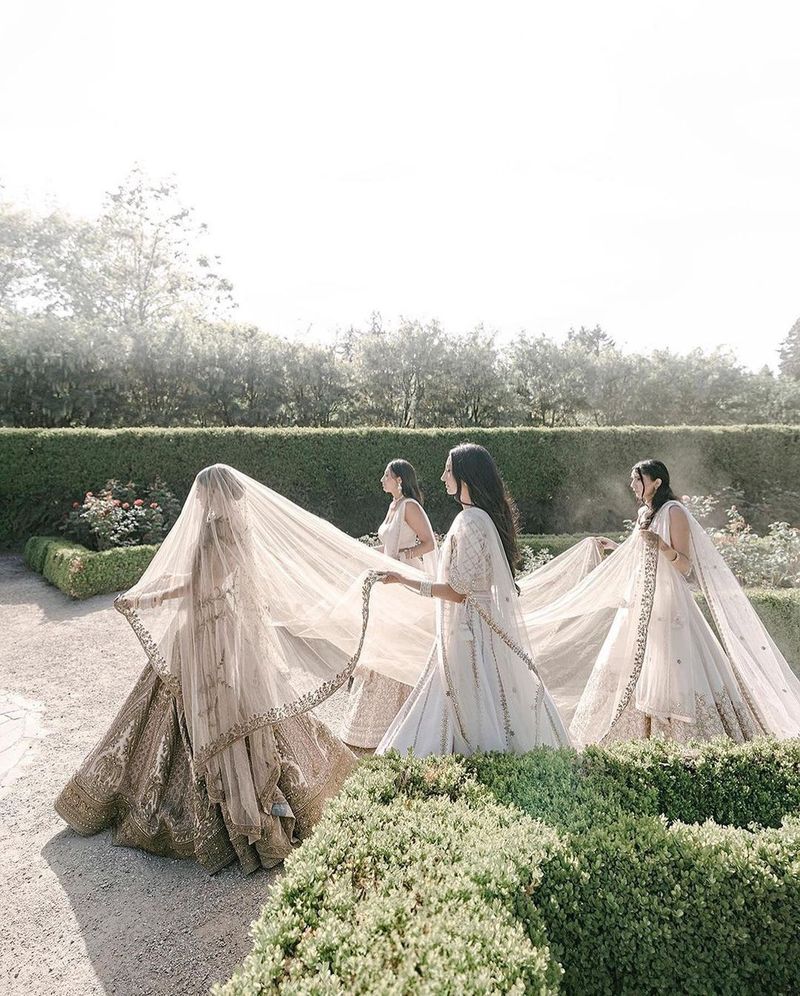
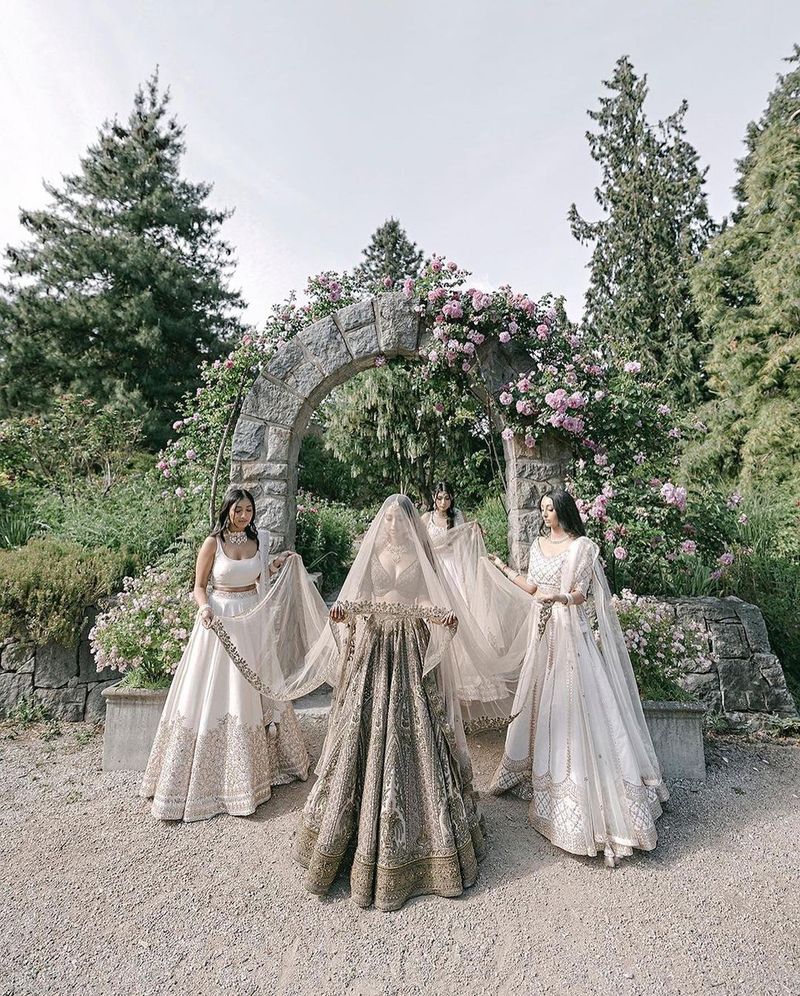
Bridesmaids carrying the veil
Your friends carry the dupatta or veil above you as you walk, forming a moving canopy. It gives them a real role in the ceremony and creates a natural frame around you in every wide shot.
Light, fog and drama
If your wedding is after dark, lighting is a more powerful tool than any prop — and it costs far less than people assume.
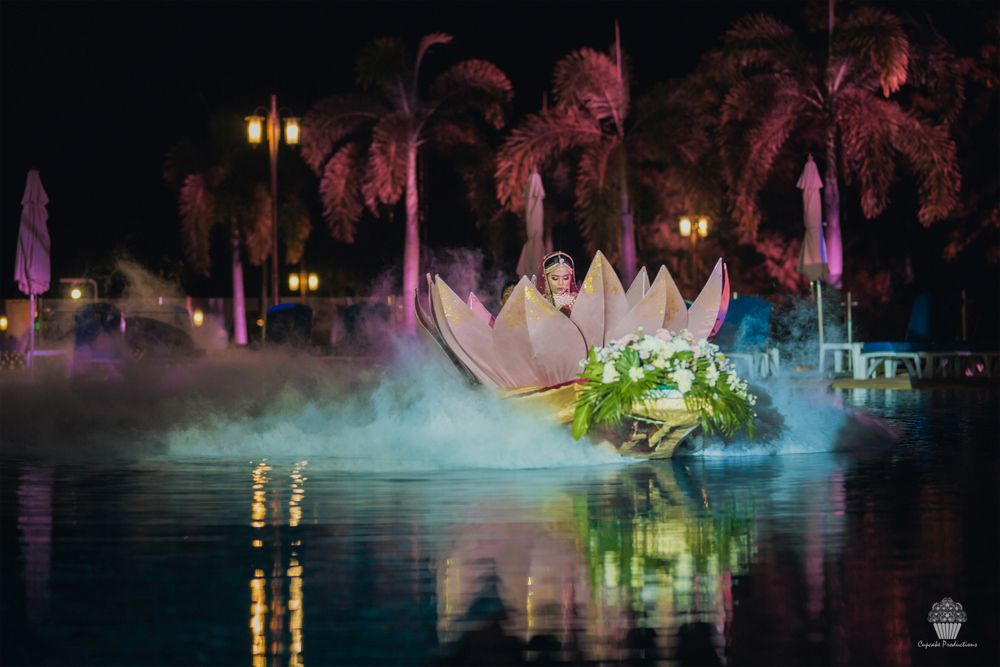
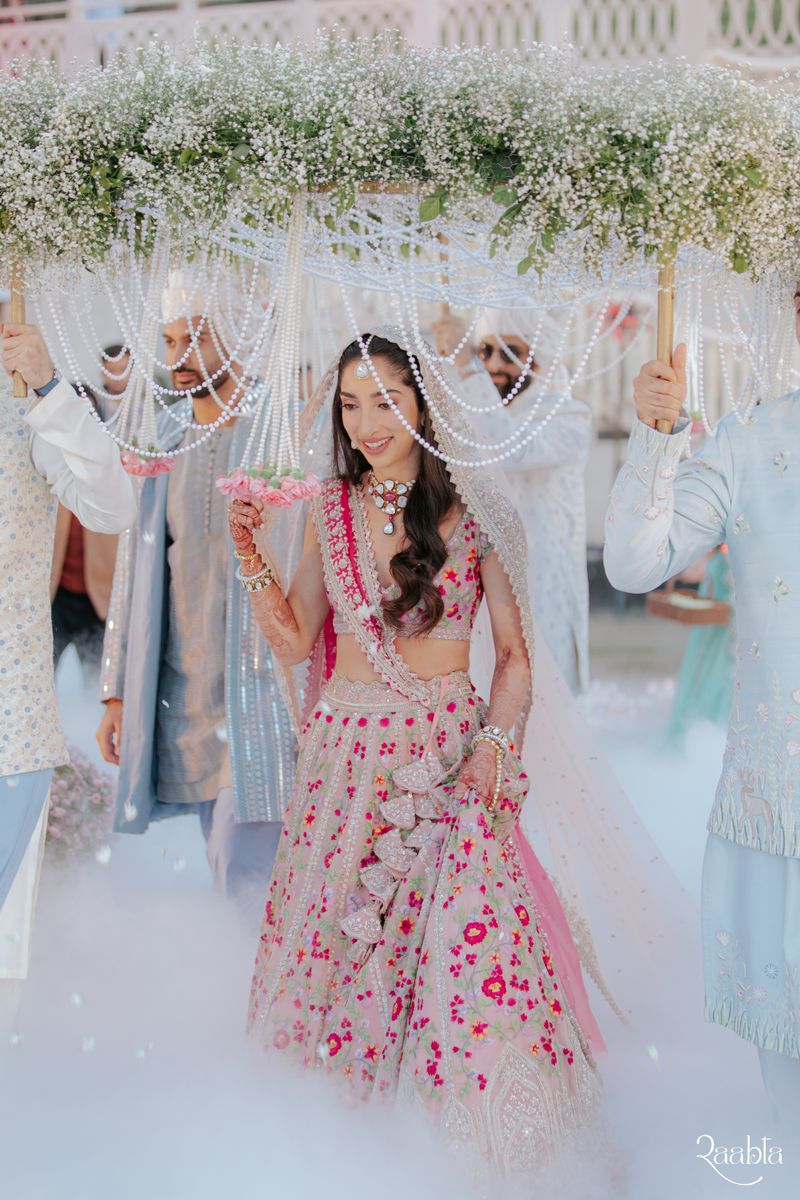
The dreamy fog entry
A low-lying fog effect at the start of the aisle makes you appear out of nowhere. It works best outdoors or in a large hall with still air; in a windy lawn the fog simply drifts away.
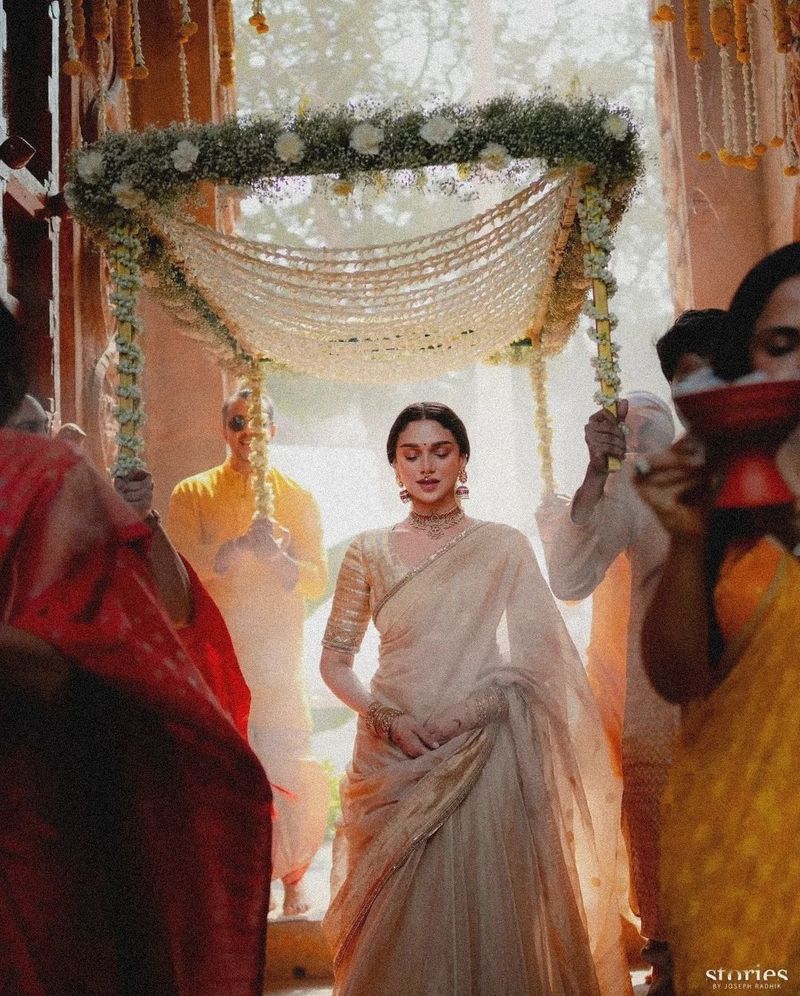
The dhoop-filled entry
Instead of flowers, your bridesmaids walk ahead carrying dhoop so the aisle fills with a soft haze and the scent of resin. It is especially lovely for a daytime outdoor phera, where the smoke catches the light.
The shadow reveal
You stand behind a backlit screen so the first thing guests see is your silhouette, then step out for the reveal. It is pure theatre, and it gives your photographer a genuinely unusual frame to work with.
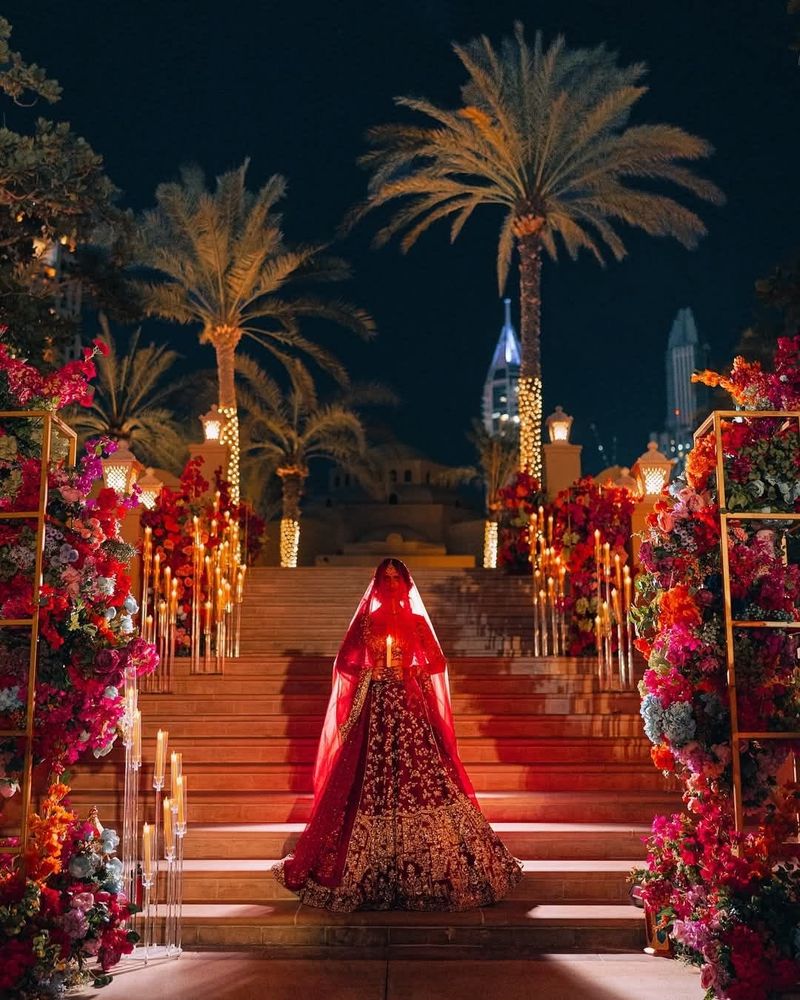
The spotlight entry
Cut the ambient lights and put a single spotlight on the bride. It is the simplest dramatic entry there is — no props, no choreography — and it flatters almost every outfit.
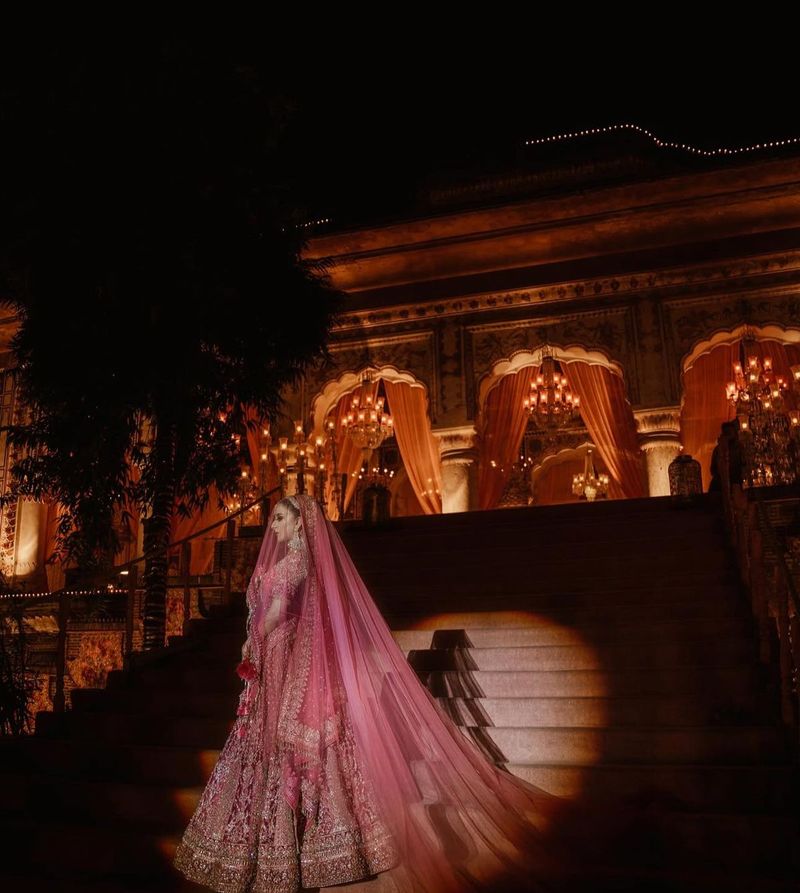
A tunnel of sparklers
Rather than two people with sparklers at the mandap, have your guests line the full aisle and form a glowing tunnel. Confirm the venue permits open flame first, and keep a clear gap between the sparklers and any flowing fabric.
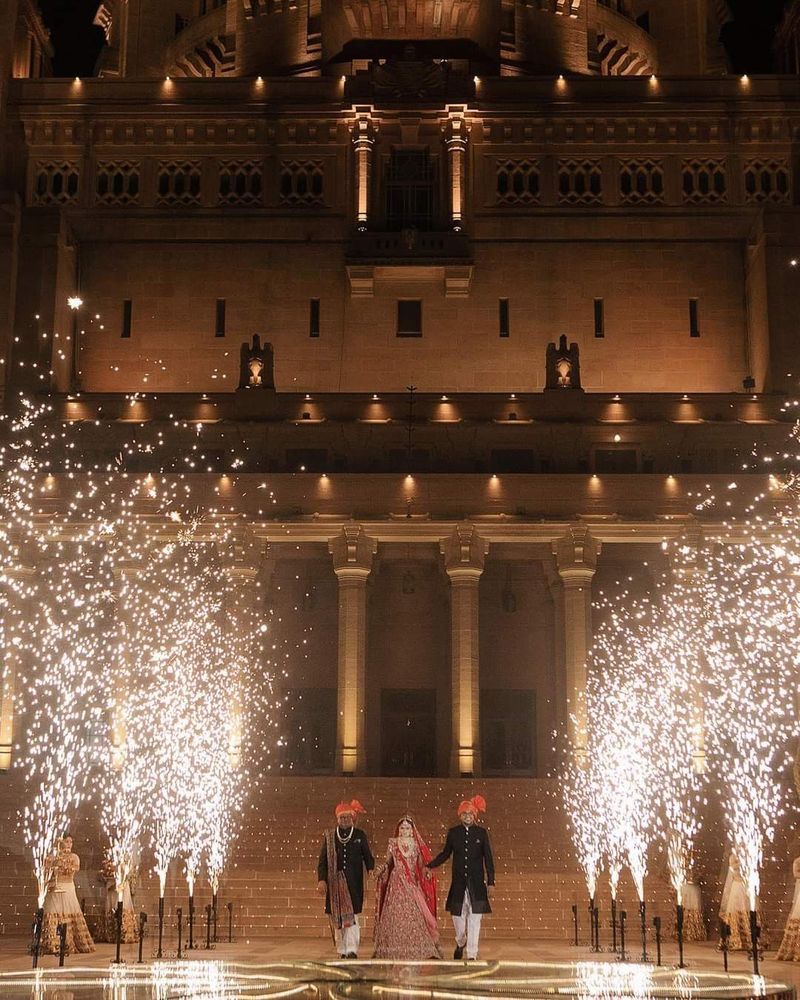
The petal shower
Take the traditional petal shower and add height: petals falling from a balcony, terrace or overhead installation read far better on camera than petals thrown at shoulder level.
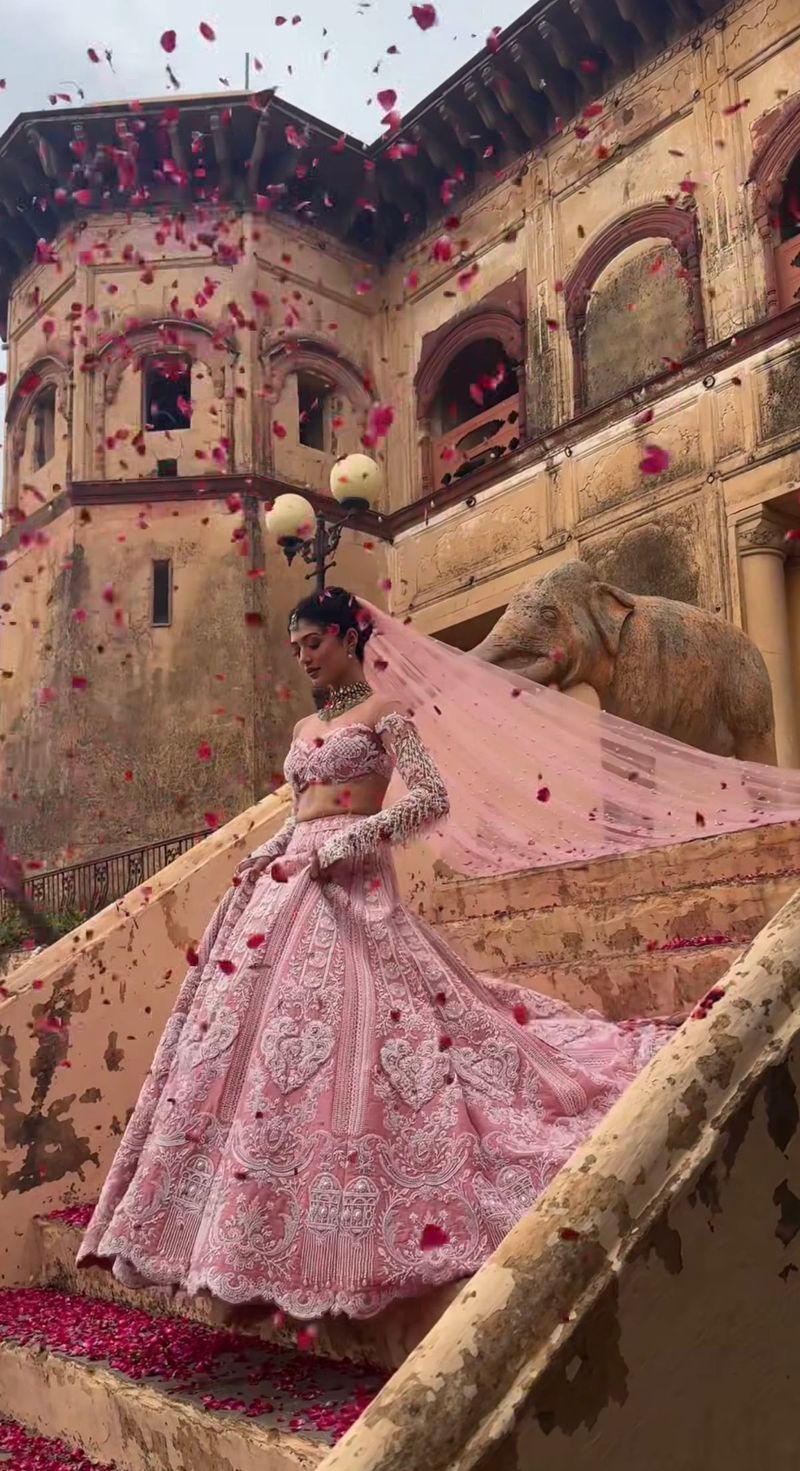
Sound and performance
Music decides the pace of your entry and, in our experience, the quality of the photographs it produces. For a full list of tracks that work, see our Bollywood wedding songs guide and our bridal entry songs list.
The dancing entry
If you enjoy dancing, dancing your way in sets the tone for the whole evening. It only works when the choreography is simple enough to survive nerves — two or three steps that you can do without thinking beat a complicated routine you are still counting in your head.
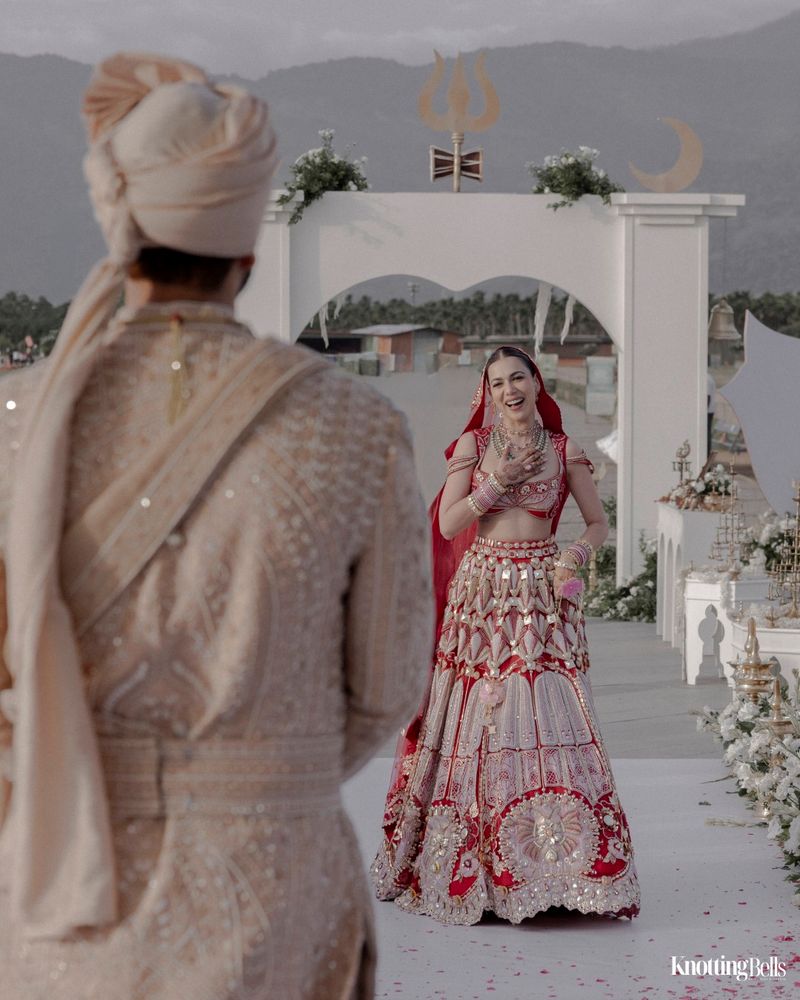
A personalised voice note
Play short recorded messages from your parents, siblings or partner as you walk. It is the cheapest idea on this list and the one most likely to leave the room in tears — but keep each clip under fifteen seconds, or the walk drags.
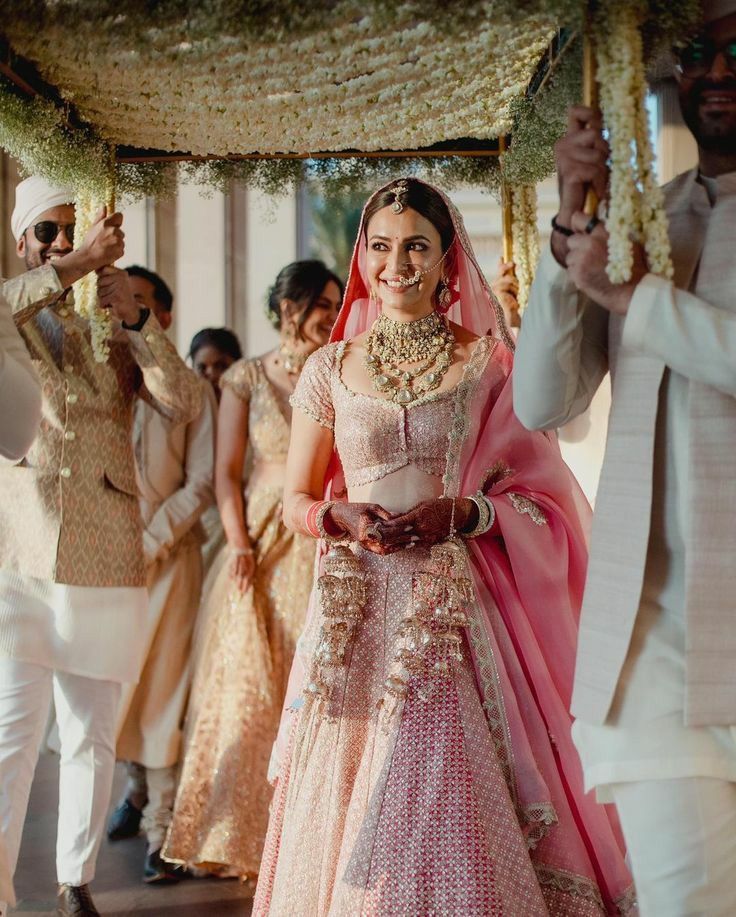
Performers before the bride
Professional dancers or musicians perform as the aisle clears, then hand the moment to you. Think of them as a build-up rather than the main event — their job is to get guests looking in the right direction at the right second.
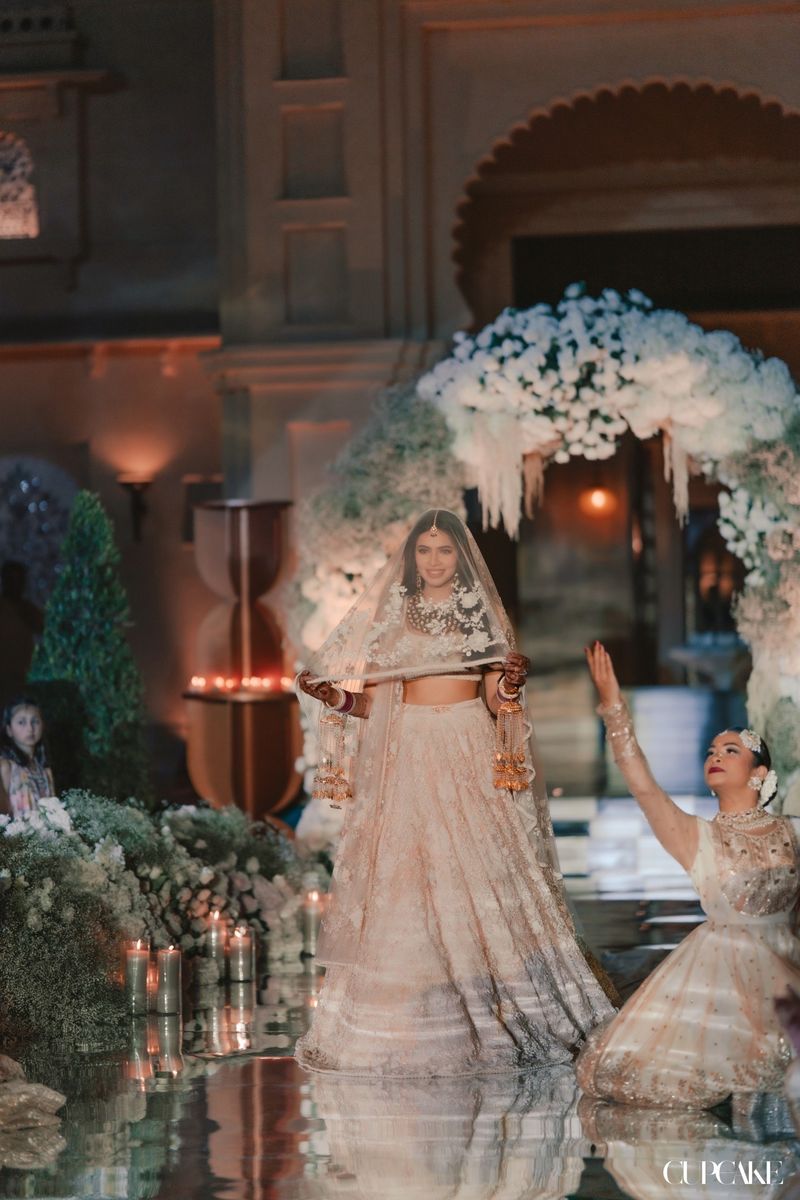
Walk in to your own song
You do not have to choose an existing track. Brides have recorded their own songs, commissioned a version of a film number with lyrics rewritten to tell their own story, and walked in to live musicians playing something written for the day. Original music is also the safest option if you plan to publish your wedding film online, where licensed tracks can attract rights claims.
Your mother's voice
A single line from your mother, sung or spoken as you begin walking, is a quieter version of the voice-note idea. Because it carries no music, it cuts through a noisy hall far better than a track does.
A live symphony or soundtrack
Live strings or a small orchestra give the entry a cinematic weight that recorded audio cannot match. If you go this route, do a sound check in the actual venue — acoustics behave very differently in a courtyard, a lawn and a ballroom.
Solo and minimal entries
Not every bride wants an escort or a production. A solo walk is its own kind of statement.
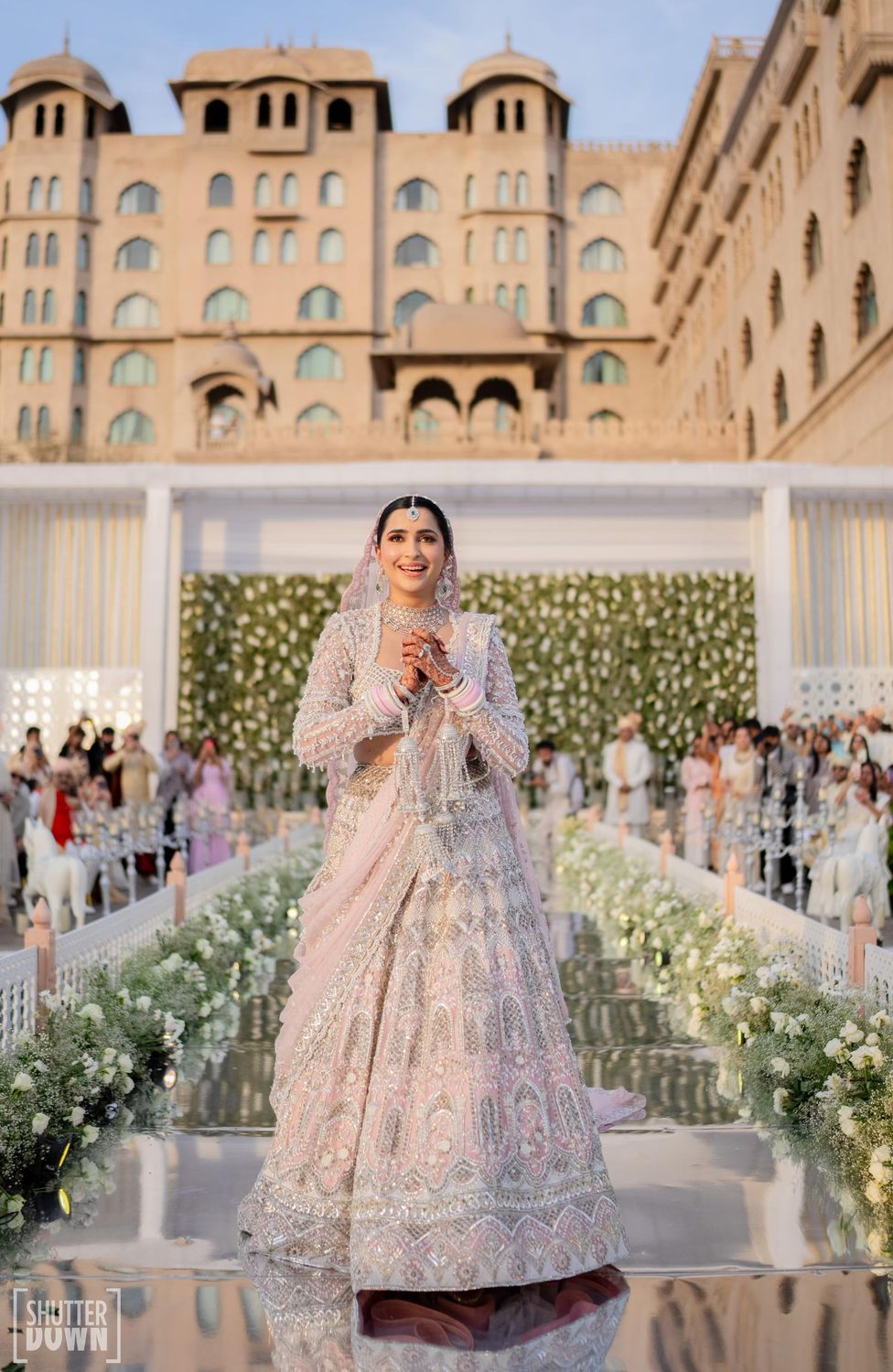
Walking in solo
No props, no entourage, just you and your outfit. It is the boldest option precisely because there is nothing to hide behind, and it gives a photographer a clean, uninterrupted line to follow.
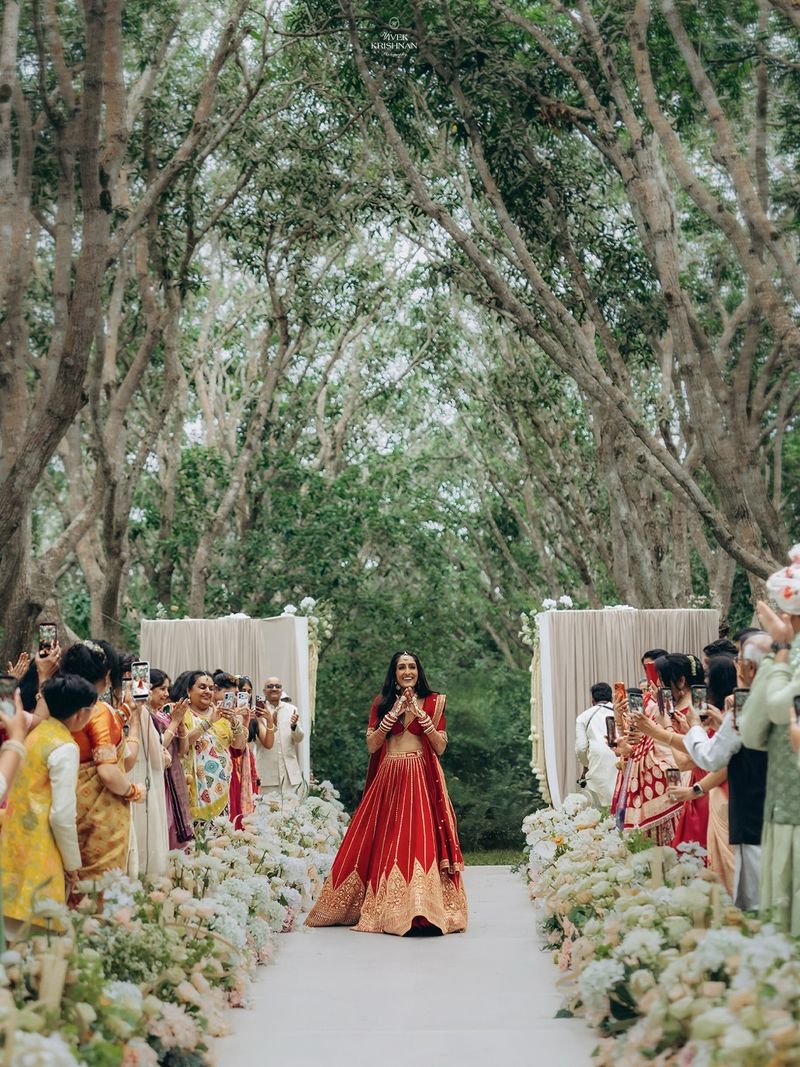
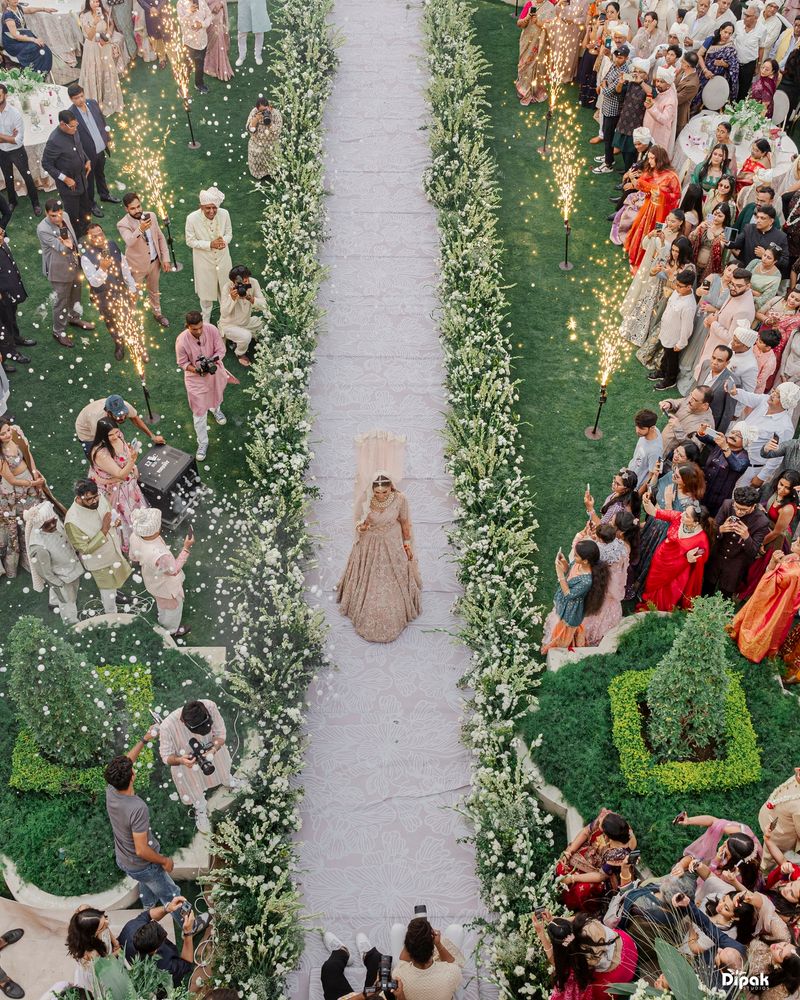
An all-white entry
An all-white or ivory bridal look with a flower shower and your friends cheering from the sides is soft rather than dramatic. It suits daytime ceremonies and smaller venues where a spotlight or fog effect would feel out of place.
Down the stairs
If your venue has a grand staircase, treat it as the aisle. Walking down while your bridesmaids shower petals from above creates a natural sense of descent and gives guests a clear sightline.
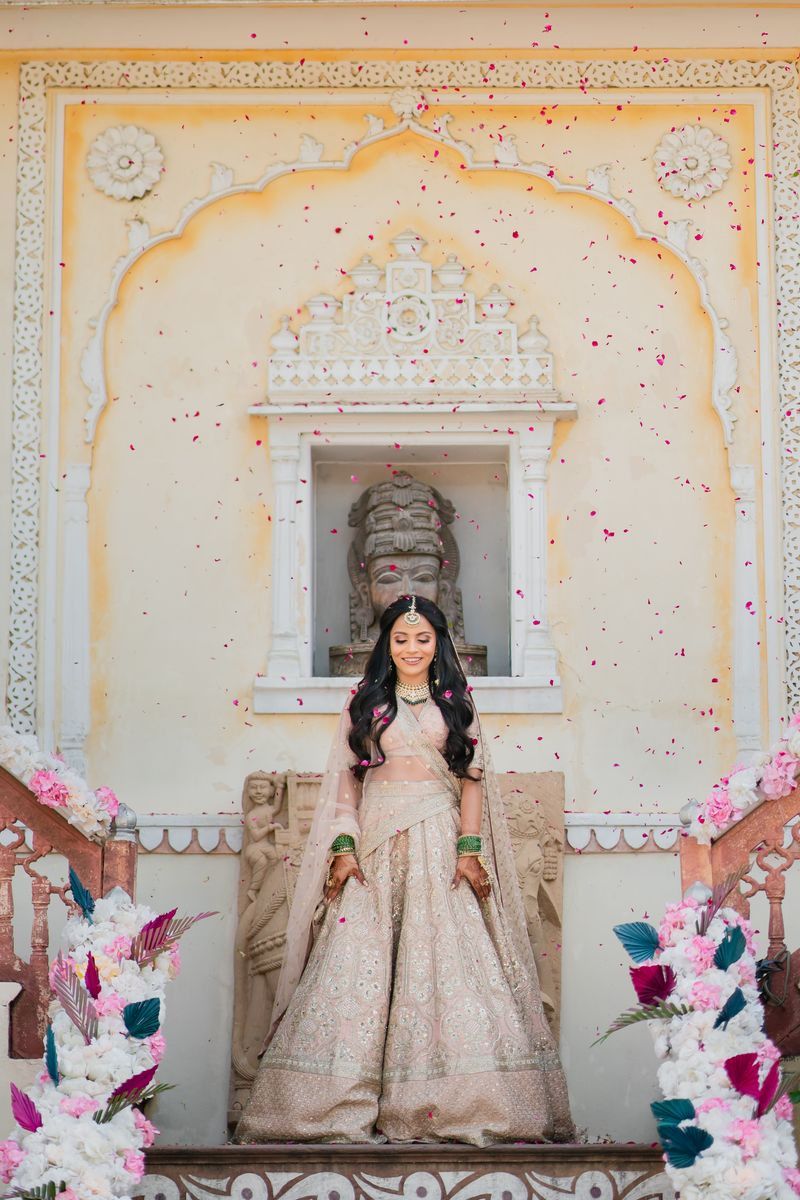
Arrive by water
At a lake, backwater or beachfront venue, arriving by boat is the entry itself. Check the timing of tides and currents with your planner, and always keep a land route ready as a backup.
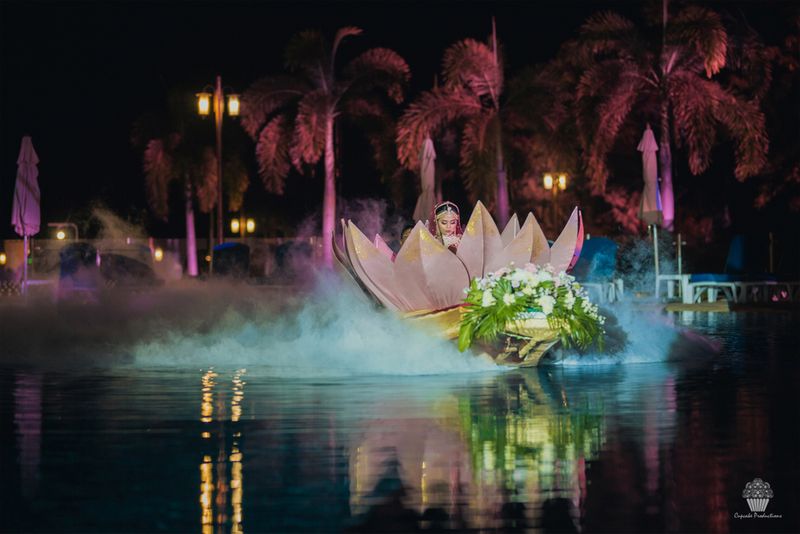
Props and details that change the frame
One well-chosen prop does more than three, and it should always relate to the venue or the outfit rather than simply being novel.
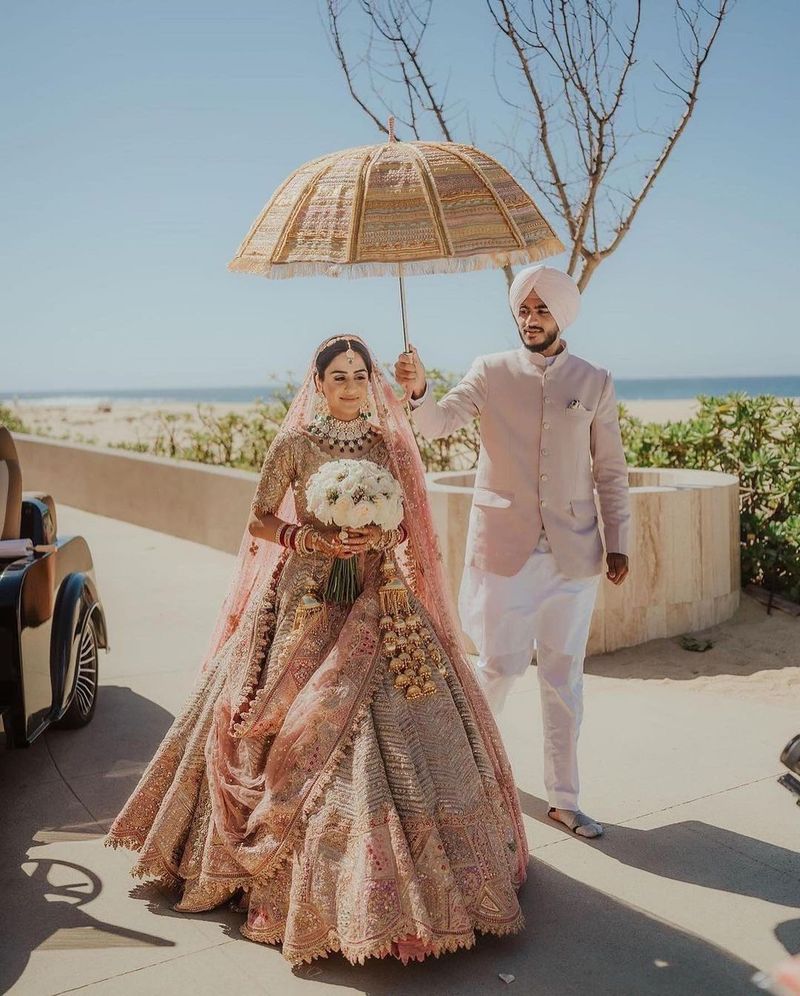
A coordinated umbrella
Having an umbrella made to match your lehenga is a small detail that reads as intentional in every photograph. It also has an obvious practical use for outdoor monsoon weddings.
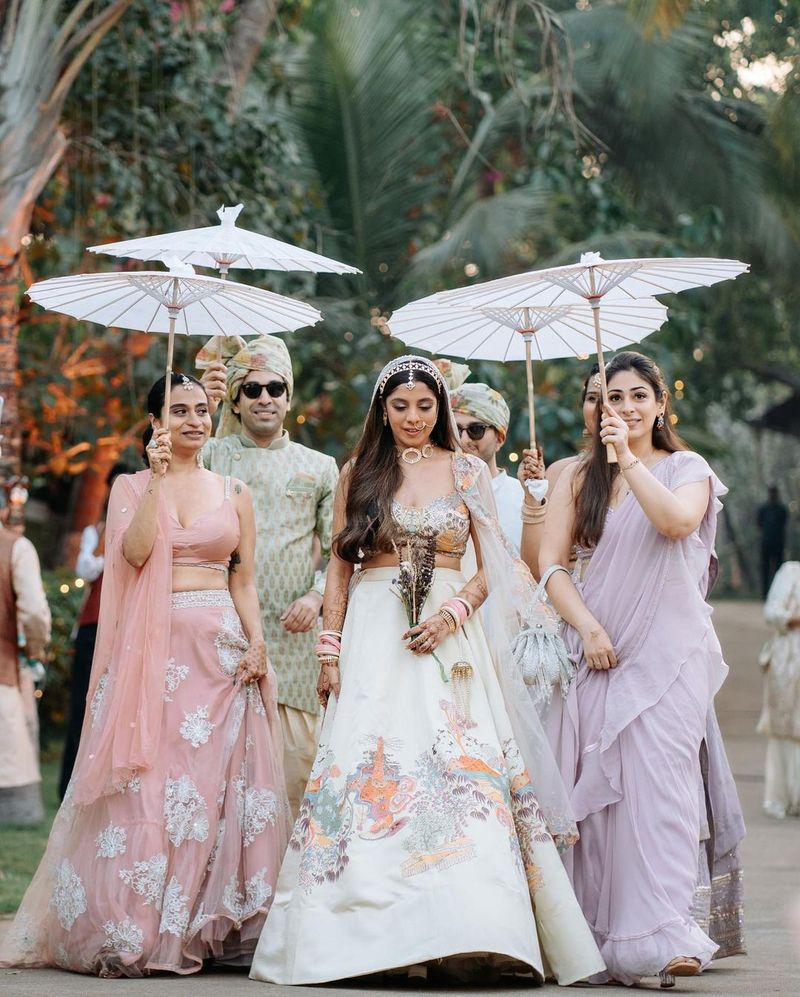
Japanese parasols
Parasols add a graphic, almost painterly shape to an outdoor entry and photograph beautifully against a plain mandap. They work best as a coordinated set — one for you and a few for the bridesmaids.
Walking in with your pets
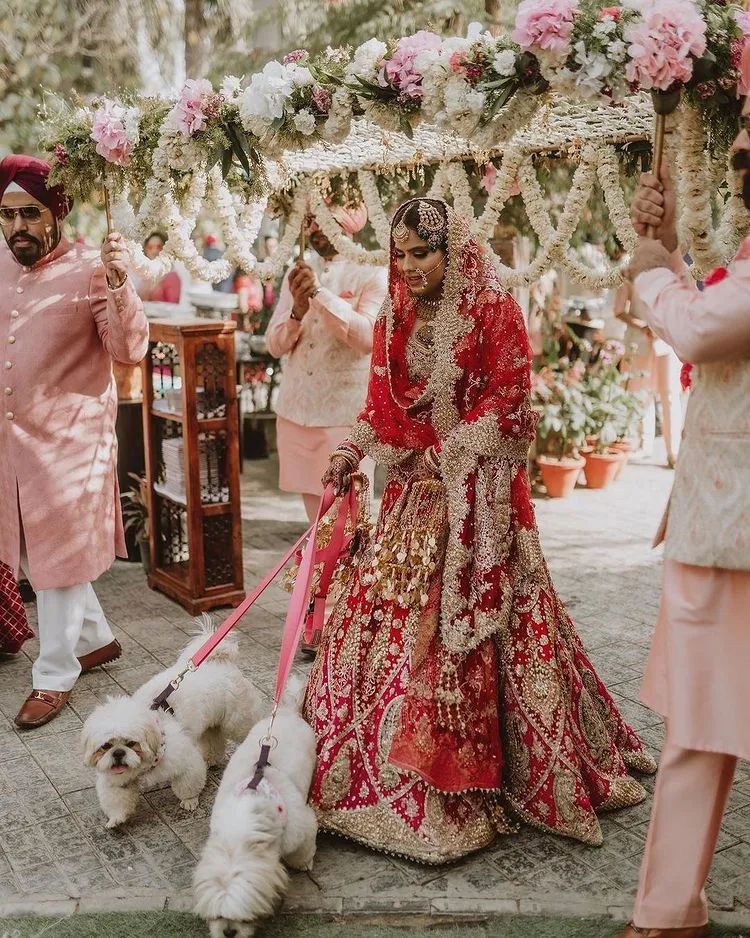
Dogs can walk the aisle with you, and they usually steal the entire ceremony. Appoint one person whose only job is the animal, keep the walk short, and check the venue allows pets before you commit.
How to plan your entry
- Time the walk with the music, not separately. Ask your DJ or musicians for a rehearsal cue and mark the exact spot where the track should change.
- Measure the aisle. A forty-second walk needs a different idea from a fifteen-second one. Long aisles suit handovers and processions; short ones suit reveals and spotlights.
- Confirm permissions early. Fog machines, open flame, pets, boats and drones all need venue approval, and some need it in writing.
- Brief your photographer on the sequence. Reveals, handovers and reveals-behind-screens only work if we know they are coming and can position accordingly.
- Rehearse once, in the outfit. Heels, a heavy lehenga and a long dupatta change how you walk far more than most brides expect.
- Give yourself a reset moment. Ask someone you trust to hand you water and fix your dupatta at the mandap before the pheras begin.
Frequently asked questions
How long should a bridal entry last?
Roughly thirty to sixty seconds of walking, plus any performance or reveal. Under thirty feels rushed; over ninety seconds and guests start looking away from the aisle.
Can we combine two entry ideas?
Two is usually the limit, and they should be sequential rather than simultaneous — for example a silhouette reveal followed by a solo walk. Stacking three or more effects makes the moment feel busy instead of emotional.
What if our venue does not allow sparklers or fog?
Fall back to light. A single spotlight, a backlit screen or a petal shower from a balcony all create drama without flame or smoke, and they need no special permission in most venues.
Planning your entry? Talk to us — we have photographed hundreds of Indian wedding entries and can tell you which ideas actually look as good on camera as they do in your head.